
By Ben Kerrigan-
The UK government has been granted permission to challenge a landmark High Court decision that ruled the ban on the protest group Palestine Action unlawful under anti-terrorism laws.
The move marks the latest chapter in a protracted legal battle over how far the state can go in restricting political protest actions, with implications for civil liberties and national security alike. Amid a backdrop of sharp debate over free speech, security policy and judicial oversight, both sides are now preparing for what could be a lengthy appeal process at the Court of Appeal.

AD: Capeesh Restaurant
The controversy stems from the UK government’s decision in mid-2025 to proscribe Palestine Action as a terrorist organisation under the Terrorism Act 2000, a designation typically reserved for groups involved in serious, sustained violence.
The proscription which made it a criminal offence to belong to or express support for the group followed a series of direct-action protests targeting Israel-linked defence firms, including a break-in at RAF Brize Norton airbasethat resulted in property damage and arrests.
In February 2026 the High Court ruled that the ban was “disproportionate” and unlawfully interfered with freedom of expression and assembly, important rights under UK law. The court found that many of the group’s activities did not meet the legal threshold to justify classification as terrorism and that the Home Office had failed to apply its own policy consistently.

AD: Oysterian Sea Food Restaurant And Bar
The decision threw into legal limbo the prosecutions of thousands of individuals arrested for showing support for Palestine Action since the proscription came into force, as police adjusted enforcement approaches in light of the ruling.
Despite this setback, the government successfully secured the right to appeal the High Court’s judgment to the Court of Appeal, meaning the ban remains in place while the case progresses.
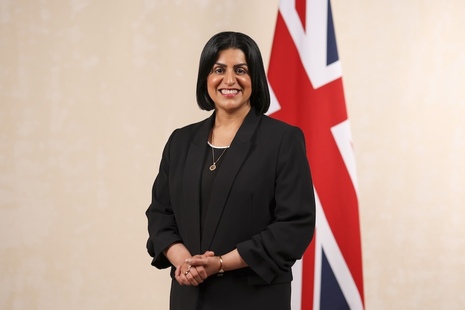
Judges agreed that the Home Secretary, Shabana Mahmood, should have the opportunity to argue that the original ruling was incorrect in law, keeping the proscription active until a final appellate decision is reached. No date has yet been set for the appeal hearing, but legal teams from both sides are preparing their written submissions and arguments.
The legal battle has ignited strong reactions across political, legal and civil society circles. Supporters of the High Court’s judgment hailed it as a victory for fundamental civil liberties, asserting that the state must not use terrorism laws to shut down protest movements without clear evidence of sustained violent activity. Opponents, including government officials, insist that robust powers are necessary to protect public order and national security.
The case also underscores broader tensions in how democracies handle protest movements that engage in disruptive direct action. Across Europe and beyond, governments have increasingly faced campaigns that blur the line between peaceful protest and criminal damage, between civil disobedience and threats to public order.
While climate activists blocking motorways to anti-arms trade demonstrators targeting defence contractors, the methods are often deliberately confrontational. The legal question that follows is rarely straightforward: when does persistent disruption become a matter for counter-terror legislation rather than ordinary criminal law?
At the heart of the appeal is the state’s power to proscribe organisations a power designed to protect national security but one that carries profound consequences for civil liberties. Proscription does not merely penalise specific acts; it criminalises membership, support and, in some cases, even expressions of sympathy.
With critics, that breadth risks casting too wide a net, potentially deterring lawful protest and chilling political speech. For supporters, it is precisely this breadth that ensures authorities can prevent escalation before more serious harm occurs.
Legal scholars note that British courts have historically shown deference to ministers on matters framed as national security. Yet they have also insisted that such powers must be exercised proportionately and in accordance with human rights law.
The High Court’s earlier ruling suggested that the balance had tipped too far toward executive discretion. The Court of Appeal will now revisit that assessment, weighing evidence about the group’s activities against the statutory tests set out in terrorism legislation.
Rights organisations argue that stretching counter-terror powers to cover protest groups risks normalising exceptional measures. They point to the symbolic weight of a terrorism designation, which can carry reputational damage long before any criminal trial occurs.
Even if individuals are ultimately acquitted, the stigma attached to association with a banned organisation can linger, affecting employment, travel and community standing.
In that sense, the appeal is about more than a single group: it is about the precedent set for future campaigns that challenge government policy through disruptive means.
On the other side of the debate, ministers maintain that the government has a duty to act when protest crosses into serious criminality. They argue that coordinated campaigns targeting infrastructure or defence facilities can have implications beyond symbolic dissent, particularly if they interfere with military operations or critical supply chains.
From this perspective, waiting until harm escalates would represent a failure of preventative governance. The appeal therefore raises questions about how much risk a democratic society is willing to tolerate in the name of protecting open dissent.
The political context cannot be ignored. Protests related to the Israel-Gaza conflict have generated strong emotions and, at times, sharp divisions within communities. Decisions taken in such charged circumstances are likely to be scrutinised not only for their legal basis but also for their perceived impartiality.
Courts, in turn, are acutely aware of the need to appear independent from political pressure while still respecting Parliament’s intent in drafting security laws.
Observers from legal scholars to rights groups are watching closely to see how the Court of Appeal balances these competing public interests.
Its judgment will likely delve into technical questions the interpretation of statutory language, the threshold for defining terrorism, the standard of review applied to ministerial decisions but its practical impact will resonate far beyond the courtroom. Police forces, prosecutors and activists alike will look to the ruling for guidance on where the legal boundary now lies.
Whatever the outcome, the appeal will help clarify the limits of executive authority in matters of proscription and the scope of judicial review when fundamental freedoms intersect with security concerns. If the government succeeds, it may reinforce ministerial discretion in designating organisations deemed to pose a threat.
If the challenge fails, it could signal a more assertive judicial stance in safeguarding protest rights against expansive security measures. Either way, the case is poised to become a reference point in ongoing debates about how democratic societies reconcile robust dissent with the imperatives of safety and order a tension unlikely to disappear anytime soon.

AD: Heritage And Restaurant Lounge Bar