
By Ben Kerrigan-
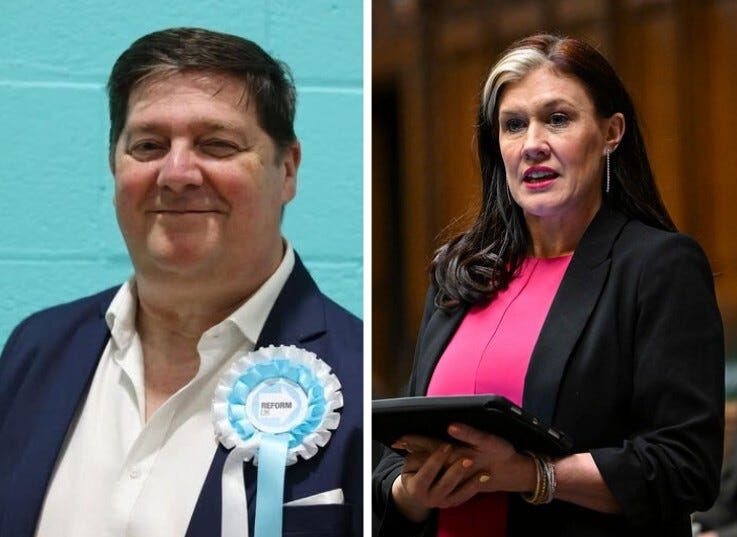
A senior Reform UK politician is at the centre of a fierce national controversy after sharing a Facebook post that appeared to endorse violence against a Labour MP a development that has reignited debate over political rhetoric, social media conduct and the safety of public servants.
County councillor Simon Evans, who serves as deputy leader of Lancashire County Council and as the party’s cabinet member for children and families, drew widespread condemnation on 24 February 2026 after liking and sharing a social media post about Labour MP Natalie Fleet that included the phrase “you should be shot.”

AD: Capeesh Restaurant
The image alongside the text included a false claim about Fleet’s voting record on a high‑profile inquiry, amplifying concerns about misinformation and hostile political discourse.
The episode has sparked cross‑party outrage, prompted calls for disciplinary action within Reform UK, and raised pressing questions about how mainstream political parties manage members’ conduct online particularly when that conduct appears to advocate violence against elected representatives.
The Facebook post in question depicted Natalie Fleet, the Labour MP for Bolsover in Derbyshire, with a fabricated claim that she voted against an inquiry into grooming gangs a subject that has been politically charged and widely debated in recent years. Accompanying the image was text stating: “YOU DOZY COW…YOU SHOULD BE SHOT.”

AD: Oysterian Sea Food Restaurant And Bar
Councillor Evans, who shared and “liked” the post before removing it, later issued an apology, saying he had not noticed the violent wording attached to the content when he clicked to share it. He described the incident as a “genuine mistake” and insisted he did not condone violence against anyone, regardless of political affiliation. He deleted the post once its full content was pointed out to him.
Despite the apology, the fallout was swift. Labour figures and campaigners condemned the incident as symptomatic of a broader deterioration in political culture, where threats and hostile rhetoric have become increasingly common.
Alex Davies‑Jones, Labour’s minister for victims and tackling violence against women and girls, described the content as “grotesque and misogynistic,” and said calls for violence “have absolutely no room in society.”
Ms Fleet herself, a vocal campaigner on issues including violence against women and children, said the ubiquity of threatening posts had left her desensitised to them, but that they underscored why her family had initially urged her not to enter politics.
The intensifying debate comes amid growing concern about hostility directed at politicians online particularly women and ethnic minority MPs with many reporting sustained abuse, sexist slurs and threats as part of their daily public life.
Political Fall Out And Party Response
The incident has put pressure on Reform UK’s leadership, including party figurehead Nigel Farage, to take a clearer stance on members’ use of violent or incendiary language especially given the optics of a high‑ranking councillor sharing content that appears to advocate shooting a sitting MP.
In a statement, Reform UK said it had investigated the post and accepted Evans’ explanation, concluding the councillor’s actions were a misunderstanding rather than an intentional endorsement of violent rhetoric. The party declined to take disciplinary action, a decision that has drawn criticism from political opponents.
Labour and other political figures called for Evans to be suspended or face greater consequences, arguing that tolerating such incidents normalises threats in political discourse and could embolden others to cross boundaries. “This sort of rhetoric is completely unacceptable,” one critic said, urging the party leadership to act more robustly.
The controversy also comes alongside other internal challenges for Reform UK. The party recently suspended another associate, Adam Mitula, over historic social media posts featuring racist and misogynistic remarks highlighting internal strains on how to manage controversial online behaviour among its members.
Supporters of Evans have suggested that the shared post was indeed a simple error, pointing to the fast pace of social media and accidental interactions with content users may not read fully before sharing.
But opponents argue that elected officials, particularly those in leadership roles, must exercise greater caution and responsibility, given the potential real‑world consequences of violent rhetoric especially in a country that has seen MPs murdered by extremists in the past.
The row has underscored a broader national conversation about the tone and limits of political debate in the digital age. With general elections looming in the UK and social media continuing to serve as a dominant forum for political communication, scrutiny of how parties and their representatives engage online is expected to intensify.
Reform’s internal response accepting Evans’ apology and refraining from disciplinary measures has been interpreted by some analysts as indicative of the party’s broader struggle to balance a populist base with expectations of mainstream political conduct. Others suggest it reflects a cautious approach by leadership, wary of diluting party cohesion ahead of key electoral contests.
Conversely, campaigners against violent political rhetoric see the incident as a test case. They argue that failure to impose consequences could embolden more such behaviour in the future, undermining public trust and discouraging participation especially by women and minority groups in political life.
“Normalising threats against elected officials threatens the very foundation of democratic engagement,” one advocacy group spokesperson said.
Analysts also highlight that the personal nature of some social media platforms, combined with the fast pace of political news cycles, can make it easier for misleading or harmful content to spread quickly before it is fully scrutinised a problem that parties and regulators are still grappling with.
Whether this episode will prompt changes in how political parties monitor and govern members’ online conduct remains uncertain. But for now it has intensified pressure on Reform UK to clarify its stance on online violence and set clearer expectations for candidates and elected representatives alike.
While this continues to unfold, it has drawn the attention of commentators across the political spectrum highlighting deep concerns about the intersection of digital communication, political accountability and the safety of public figures.
With Parliament and communities watching closely, the long‑term implications of this controversy on political norms and party discipline are likely to resonate well beyond Lancashire.

AD: Heritage And Restaurant Lounge Bar