
By Ben Kerrigan-
While Iran reels from weeks of nationwide unrest, a profound and unresolved question continues to haunt the country: how many people were killed during the state’s violent crackdown on protesters?
Official figures from Tehran suggest just over 3,000 deaths, but independent estimates range far higher from more than 6,000 confirmed cases to as many as 30,000 fatalities, according to leaked internal accounts and testimony from medical workers.

AD: Capeesh Restaurant
The gulf between these numbers has raised serious concerns about concealed deaths, mass burials and systematic obstruction of independent investigations.
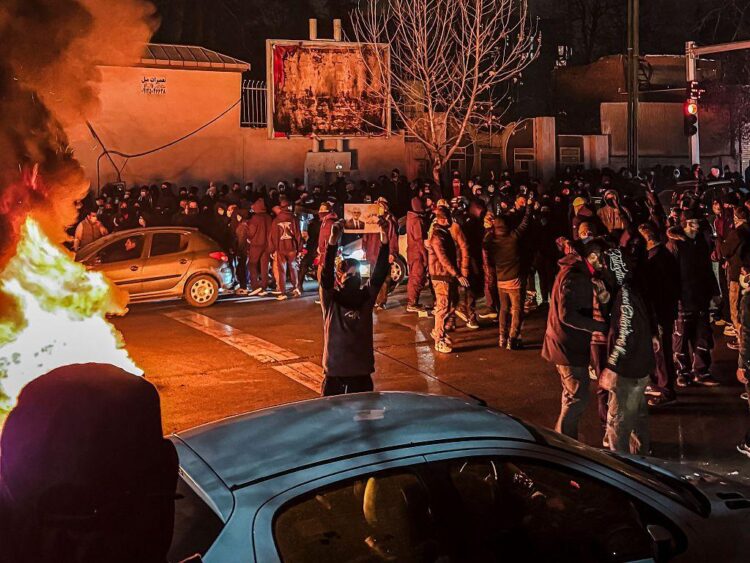
Protests erupted across Iran in late December 2025, driven by economic collapse, inflation, political repression and public anger at the ruling establishment.
A demonstrations spread to dozens of cities, authorities responded with force, deploying the Islamic Revolutionary Guard Corps (IRGC), Basij militias and armed police. Internet blackouts, restrictions on journalists and the arrest of activists quickly followed, making independent verification of casualties exceptionally difficult.

AD: Oysterian Sea Food Restaurant And Bar
What has emerged instead is a fragmented but deeply troubling picture one in which thousands of bodies may never have been officially registered, and entire families remain unsure whether missing relatives are dead, detained or buried in unmarked graves.
Competing Death Counts and What They Represent
Iranian officials insist the death toll has been exaggerated by foreign media and opposition groups. State-linked forensic authorities place the number of deaths at approximately 3,117, a figure that includes security personnel as well as civilians. Government spokespeople claim many of those killed were “armed rioters” or victims of unrest rather than state violence.
Independent monitors, however, present a sharply different assessment. The Human Rights Activists News Agency (HRANA) which compiles names, ages and locations has verified at least 6,126 civilian deaths, based on hospital records, family testimonies and local reporting.
HRANA cautions that this number reflects confirmed cases only, with thousands more still under investigation due to missing documentation or inaccessible regions.
More alarming estimates have surfaced from inside Iran’s own institutions. According to reporting by TIME, senior officials within the Ministry of Health privately acknowledged death figures approaching 30,000, particularly following two days of intense violence on January 8 and 9, when security forces reportedly opened fire on crowds in multiple provinces. Hospitals, the officials said, were overwhelmed, and morgues lacked capacity to process the dead.
Investigations by The Guardian support these claims, citing testimony from more than 80 doctors, nurses, morgue attendants and cemetery workers. These witnesses describe receiving far more bodies than official records reflect, often transported in unmarked vehicles or refrigerated trucks.
Several estimated that official death registrations account for less than 10% of actual fatalities, suggesting a true toll well into the tens of thousands.
The United Nations has not issued a definitive figure but has expressed grave concern about underreporting. A UN human rights expert reported that Iranian authorities were detaining injured protesters directly from hospitals, preventing deaths from being recorded and discouraging others from seeking medical help a practice that would inevitably suppress casualty statistics.
Beyond disputed numbers, evidence of disappeared bodies and mass burials has intensified fears of deliberate concealment.
Cemetery workers in several provinces told investigators that they were ordered to prepare large graves at short notice, sometimes burying dozens or even hundreds of bodies at once, often without names, identification tags or death certificates.
At Behesht-e Sakineh cemetery near Tehran, witnesses described pickup trucks arriving at night, carrying bodies wrapped in plastic or hospital sheets. Similar accounts emerged from cities including Mashhad, Isfahan and Shiraz.
In some cases, families were reportedly told their relatives had been buried already or were asked to pay significant sums to retrieve bodies, a practice that further reduced official documentation.
Medical professionals interviewed by international reporters said many bodies showed signs of close-range gunshot wounds, particularly to the head and chest, consistent with targeted firing rather than crowd control.
Several doctors reported seeing patients die from injuries sustained during protests, only for security forces to remove the bodies before proper registration.
These accounts help explain the massive discrepancy between the 3,000-plus deaths acknowledged by the state and the 6,000 to 30,000 deaths estimated by independent sources.
Human rights groups argue that the combination of hospital arrests, rapid burials, restricted access to morgues and intimidation of families has systematically erased thousands of deaths from the official record.
Iranian authorities deny these allegations, accusing Western governments and media of inflating figures to justify sanctions and political pressure. Yet they have not permitted an independent international investigation, nor released detailed forensic data that could substantiate their claims.
With families of the missing, the numbers are not abstract. Thousands continue to search for loved ones whose names appear on no official list people who vanished during protests and may now lie in unmarked graves. As long as access remains restricted and records opaque, the true scale of Iran’s crackdown may never be conclusively known.
What is clear, however, is that even the lowest credible estimates place the death toll in the thousands, making the crackdown one of the deadliest state responses to protest in recent decades and leaving a legacy of grief, uncertainty and unanswered questions that will endure long after the streets have fallen silent.

AD: Heritage And Restaurant Lounge Bar