
By Bobby Chacko-
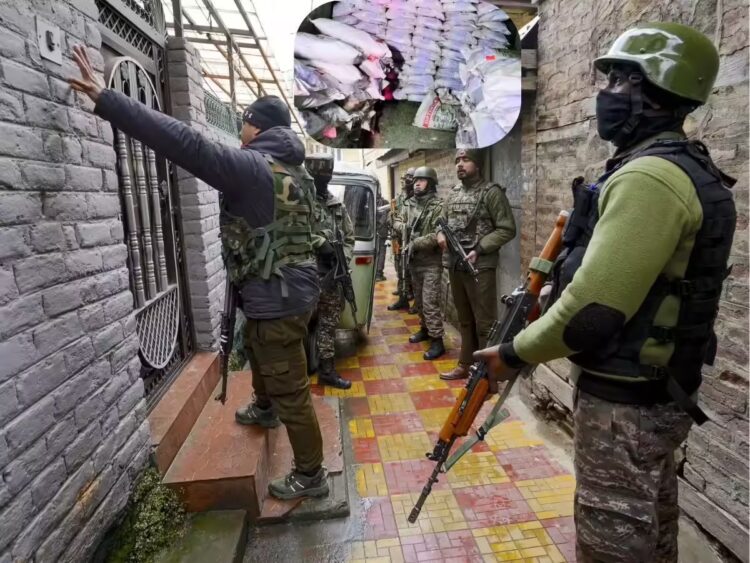
In a major security breakthrough just days before India’s 77th Republic Day celebrations, Rajasthan police seized a massive cache of nearly 10,000 kilograms of explosive material from a rural farmhouse in Nagaur district on Sunday night.
The discovery, which authorities are describing as the largest explosives haul in the state’s recent history, came amid heightened nationwide terror alerts linked to cryptic “26-26” intelligence inputs warning of potential coordinated threats around January 26.

AD: Capeesh Restaurant
Acting on precise intelligence about illegal storage of explosive materials, a joint operation involving the Nagaur district police and a specially constituted response team raided a farmhouse in Harsaur village in the Thanwala police jurisdiction.
The operation resulted in the arrest of 50-year-old Suleman Khan, who police say was found storing the stockpile of explosives at his property.
Officials have registered a case against the suspect under the Explosives Act of 1884 and relevant sections of the Bharatiya Nyaya Sanhita, and investigations are underway to determine whether the cache was intended for illicit distribution, illegal mining activities, or other unlawful use.

AD: Oysterian Sea Food Restaurant And Bar
The enormity of the seizure has sent shockwaves through security circles. Approximately 10,000 kilograms (around 9,550 kg) of ammonium nitrate, a common industrial fertiliser that can be weaponised, was recovered packed in 187 sacks.
Police also confiscated large quantities of detonators, blue and red fuse wires, and other explosive accessories materials that are vital components in the manufacturing of improvised explosive devices (IEDs).
The police raid was the culmination of specific intelligence inputs received days earlier, which indicated that unusually large quantities of explosive materials were being bought and stored in Nagaur district.
According to Nagaur Superintendent of Police Mridul Kachhawa, officers had been tracking suspicious activity related to explosives storage long before the late-night operation.
“We had been receiving credible information that large quantities of explosive material beyond what could be justified for agricultural or industrial purposes were being bought, sold, and stored in the district,” Kachhawa said at a press briefing.
“Acting on these intelligence inputs, we carried out a thorough operation which resulted in one arrest and the seizure of a significant amount of dangerous material.”
Investigators have emphasised that ammonium nitrate, while used legitimately in mining and construction, is also a key ingredient in many explosive devices. Authorities recovered this substance alongside a wide array of detonators and wires components that, if misused, could greatly amplify destructive potential.
One official explained that such a huge quantity nearly 10 metric tonnes of ammonium nitrate could have had devastating consequences if it had fallen into the wrong hands.
“Just 150 kilograms of ammonium nitrate is considered sufficient to cause a major explosion,” security analysts have noted in related reports, underscoring the scale of the threat had these materials been used maliciously.
The accused, Suleman Khan, already had a criminal background with three previous cases registered under the Explosives Act, police reports show. Two of those cases remain under trial, while he was acquitted in one prior instance.
The authorities are probing whether Khan’s involvement was limited to storage or if he was part of a larger network supplying explosive materials across regions.
This seizure also resonates against a backdrop of intensified terror alerts issued by Indian intelligence agencies ahead of Republic Day.
Reports have highlighted unusual activity on encrypted digital platforms featuring coded references to “26-26”, which many counter terror sources interpret as a possible allusion to January 26. These inputs have prompted additional security readiness in key cities, religious sites, and major public spaces.
Security planners have also been analysing chatter linked to groups allegedly operating from across the border, including outfits with historical ties to attacks in India. An intelligence assessment cited by a leading Indian newspaper noted suspicions of coordinated threat signals, potentially involving multiple organisations planning actions related to Republic Day.
The Nagaur discovery was not the only explosives-related incident reported in Rajasthan in recent weeks. Earlier, police in the Tonk district seized around 150 kilograms of explosive material concealed in sacks of urea fertiliser during a roadside check, with two men arrested in connection with that case.
Though significantly smaller in scale, that haul was enough to trigger serious security concern and has been factored into broader threat assessments.
In another development linked to terror alerts nationwide, Delhi has been on high alert with additional forces deployed across the capital, while other states have reinforced security protocols at public events and historic sites.
Intelligence agencies are coordinating through multiple channels to monitor suspicious activities, disrupt potential plots, and safeguard major gatherings marking Republic Day.
Senior officials have clarified that there is no immediate evidence linking this particular cache directly to any specific terror group or radical group, but they stress that the quantity and nature of the seized material demand thorough scrutiny.
Central investigation agencies have reportedly been notified and may take over aspects of the probe if interstate or cross-border connections emerge.
Authorities are also examining the supply chain for the explosive materials and whether they were destined for illegal mining markets or diverted for other purposes.
Security analysts are also watching these developments in light of previous incidents in the region. A bomb blast near Delhi’s Red Fort in November 2025 attributed to explosive materials including ammonium nitrate killed 15 people and heightened counter terror vigilance across the country.
While links between that attack and the Nagaur seizure are still under investigation, the similarities in materials recovered have prompted extra caution among investigators.
In response to the incident, state authorities have increased patrols, stepped up surveillance at transport hubs and sensitive locations, and urged the public to report suspicious activities immediately.
“We are committed to ensuring that citizens can celebrate Republic Day without fear,” a senior police official said, adding that “proactive intelligence action and prompt response will continue to be our guiding principles.”
Beyond the criminal and counter terror dimensions, there are implications for public safety regulations concerning the storage and movement of explosive precursors like ammonium nitrate.
Industry experts have long fought for tighter controls on such substances to prevent their diversion to illegal markets. The sheer scale of this seizure may prompt a broader review of how authorities regulate and monitor these materials nationwide.
With the seizure of nearly 10,000 kilograms of explosive material in Rajasthan highlighted by the recovery of ammonium nitrate, detonators, fuse wires, and related components represents one of the most significant pre-Republic Day security operations in recent memory.
With potential terror alerts tied to coded “26-26” intelligence warnings and nationwide preparedness heightened, the episode underscores the challenges facing Indian security agencies in pre-empting and disrupting threats during major national events.

AD: Heritage And Restaurant Lounge Bar