
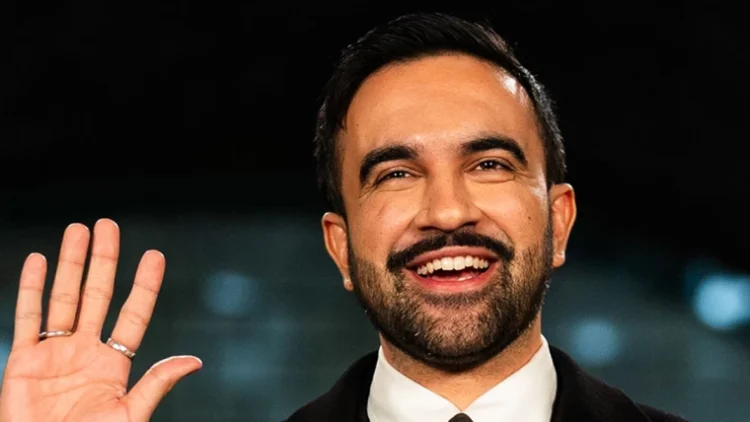
By Aaron Miller-
In the early hours of January 1, 2026, Zohran Mamdani(pictured) took the oath of office as the mayor of New York City, ushering in a new chapter in the history of the largest city in the United States. Mamdani, at 34 years old, became the first Muslim individual to hold New York City’s highest municipal office.
His inauguration took place just after midnight in the historic but long-disused Old City Hall subway station, a setting that underscored his focus on transit, history, and community roots. The oath was administered with Mamdani placing his hand on a Quran, a moment described as deeply meaningful and historically significant.

AD: Capeesh Restaurant
The ceremony, which was attended by close family members and leading officials including New York Attorney General Letitia James, marked the end of a contested election season that saw Mamdani defeating well-known opponents in what became one of the most watched mayoral races in recent memory.
Political observers and supporters across New York welcomed the moment as a breakthrough in representation and diversity. Mamdani also became the first of South Asian origin and the first mayor born on the African continent to lead the city.
Born in Kampala, Uganda, to parents who later moved to New York City, Mamdani’s personal story reflects the multicultural identity of the metropolis he now leads.

AD: Oysterian Sea Food Restaurant And Bar
During his brief remarks at the subway station, Mamdani spoke about the weight of the responsibility ahead and the symbolism of the location where he began his tenure. He called the venue a tribute to New Yorkers who depend on public transit every day and a reminder of the city’s vibrant, working urban fabric.
A public swearing-in ceremony was later celebrated at City Hall, drawing larger crowds, elected officials, and community leaders.
Mamdani’s electoral success came after a campaign that highlighted affordability, economic justice, and expanded public services. His message resonated with a broad spectrum of New Yorkers who sought alternatives to traditional political leadership.
In a city often defined by towering wealth and soaring living costs, many voters connected with his focus on lowering the cost of living and expanding access to quality housing and transit infrastructure.
Despite moments of opposition during the campaign season, Mamdani’s win reflected a broader shift in the political landscape of the city, energising young voters and diverse communities who had not always felt represented in local government. His election has been described as emblematic of changing priorities among the city’s electorate.
One of the hallmark scenes of the night was the presence of his wife, Rama Duwaji, standing beside him as the oath was administered.
The image of Mamdani placing his hand on the Quran was widely covered in media outlets, with news agencies reporting that the choice to use the Quran was a meaningful gesture that celebrated his heritage and faith while also honouring New York City’s rich tapestry of cultures and beliefs.
The transition reflected both celebration and thoughtful reflection. Supporters applauded the moment as historic and reflective of America’s evolving civic landscape.
Some critics raised questions about the role of identity politics in what they saw as a deeply symbolic election, yet even many detractors acknowledged the sincerity of the historic moment.
While news of his inauguration spread around the globe, international press outlets quickly highlighted the significance of his election. Reports quoted Mamdani calling the ceremony “an honour and a privilege,” and underscored the fact that such a milestone had occurred in perhaps the most visible and influential city in the world.
The location chosen for the midnight ceremony, the decommissioned Old City Hall subway station, stood in contrast to the grandeur of modern City Hall.
The station, one of the city’s earliest subway stops, is known for its soaring ceilings and classic architecture, a ghostly reminder of New York’s past achievements in engineering and public service.
Mamdani’s decision to be sworn in there was seen as a nod to the everyday life of New Yorkers, many of whom rely on transit systems to commute, work, and engage with the city’s diverse neighbourhoods.
New Leadership Amid High Expectations
With the ceremony now complete, Zohran Mamdani faces a city brimming with both promise and long-standing challenges.
New York City is home to millions, a vast pipeline of cultural communities, economic sectors, and neighbourhoods each with distinct needs and expectations. While being mayor, he will guide policymaking aimed at confronting rising costs of living, affordable housing shortages, transportation issues, and deepening economic disparities.
Supporters of Mamdani’s approach see his mayorship as an opportunity to reinvigorate public services, including reimagined support for transit, expanded childcare access, and city-run grocery initiatives designed to lower food costs.
Critics of some proposed plans have questioned the feasibility of these ambitious programs, pointing to budget constraints and governance challenges that come with leading a city of such scale.
Another aspect of his leadership that has drawn attention is his faith. While many applauded the historic nature of his Muslim identity and the respectful acknowledgement of his religious belief, other commentators expressed concern about potential biases in public perception and expectations. Yet Mamdani’s focus in his inaugural moments remained on unity and service rather than division.
Political analysts note that New York’s electorate has become increasingly multifaceted, with a blend of progressive ideals and pragmatic concerns. Mamdani’s platform appealed widely to voters disillusioned with traditional politics, and his understanding of grassroots organising helped galvanise support from diverse communities across the boroughs.
Mamdani also recognises that his leadership comes at a time when local governance is under intense national scrutiny. The policies enacted in New York often set precedents and influence debates in cities across the country. Whether it is transit, housing, homelessness, or economic policy, the mayor’s decisions will be watched closely far beyond the city’s limits.
His inaugural speeches emphasised resilience and collective effort. They called upon New Yorkers to engage with the civic process and to work together toward shared progress.
With a rich personal background bridging continents and cultures, Mamdani embodies the global city he now leads, a metropolis constantly reshaped through the hopes and struggles of its residents.
In closing, the installation of Zohran Mamdani as mayor of New York City stands as a notable moment in municipal history. Historical firsts often carry deep societal meaning, and for many, his ascent represents the promise of broader representation, collective aspiration, and evolving civic identity.
In light of his campaign vision and the varied expectations of a city that has always been characterised by its ability to welcome diversity and change, both supporters and opponents are keeping a careful eye on how his leadership will develop once he takes office.

AD: Heritage And Restaurant Lounge Bar