
By Ben Kerrigan-
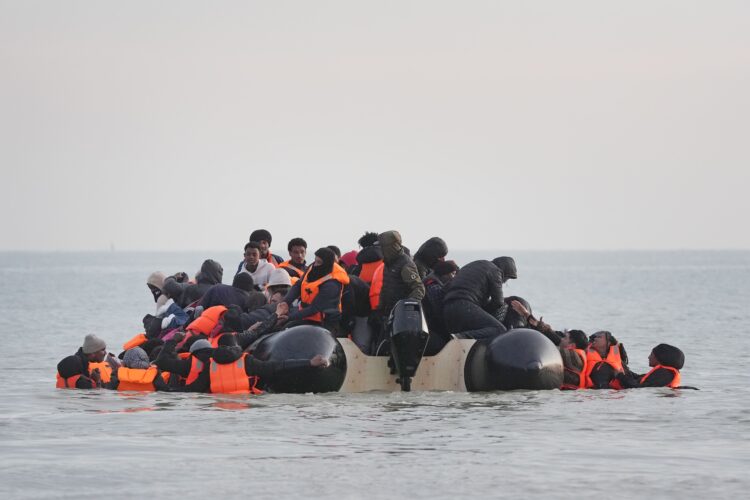
In 2025, the number of migrants crossing the English Channel in small boats and arriving on UK shores climbed to levels not seen since the record year of 2022, highlighting one of the most persistent and politically charged migration challenges facing Britain and Europe.

AD: Capeesh Restaurant
Small boat crossings have been a feature of UK immigration patterns for several years, drawing sustained political debate, legal actions, and intense public scrutiny.
The rise in arrivals comes amid government pledges to disrupt the smuggling networks that organise these trips and national initiatives designed to deter people from attempting the crossing.

AD: Oysterian Sea Food Restaurant And Bar
Despite such efforts, the sheer volume of crossings in 2025 has revealed the challenge’s scale and exposed ongoing pressure at Britain’s southern coastlines. The Home Office confirmed that no migrants made the journey on New Year’s Eve itself, reflecting a seasonal lull in crossings, yet the annual total remained starkly high.
Maritime officials, border forces and volunteer lifeboat crews have worked continuously throughout 2025 to respond to the influx of small boats that have set out from French coasts. These vessels, often overcrowded and unseaworthy, make the roughly 21‑mile crossing in hazardous conditions.
Many of those who undertake the journey do so to escape war, persecution or extreme poverty in their home countries, although critics of irregular migration emphasise the danger of organised people‑smuggling networks that profit from the ordeal.
Assistance and rescue operations have at times drawn international attention, with coastal crews coordinating responses amid complex weather conditions and high traffic on the waterway.
The 2025 total while slightly below the record of 45,774 crossings set in 2022 nevertheless illustrates a sustained trend that has escalated since small boat arrivals began rising significantly in the late 2010s.
Figures show the annual figure finished 9 percent below the 2022 peak, yet the rate of crossings this year has matched or surpassed many expectations and projections. The increase in 2025 arrivals has intensified debates over immigration policy, border security and humanity’s obligations to those seeking refuge.
Public reaction to the figures has been varied and passionate. Supporters of stricter border measures argue that the rising total demonstrates a failure of policy initiatives and calls for stronger deterrents to illegal travel.
Others note that the drivers of migration including conflict, climate change and economic deprivation require international cooperation and humane responses that differentiate between irregular entry and legitimate asylum claims.
Advocacy groups have repeatedly pointed out that many migrants claim asylum upon arrival, seeking legal protection under global refugee conventions.
Critics of current immigration approaches have also emphasised the dangers faced during the crossing itself. The English Channel is one of the world’s busiest shipping lanes, and undertaking the journey in small craft can be deadly.
Reports of incidents requiring rescue, medical aid or intervention by maritime authorities are common during peak periods of traffic, and volunteers from organisations such as the Royal National Lifeboat Institution have played a vital role in ensuring safety at sea.
Their work often occurs amid fraught political debate and public controversy over the broader context of migration policy in Europe.
Political Pressure and Policy at a Crossroads
The persistent increase in Channel crossings has placed significant pressure upon political leaders in the United Kingdom.
With the Labour Government assuming power in mid‑2024 with immigration control as a central priority, officials pledged to dismantle criminal networks responsible for organising crossings and to establish new bilateral arrangements with European partners.
These dynamics have fuelled debates within Parliament and among the public about the adequacy and effectiveness of existing strategies.
Prime Minister Sir Keir Starmer has faced criticism from opposition politicians who accuse the government of losing control of the border, while supporters of his platform argue that long‑term disruption of smuggling networks will take time and require sustained cooperation beyond short‑term data points.
Border security officials have also highlighted their efforts in removing tens of thousands of individuals from the UK for immigration breaches, even as seasonal peaks in crossings present operational challenges.
The debate has not only political but also cultural implications, as communities in port towns and inland cities grapple with integration and service provision for new arrivals while pursuing compassionate yet enforceable policies.
Across the political spectrum, questions have arisen over how best to balance security imperatives with humanitarian obligations. Some voices within Parliament and civil society have suggested broader reforms that emphasise legal pathways for asylum seekers, aiming to reduce the incentive to undertake dangerous journeys.
Advocates argue that expanding lawful entry channels could undermine the dangerous smuggling operations that rely on irregular travel.
Opponents of this approach maintain that expanding legal routes could inadvertently encourage greater migration attempts, while focusing instead on deterrence and deportation as necessary components of border policy.
Home Secretary Shabana Mahmood has defended the government’s approach, acknowledging that crossings remain “unacceptably high” yet emphasising ongoing efforts to enhance cooperation with European partners and strengthen enforcement mechanisms.
Her statements reflect a wider recognition within government circles that tackling the Channel route requires both domestic policy innovation and coordinated international action.
Some proposed reforms include changes to asylum processing, visa controls and investment in regional development schemes intended to address root causes of migration in countries of departure.
Weather patterns and seasonal conditions also play a notable role in the number of crossings recorded each year. Cold and stormy periods typically see fewer migrants attempting the journey, as rough seas and low visibility deter small boat launches from French shores.
Data from late 2025 showed extended runs of days with no crossings, signalling both the impact of environmental factors and the unpredictable nature of movements across the Channel.
The increasing averages in people per boat reflect another dimension of the phenomenon. The average number of migrants per crossing rose in 2025, indicating that individuals and families remain willing to pack into small vessels in pursuit of the same destination despite heightened risks.
These patterns have pushed maritime rescue services and border patrols to adapt tactics and resources, often straining capacities during peak seasons and calling for more robust planning and funding. Humanitarian organisations have continued to highlight the personal stories behind the statistics. Many migrants undertake the Channel crossing after enduring long journeys through multiple countries, often leaving behind profound hardship.
Their experiences encompass complex motivations including escaping conflict, persecution, or economic instability and their treatment upon arrival has triggered debate over ethical obligations under international law.
Human rights advocates stress that while unlawful entry presents legal challenges, the moral obligation to protect vulnerable people remains a defining global concern. Discussions on Channel crossings and migration policy will continue to be key issues in political dialogue and societal matters.

AD: Heritage And Restaurant Lounge Bar