
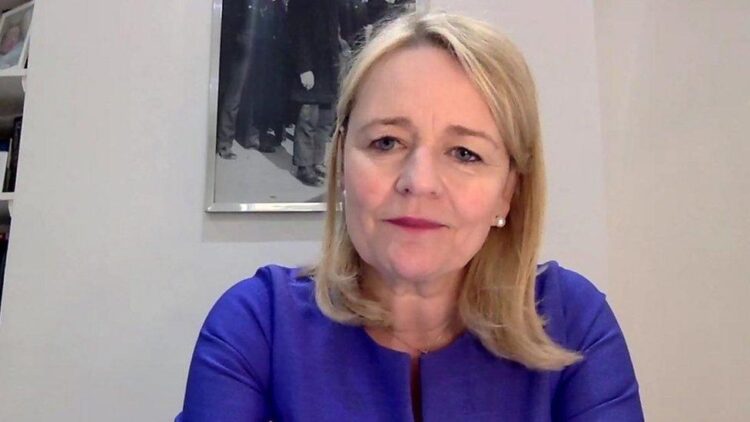
By Ben Kerrigan-
Labour’s leadership is under mounting pressure as a major trade union figure issued a stark warning that the Government risks “sowing the seeds of its own destruction” unless it re-centres its agenda around worker issues heading into 2026.
The message, delivered by Sharon Graham, general secretary of the Unite union, combines a plea for stronger backing of workers with a sweeping critique of current political priorities, portraying a government distracted from the urgent needs of Britain’s workforce.

AD: Capeesh Restaurant
The call comes at a moment of internal debate within the Labour Party, with some figures emphasising leadership succession and party strategy while unions and activists push for greater focus on the lived realities of employees across sectors.
Graham’s intervention reflects broader unease among organised labour about economic conditions, public services, investment and the direction of national policy, suggesting deep political currents beneath the surface of routine Westminster discourse.
In a piece written for The Times, Graham directly challenged Labour’s leadership, arguing that the Government must clarify what it stands for and whose interests it represents.

AD: Oysterian Sea Food Restaurant And Bar
She warned that failing to prioritise workers in the coming year especially as cost-of-living pressures and industrial challenges persist could lead to severe political consequences, describing a trajectory that could undermine the Government’s credibility and electoral prospects if unaddressed.
The language of her warning was unusually stark, using terms that convey deep pessimism about the current course. “In the coming year, if this Government does not depart from its current path, it will surely be sowing the seeds of its own destruction,” she wrote, emphasising the stakes she sees in how Labour chooses its priorities.
A Union Leader’s Call to Reprioritise the Workforce
Sharon Graham’s critique covers a broad range of concerns, but at its core is an insistence that the Government must reaffirm its commitment to workers across the economy.
She pointed to issues including economic stagnation, lack of industrial investment, and recent budget decisions as examples of policy choices that risk alienating working-class voters and weakening Labour’s connection to the electorate.
Graham lamented what she characterised as a political environment preoccupied with internal leadership discussions at the expense of substantive policy action to improve conditions for employees. She framed Britain as “rudderless,” lacking a strategic vision to boost productivity and rebuild industries that have weakened over decades.
This critique tied back to her view that failing to champion workers could erode trust not only in the current leadership but in Labour as a party positioned historically as a voice for labour interests.
While acknowledging that discussion about party leadership is inevitable, Graham warned that it should not consume the party’s agenda. Her message underscores union frustration with being sidelined in debates dominated by political positioning rather than policy proposals aimed at addressing wage stagnation, rising costs and investment shortfalls.
She called for Labour to rekindle its engagement with the concerns of workers in every region and sector, rather than focusing internally.
The Unite union, one of the country’s largest, has positioned itself as a watchdog on Labour’s promise to support workers, especially on issues like cuts to allowances and industrial strategy.
Graham’s position highlights her organisation’s ongoing scrutiny of government policy choices, and her willingness to push for changes she views as necessary for a stronger economic foundation and fairer working conditions.
In her critique of recent fiscal moves, she highlighted opposition to cuts such as the winter fuel allowance and raised concerns over economic decisions that she believes place undue burdens on workers rather than targeting wealthier individuals or investing in industry.
Her analysis reaches beyond simple policy disagreement, touching on what she perceives as fundamental questions about the direction and character of national governance.
Her comments about Britain’s industrial decline recall broader debates about the country’s economic standing. Graham contrasted the UK’s historic role at the forefront of the first Industrial Revolution with its current ranking in global industrial investment, emphasising that without reinvigoration of domestic industry, productivity and growth will continue to lag.
Amid these criticisms, Graham also emphasised the role of trade unions as advocates for workers irrespective of political alignment. She stated that unions are there to fight for worker rights, not simply to support politicians, reinforcing the notion that alignment with worker interests should be a priority regardless of party politics.
Political Implications and Broader Debate
The warning comes as the Labour government, led by Sir Keir Starmer, navigates a complex political landscape. Internally, the party is debating strategy and leadership succession, while externally it faces challenges from opposition parties and economic pressures that affect households nationwide.
Against this backdrop, Graham’s message adds another layer to the discourse about where political attention ought to be concentrated.
The rhetoric of “destruction” used in her warning captures an intensity of concern that goes beyond routine policy disagreement. Her framing implies that failing to reorient priorities toward worker support could have far-reaching consequences for political stability and Labour’s connection with the electorate.
It highlights a belief among union leadership that ideological clarity and stronger policy commitments to address worker issues are essential to any credible government agenda in the run-up to elections.
Reactions among commentators and political actors underscore the tensions between party strategy and calls for more decisive action on socio-economic issues.
Supporters of Graham’s stance argue that a government must demonstrate tangible benefits for workers to maintain public confidence, while critics claim that broader economic reforms and leadership decisions also require attention as part of a balanced governance strategy.
The debate reflects competing visions about how best to secure economic wellbeing and political support in a period marked by uncertainty.
There is also a backdrop of broader economic anxiety among workers and unions, shaped by rising living costs, slow wage growth and the long-term impacts of global economic shifts. These conditions have intensified pressure on political parties to address structural economic concerns, particularly in regions impacted by industrial decline or limited job prospects.
Graham’s intervention taps into these undercurrents, amplifying the union movement’s demand for policy responses that deliver measurable improvements for employees.
The emphatic language used in her warning highlights the urgency she associates with addressing these challenges. It reflects a conviction that political leaders must adopt a clear and unapologetic pro-worker stance to avoid alienating constituencies whose support is seen as vital to electoral success and societal cohesion.
Her comments amplify broader discussions about the nature of political representation and economic policy, illustrating how labour organisations are attempting to shape the discourse around policy priorities. While the Government evaluates its plans for 2026, the push to enhance support for workers and shift focus back to labour issues is expected to continue being a prominent topic.

AD: Heritage And Restaurant Lounge Bar