
By Charlotte Webster-
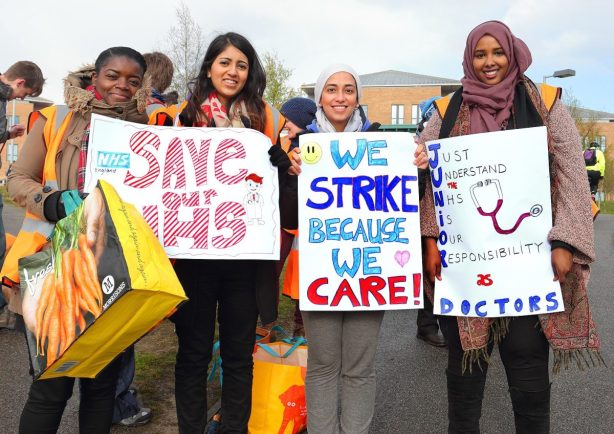
Resident doctors across England have commenced a significant five-day strike, escalating a protracted dispute over pay, training and working conditions that has repeatedly disrupted the National Health Service (NHS).
The industrial action began at 7 a.m. on Wednesday and is expected to last until early next week, with hospital leaders warning of widespread delays, postponed appointments and heightened pressure on already stretched emergency services.

AD: Capeesh Restaurant
The walkout represents the 14th round of strike action by resident doctors formerly known as junior doctors since March 2023 and reflects deepening frustration within the medical workforce over real-term pay erosion and stagnant career progression.
Despite extensive negotiations, doctors rejected a government proposal on training positions and pay earlier this month, leaving no agreement in place to avert industrial action.
The British Medical Association (BMA), which represents around 55,000 resident doctors, said its members voted resoundingly against the government’s latest offer, with more than 80 per cent opposing the terms. Union leaders argue that the NHS faces a preventable jobs crisis and insist that long-term structural reform is necessary to retain doctors and protect patient care.

AD: Oysterian Sea Food Restaurant And Bar
Health service chiefs have underscored the timing of the strike as particularly challenging. Hospitals are grappling with an early and severe surge in flu cases, with admissions far higher than typical December levels.
NHS England reports that flu-related hospitalisations have risen sharply in recent weeks, placing extraordinary pressure on beds, emergency departments and staffing resources.
This convergence of events a major industrial dispute in the midst of a flu wave and the run-up to Christmas has alarmed health leaders, politicians and patient advocacy groups alike. They warn that the combination of staff shortages, surging demand and strike action could translate into significant disruption for patients across the country.
Impact, Tensions and Official Warnings
NHS trusts have cautioned that non-urgent services are likely to be affected throughout the coming days. Elective procedures, routine appointments and diagnostic tests may be rescheduled or cancelled as hospitals prioritise emergency and life-saving care during the strike period.
Staff not participating in the walkout, including consultants and specialists, will attempt to maintain core services, but the gap left by striking resident doctors who perform a substantial share of hospital duties cannot be fully bridged.
“Significant impact on services” and “additional challenges” are phrases echoed by regional NHS leaders urging the public to use healthcare resources wisely. People are being advised to rely on NHS 111 online for non-urgent concerns and to seek emergency care through 999 only if life or limb is at risk.
In a statement from NHS England’s North West region, a senior medical director said the service aims to keep as many operations going as possible but warned that cancellation or rescheduling of some appointments is unavoidable.
Political figures have been vocal about the disruption. Prime Minister Sir Keir Starmer criticised the strike as “irresponsible,” arguing that the shortage of doctors during peak winter pressures could endanger patient well-being. He has appealed for the BMA to reconsider and engage more constructively with government proposals.
The government’s stance is grounded in the claim that doctors have already received substantial pay increases in recent years including a nearly 30 per cent rise and that further demands are unaffordable in the current public funding climate.
Officials also offered to expand training positions and support career progression as part of a broader package designed to address system challenges, but the BMA rejected the deal ahead of the walkout.
Tensions are not confined to Westminster. Hospital bosses and NHS Confederation representatives have highlighted the broader consequences of persistent strike action on service delivery. Previous walkouts have forced cancellations of tens of thousands of procedures and appointments, and the cumulative financial and operational impact on the NHS is significant.
Industry leaders warn that repeated disruption could necessitate cuts in frontline staff or services if unresolved disputes continue to drain resources.
The union has pushed back against claims that the strikes will lead to patient deaths, rejecting assertions that industrial action directly results in fatal outcomes. BMA officials emphasise that senior medics will cover critical care during the walkout and that safety protocols are in place to mitigate risks.
They also argue that addressing the root causes of workforce dissatisfaction including pay and long-term career paths is essential for patient care in the long term. LBC
Amid the mounting tension, independent voices have urged both sides to consider independent mediation to resolve the impasse. NHS leaders and policymakers have suggested that an impartial process could help break the stalemate and prevent further escalations in 2026.
Without such intervention, the standoff risks extending beyond the current strike period, with additional industrial action already under consideration.
Patients and their families are already feeling the effects. Some are facing longer waits for routine care, and those who need scheduled interventions may experience delays that ripple into the new year.
Elderly patients, particularly those needing post-operative discharges or ongoing treatment plans, are especially vulnerable to disrupted continuity of care. Charities and health advocacy groups have joined calls for urgent negotiation to safeguard services for the most at-risk.
In regional hospitals, local NHS trusts have issued statements urging patients to attend scheduled appointments unless notified otherwise and reassuring the public that emergency services remain operational. Trusts emphasise that life-threatening conditions will continue to be treated.
These communications reflect efforts by hospital management to balance honesty about the disruption ahead with reassurance that urgent care will not be abandoned.
Doctors on strike have described their action as a last resort after years of unresolved concerns. Union leaders highlight that resident doctors are integral to the NHS workforce, performing a wide range of clinical duties from early-morning ward rounds to late-night emergency shifts.
With morale low and recruitment challenges intensifying, many view the strike as necessary to prompt meaningful conversation about the health service’s future.
As hospitals struggle to keep up with demand, many analysts suggest that the strike will intensify debate over how the NHS can sustainably support its workforce while maintaining safe and timely care for patients.
The coming days are likely to be closely watched by clinicians, politicians and the public alike, with implications for the broader conversation around public service funding, healthcare policy and industrial relations in one of the country’s most vital public sectors.
The outcome of the five-day strike may hinge not just on the immediate dispute over pay and conditions, but on the willingness of both sides to find common ground that ensures the NHS remains resilient, effective and staffed by a motivated workforce capable of meeting the nation’s health needs during peak pressures and beyond.

AD: Heritage And Restaurant Lounge Bar