
By Bobby Chacko-
India’s top anti-terror agency has formally filed a comprehensive chargesheet against Pakistan-based militant Islamist groups Lashkar-e-Taiba (LeT) and its allied outfit The Resistance Front (TRF), along with several individuals, in connection with the April terror attack in Pahalgam, Jammu and Kashmir that left dozens of civilians dead and sparked one of the most serious India-Pakistan escalations in years.
The National Investigation Agency (NIA) presented the chargesheet on Monday before a special court in Jammu, marking the first formal legal indictment tied to the violence that shook the region earlier this year.

AD: Capeesh Restaurant
The extensive document running to nearly 1,600 pages alleges a coordinated conspiracy traced back to handlers and operatives based in Pakistan, and lays out detailed evidence linking the organisations and individuals to the planning and execution of the assault.
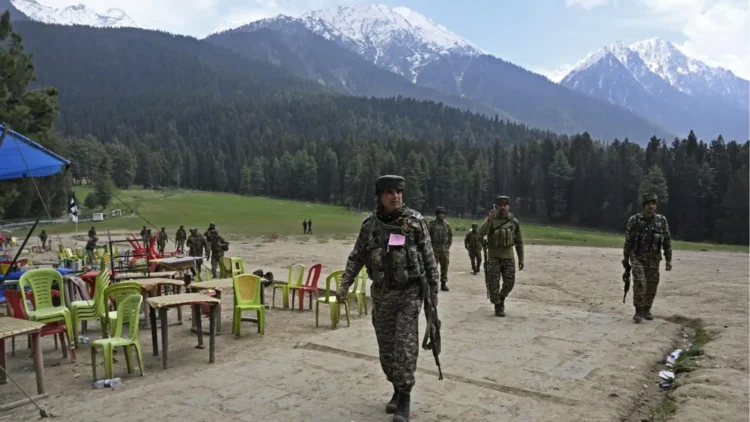
The deadly ambush, which occurred on 22 April in the scenic Baisaran meadows of Pahalgam, targeted a group of tourists, killing 26 people, including mostly civilians from outside the region. The attack prompted a fierce military and diplomatic confrontation between India and Pakistan, with both sides accusing the other of harbouring and sponsoring extremist violence.
In its filings, the NIA accused the militant groups and seven individuals including a key handler believed to be operating out of Pakistan of waging war against India under multiple stringent sections of Indian law.

AD: Oysterian Sea Food Restaurant And Bar
These include provisions of the Unlawful Activities (Prevention) Act, the Bharatiya Nyaya Sanhita 2023, and the Arms Act 1959, all of which carry severe penalties for acts of terrorism and violent conspiracy.
Deepening Legal and Diplomatic Fallout
One of the most significant aspects of the chargesheet is the formal naming of Lashkar-e-Taiba as a legal entity for its alleged role in the attack, a step that underscores India’s intent to hold not only individuals but also organisational structures responsible under domestic legal frameworks. Alongside LeT, its proxy TRF has been accused of aiding in the logistics, communication and execution of the strike.
The chargesheet identifies Sajid Jatt, described by investigators as a senior LeT figure and TRF commander, as the principal handler orchestrating the assault from a base in Pakistan.
Prosecutors allege encrypted communications between Jatt and the operatives on the ground were crucial in coordinating the movements of the attackers across the Line of Control, India’s de facto border with Pakistan-administered territories.
Also named are three Pakistani nationals who allegedly carried out the killings at the popular tourist site. Indian security forces killed these individuals during a July counter-terror operation known as Operation Mahadev in the Dachigam forest near Srinagar.
The NIA names them Faisal Jatt (also known as Suleman Shah), Habeeb Tahir (Jibran) and Hamza Afghani and alleges they were tasked with selecting and engaging targets during the assault.
Two local associates were also charged for sheltering and assisting the militants in the days leading up to the attack, providing food and refuge in a seasonal hut in Pahalgam. Their arrest in June and subsequent cooperation with investigators helped to identify the three principal attackers and link them directly to Pakistan-based terror networks.
India’s decision to pursue formal legal action against the groups and individuals is seen both as a prosecutorial milestone and a symbolic assertion of accountability in cross-border terrorism cases.
Legal analysts say the detailed documentation of encrypted communications, forensic evidence and eyewitness accounts seeks to make a robust case that goes beyond diplomatic blame and into the realm of judicial scrutiny.
The timing of the chargesheet coming nearly eight months after the attack reflects intensive investigatory work undertaken by the NIA, which questioned hundreds of individuals and sifted through significant amounts of technical and forensic material.
Investigators report that mobile phones recovered from the sites of ensuing operations contained biometric data and encrypted messages directly tying the operatives to Pakistan, bolstering claims of cross-border involvement.
India’s sustained focus on legal documentation comes amid wider tensions in the region. The attack had already triggered a four-day military escalation in May, with New Delhi carrying out precision strikes against what it described as terror infrastructure across Pakistan and Pakistan-occupied Kashmir.
The standoff was only defused after international diplomatic efforts encouraged both sides to de-escalate.
Islamabad has consistently denied India’s allegations of state-sponsored terrorism and rejected assertions that it harbours or directs militant operations against its neighbour. Earlier responses from Pakistani authorities characterised India’s claims as politically motivated and lacking substantiation, amplifying long-standing distrust between the two nuclear-armed states.
Internationally, the attack has drawn varied responses. Some Western governments have publicly acknowledged the threat posed by transnational militant networks in South Asia, with certain lawmakers in the United States supporting India’s characterisation of Pakistan-linked terror group involvement.
These acknowledgements have appeared to bolster New Delhi’s diplomatic position in global counter-terrorism forums.
Regional Impact and Broader Security Implications
The Pahalgam attack and subsequent legal action have had far-reaching effects well beyond the immediate judicial process. For many in India, the chargesheet represents a moment of closure in a case that brought intense national grief and triggered debates about border security, intelligence gathering, and counter-terrorism readiness.
The meticulous compilation of evidence is intended to send a clear message about India’s resolve in combating terrorism and holding perpetrators to account through law as well as force.
The incident also intensified scrutiny of militant groups that operate under shifting names or in fractured organisational structures, complicating counter-terror operations.
The NIA’s move to charge both LeT and its offshoot TRF as entities signals a recognition that proxy groups often serve as a strategic buffer for larger organisations, providing plausible deniability while enabling trained cadres to conduct violent acts.
For governments across the region and for communities living in sensitive border areas the chargesheet underscores the persistent security challenges along the Line of Control.
Tourism, local livelihoods and inter-community relations were all shaken by the April attack, which targeted civilians in a space previously known more for its scenic beauty than for militant violence. The gravity of the target choice underscored militants’ intent to ignite communal tensions and disrupt fragile peace.
Indian officials have emphasised that the chargesheet is not the end of legal proceedings. Court hearings and judicial scrutiny are expected to unfold over months or years, with prosecutors and defence lawyers presenting arguments before the special NIA court.
The evidentiary burden and legal nuances of prosecuting foreign-based individuals and groups pose challenges, particularly where cross-border extradition and cooperation remain politically fraught.
The wider geopolitical context cannot be ignored. The Pahalgam chargesheet has heightened tensions between the two South Asian neighbours, already divided by historical disputes and territorial claims. Strategic analysts believe that legal developments will feed into ongoing diplomatic negotiations, military postures, and international perceptions of both countries’ counter-terrorism strategies.
Yet, amid the heightened rhetoric, some voices call for renewed focus on grassroots peacebuilding and conflict de-escalation. Civil society groups and regional stakeholders warn that judicial actions, while necessary, must be complemented by dialogue and cooperative security frameworks to prevent future tragedies.
Balancing justice with long-term stability remains a central challenge for policymakers on both sides of the border.
The Pahalgam chargesheet marks a significant chapter in India’s legal and security narrative, even as regional dynamics continue to evolve.
With allegations of cross-border terrorism framing key legal arguments, the case will test the efficacy of domestic law in addressing international militancy and shape South Asia’s approach to counter-terror cooperation and conflict resolution in the years ahead.

AD: Heritage And Restaurant Lounge Bar