
By Charlotte Wester-
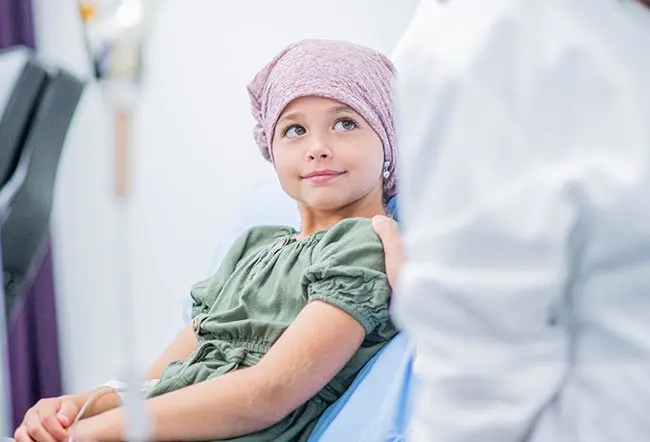
Children diagnosed with brain tumours across the UK are experiencing deeply inconsistent levels of care depending on where they live, according to a new comprehensive review by the Tessa Jowell Brain Cancer Mission (TJBCM). The review covering 15 of the 17 paediatric neuro-oncology services in the UK reveals worrying disparities in access to diagnostic tests, support services, rehabilitation, play therapy, and clinical trials.
Families and advocates warn the findings expose a postcode-based “lottery” determining whether a child receives high-quality treatment or waits.

AD: Capeesh Restaurant
The report’s findings have already reignited calls for urgent reforms within the National Health Service (NHS) to guarantee equal treatment for all children with brain tumours, regardless of region.
The TJBCM review draws a striking picture of inconsistency. In some centres, children benefit from rapid genetic testing, specialist rehabilitation, and access to play specialists and educational support throughout their treatment. In others, long delays on key diagnostic procedures such as whole-genome sequencing have been recorded.
Many centres report a serious shortage of rehabilitation staff, meaning that children living far from major hospitals may receive minimal or no specialist aftercare.

AD: Oysterian Sea Food Restaurant And Bar
The study also found that fewer than half of children treated at certain sites had access to a play specialist professionals who help young patients cope emotionally with the stress and disruption of cancer treatment. Educational support during prolonged hospital stays, essential for children missing weeks or months of school, was also uneven.
Crucially, access to clinical trials which often provide cutting-edge treatments unavailable elsewhere was heavily dependent on location. Many families living outside major urban centres were unable to participate due to geography, lack of trial-site proximity, or delays in genetic and tissue testing required for eligibility.
Parents testifying during the review described moments of “exceptional care” juxtaposed starkly with gaps in support. One bereaved mother, whose son George died from a glioblastoma at age 13, said that while some treatment was very good, she encountered “stark disparities in access geographically and in support services.”
She summed up the painful reality: whether a child lives in a big city like London or a small town could dramatically shape their treatment journey.
TJBCM’s chief executive emphasised that no child’s care should depend on their postcode. The organisation has produced a “road map” of reforms urging standardisation across all paediatric neuro-oncology services.
What the Report Means for the NHS
The review coincides with the establishment of a national network of 15 children’s brain tumour centres, including six that have been awarded the status of “Tessa Jowell Centre of Excellence.”
These centres among them Great Ormond Street Hospital (GOSH), University College London Hospitals NHS Foundation Trust (UCLH), and Sheffield Children’s NHS Foundation Trust met rigorous standards across treatment, care, research and aftercare, demonstrating what “gold-standard” paediatric neuro-oncology should look like.
Nonetheless, the majority of services fall below these standards. Critics argue that the existence of “Centres of Excellence” without ensuring equivalent support nationwide simply entrenches inequality. Just because some children receive excellent care does not justify continuing a system where many receive substandard treatment.
Medical experts emphasise that consistent access to genetic testing especially whole-genome sequencing is vital. Sequencing tumour tissue can reveal mutations that open doors to specific targeted therapies, often available only through clinical trials, improving long-term outcomes.
Delays or failures in testing limit children’s chances of benefiting from advances in precision medicine.
Campaigners are now demanding that the NHS commit to guaranteeing: prompt genetic and tissue testing regardless of location; consistent access to psychological support, rehabilitation and play/educational specialists; and equitable opportunity for all young patients to enroll in clinical trials.
Some NHS trusts have responded by expanding resources at designated centres, enhancing aftercare services, and improving coordination between hospitals and community care. But experts insist these remain insufficient when large geographic areas still lack comprehensive services.
Families continue to face a harsh reality: a child’s postcode can determine not only quality of care, but immediate access to lifesaving clinical trials. That unpredictability breeds anxiety, undermines trust, and can cost time and that could be crucial for survival.
The TJBCM review serves as a stark reminder that nearly a decade after the establishment of specialised children’s brain tumour centres, the UK still lacks a unified standard of care. For children and families confronted with one of the most serious diagnoses possible, survival should not depend on geography.
The urgent task now is transforming the report’s road map into tangible, nationwide reforms because in matters of life and death, postcode should never be a lottery.

AD: Heritage And Restaurant Lounge Bar