
By Ben Kerrigan-
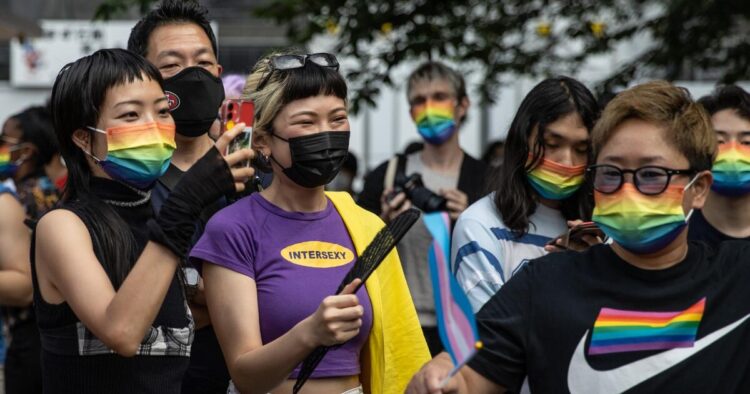
A major ruling from the Tokyo High Court has upheld Japan’s existing prohibition on same-sex marriage, dealing a significant blow to equality campaigners and setting up a likely eventual review by the nation’s highest court. The decision stands in stark contrast to a wave of lower-court judgments across Japan that have found the ban unconstitutional — marking a sharp turn in the judicial debate over LGBTQ+ rights.
On 28 November 2025, the Tokyo High Court issued its judgment in a lawsuit brought by eight plaintiffs — including same-sex couples and a transgender man — who argued that the country’s failure to legally recognise their relationships violated their constitutional right to equality, marriage, and dignity.

AD: Capeesh Restaurant
Presiding Judge Ayumi Toa declared that Japan’s current legal framework — under which marriage is reserved for “husband and wife,” and which is defined as a union between a man and a woman — does not breach the Constitution. In the court’s view, the Civil Code and Family Registration Act’s exclusion of same-sex couples from marriage remains “constitutional,” as the traditional understanding of marriage as between opposite sexes continues to be valid under Japanese law.
In addition to rejecting the key constitutional arguments, the court dismissed the plaintiffs’ request for compensation — 1 million yen each — for emotional and legal disadvantage. The judges said they could not hold the state liable for failing to reform the law, particularly while the longer legal and social debate continues.
By doing so, the Tokyo High Court became the only high court — out of six major cases heard nationwide — to uphold the ban. The other high courts, in cities such as Sapporo, Osaka, Nagoya and Fukuoka, had previously ruled that limiting marriage to opposite-sex couples violated constitutional guarantees of equality, dignity and protection under the law.

AD: Oysterian Sea Food Restaurant And Bar
The Tokyo ruling changes the terrain of the legal fight: while previous wins gave hope that a nationwide shift toward legal recognition might be unstoppable, the new decision underscores how deeply contested the issue remains — especially within Japan’s judiciary.
The verdict triggered immediate disappointment from LGBTQ+ rights groups and human rights organisations. Amnesty International described the decision as “a significant step backwards for marriage equality in Japan,” warning that the ruling “cannot be allowed to hamper progress.” The group called on the government to move swiftly to enact legislation that legally protects same-sex couples.
For many couples, the decision felt like a re-assessment of their very rights — not based on social acceptance, but judicial interpretation. One plaintiff was quoted saying the outcome was “deeply disappointing,” though vowing to press on with appeals.
Analysts interpret the Tokyo High Court’s ruling as more than a legal outcome — as a political signal. The court reaffirmed a traditional view of family structure at a moment when Japanese society, especially among younger generations and urban populations, appears increasingly sympathetic to marriage equality.
The timing — after a series of lower court victories — suggests the judiciary may be trying to slow momentum and leave the ultimately decisive judgment to the Supreme Court of Japan. Indeed, many expect the plaintiffs will appeal.
That sets the stage for what could become a landmark constitutional review — not just of marriage laws, but of whether Japan’s post-war legal framework can accommodate changing social norms around identity, dignity, and family.
Meanwhile, the ruling has renewed pressure on the government. Even before today, Japan was the only G7 country that did not recognise same-sex marriage or provide full legal protections for same-sex couples.
Calls are growing louder for the legislature — the National Diet — to act. Advocates argue recent laws intended to promote “understanding” of LGBTQ+ people are insufficient and urge real legal reform to guarantee equality under family, inheritance, tax, and social security laws.
For same-sex couples in Japan, the Tokyo decision reinforces a legal limbo: socially, many enjoy growing acceptance — but legally, they remain excluded from fundamental rights enjoyed by heterosexual couples.
The stakes are not only symbolic. Without marriage rights, couples face practical disadvantages: from inheritance and property rights to parental recognition, joint taxation, pension survivor benefits, hospital visitation rights — all aspects of life where legal recognition of relationship matters.
Lower-court rulings had recognised that these disadvantages amounted to serious inequalities under Articles 13, 14 and 24 of the Constitution.
But for now, those judicial protections are uncertain and vary by jurisdiction. The Tokyo High Court’s decision enshrines a divide: depending on where a same-sex couple might live or file suit, their rights could be judged fundamentally differently.
In that sense, the case — and its appeal to the Supreme Court — may shape not only the fate of marriage law, but that of civil rights, equality jurisprudence, and future legislation.
Meanwhile the social climate grows more complicated. Polls show rising public support for same-sex marriage, especially among younger Japanese and urban residents, but conservative legal and political institutions remain resistant. The government’s ruling party — the Liberal Democratic Party (LDP) — continues to oppose formal marriage reforms, citing traditional family values and concerns over social stability.
If the courts are increasingly fragmented, the choice is effectively being deferred to the political arena — and that means progress may depend more on parliamentary change than judicial activism.
The Tokyo High Court’s ruling underscores how legal interpretations — not just social sentiment — can shape fundamental rights. Today, same-sex couples in Japan face a harsher legal reality than they did even a few months ago.
Yet despite this setback, the broader trajectory of Japanese judicial rulings remains remarkable: five out of six high-court cases nationwide have now declared the lack of legal recognition unconstitutional. That suggests mounting pressure on the government and points toward a growing divergence between courts and legislation.
With a Supreme Court appeal likely, the coming months may determine whether the Japanese Constitution — originally drafted in a different era — will be reinterpreted for modern understandings of family, identity and equality.
For same-sex couples and LGBTQ+ citizens across Japan, that decision cannot come soon enough.

AD: Heritage And Restaurant Lounge Bar