
Isabella WIlson-
A dramatic escalation in Venezuela’s dispute with the United States saw the government on 27 November 2025 revoke the operating rights of six major international airlines after they halted flights to the country.
The move — announced by the national civil aviation authority — marks a major rupture in air connectivity and illustrates how geopolitical tensions are increasingly shaping commercial aviation in Latin America.

AD: Capeesh Restaurant
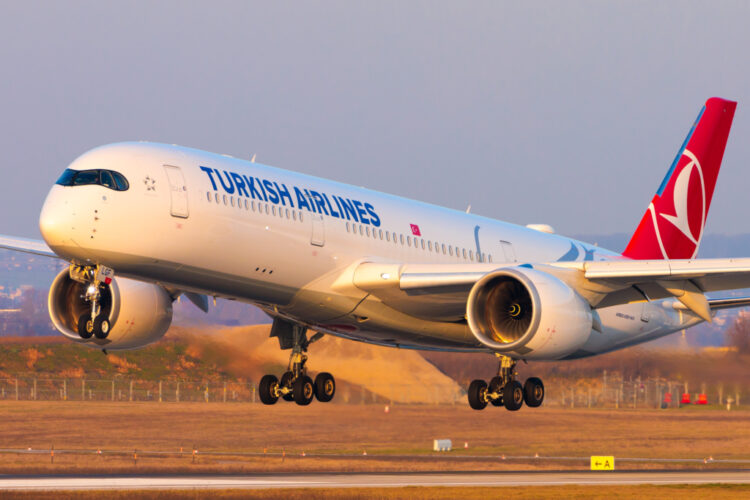
The affected carriers — Iberia, TAP Air Portugal (TAP), Avianca, LATAM Airlines (LATAM Colombia), Turkish Airlinesand GOL Linhas Aéreas — will no longer be permitted to operate flights to or from Venezuela. Caracas justified the bans, accusing the airlines of “joining actions of state terrorism promoted by the United States” by suspending flights.
The airlines had grounded their Venezuela routes after the Federal Aviation Administration (FAA) issued a warning about potential dangers in Venezuelan airspace, citing heightened military activity and a deteriorating security situation.
From warnings to bans: how tensions over airspace erupted

AD: Oysterian Sea Food Restaurant And Bar
The crisis unfolded earlier this week when the FAA issued an alert to international carriers, advising caution for flights over Venezuela. The warning came amid a surge in military deployments in the Caribbean by the U.S., which Caracas views as part of a broader campaign against its government.
In response to the FAA warning, several airlines — led by Iberia and TAP — suspended their Venezuela services. Within days, the Venezuelan government issued a stern ultimatum: resume flights within 48 hours or lose operating licences. When the deadline passed without compliance, Caracas revoked the airlines’ permits.
According to officials, the decision reflects Venezuela’s insistence on sovereignty over its airspace and rejection of what it perceives as outside interference. One senior official told reporters, “You keep your planes, and we will keep our dignity.”
Critics — including foreign governments and aviation analysts — say the response is disproportionate and risks isolating Venezuela further. They argue that the airlines suspended flights only because they believed the security risk was real. As the Portuguese foreign minister put it, the airlines were acting out of “safety concern” rather than political alignment.
The fallout is tangible. For now, some carriers such as Copa Airlines and select domestic Venezuelan airlines continue limited operations. But the bans disrupt thousands of passengers’ plans, threaten commerce and trade links, and further isolate a country already navigating deep economic and political crises.
The revocation of six major airlines’ licences dramatically shrinks Venezuela’s international access. For diaspora communities, business travel, tourism, and cargo shipping, the impact will be immediate and painful. Across Latin America, Europe, and beyond, flights once taken for granted are now cut off — indefinitely or until the situation changes.
Many Venezuelans living abroad rely on direct flights for family visits, remittances, and essential goods. With major operators gone, they may face longer, more expensive routes — or be unable to travel at all. Trade flows, air cargo of essential items like medicines or food, and even humanitarian aid may also be disrupted.
The move is likely to hit Venezuelan diaspora communities in Spain, Portugal, Colombia, Brazil, and beyond hardest — precisely the countries whose carriers have been banned.
Caracas’s decision is more than just an aviation policy — it’s a signal of defiance. By accusing the airlines of “state terrorism,” and casting the suspensions as part of U.S.-backed aggression, the Venezuelan government is reframing flight cancellations as political acts, not safety measures.
That framing feeds into a broader standoff with Washington, which has increased military deployments around the Caribbean under a campaign the U.S. describes as targeting drug trafficking. Venezuelan President Nicolás Maduro and his government, however, argue the deployments are a pretext for regime change and have responded with their own defensive rhetoric.
The airline bans add a new dimension: they turn what was previously an aviation safety debate into a fully fledged diplomatic and political crisis. Put simply — flying to Caracas is now not just dangerous, but politically charged.
What’s next and why the world is watching
For passengers stranded in limbo, the immediate concern is whether and when flights will resume. Some affected airlines have expressed openness to returning once safety conditions improve.
But for many analysts, the bigger question is whether the bans are a temporary retaliation — or part of a longer-term strategic shift. As tensions escalate between the U.S. and Venezuela, diplomatic isolation combined with restricted air travel could deepen the country’s economic and humanitarian crisis.
Observers fear that Venezuela may rely increasingly on smaller carriers, regional airlines, or domestic flights — but such rerouting cannot fully replace the global connectivity lost. Trade, tourism, remittances, family links — everything becomes harder.
The bans also raise legal and regulatory issues. International aviation norms generally discourage politicising flight access. If countries begin revoking licences in response to geopolitical disputes, airlines may reconsider global route strategies — and the precedent could destabilise international air travel more broadly.
For now, the airlines affected by the ban must choose between compliance with a government they view as illegitimate, or maintaining a presence abroad but cutting off a key Latin American route. Some analysts expect that if diplomatic relations worsen — or if U.S.-linked pressure intensifies — further carriers may be targeted.
With Monday’s decision to revoke operating permits for six major airlines, Venezuela has dramatically reshaped its relationship with global air transport. The move underscores how quickly air travel can become a tool of political confrontation — not simply a matter of safety or business.
The impact for ordinary citizens and businesses is immediate and painful. The case marks a dangerous moment for governments and international bodies when international aviation is weaponised, and safety warnings become pretexts for political retaliation.

AD: Heritage And Restaurant Lounge Bar