
By Lucy Caulkett-
A serving city councillor has appeared in court charged with a raft of child-sex offences , including rape and possession of indecent images — prompting urgent questions about political vetting and public trust.
The allegations, brought against one of the youngest members of the council, have shocked residents, colleagues and child-protection campaigners alike.

AD: Capeesh Restaurant
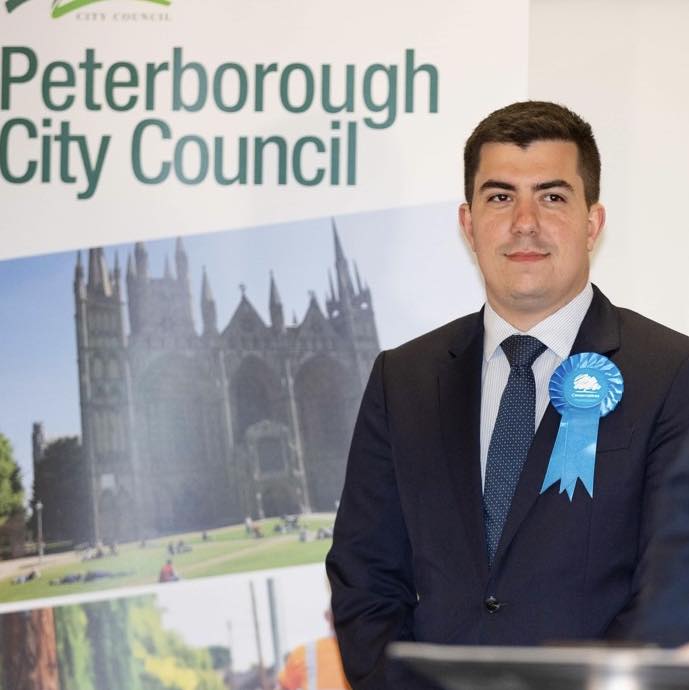
Rylan Ray (pictured)- a 25-year-old representative for the Peterborough City Council, serving the Eye, Thorney and Newborough ward — appeared at Huntingdon Magistrates’ Court on 27 November 2025 after he was charged with 26 serious sexual offences.
The charges are extensive and deeply troubling. They include: one count of rape, sexual activity with a child under 16, multiple counts of causing a child under 16 to engage in sexual activity, causing a child to watch a sexual act, sexual assault, sexual communication with a child, making indecent images of children, and possession of prohibited and extreme pornography.
Ray was elected in 2022. Despite the severity of the allegations, under local-government rules he remains formally a councillor — unless convicted and sentenced to three months or more in prison. In response to the charges, his political party — the Conservative Party — has suspended him from the party group “with immediate effect.”

AD: Oysterian Sea Food Restaurant And Bar
Council leaders have described the allegations as “appalling,” while emphasising that they will not interfere with the ongoing legal process.
Ray was remanded in custody and is due to appear at Cambridge Crown Court in January 2026 for further proceedings.
The news has sent shockwaves through Peterborough and beyond. Councillors often hold public trust and are entrusted with representing community interests, including the welfare of children and vulnerable people. When someone in such a position is accused of serious child-sex crimes, the breach of trust is profound.
In recent years, other elected officials accused or convicted of child-sex offences have sparked public outcry and demands for systemic change. For instance, a 2025 conviction of a councillor elsewhere in the UK for abusing a teenager renewed calls for stricter vetting and safeguarding procedures for public-office holders.
Critics argue that the existing system allows individuals to gain and retain positions of authority — even after serious allegations emerge — if they remain unconvicted.
In this case, Ray continues to occupy his council seat despite the charges, highlighting a gap between public expectation and legal thresholds for disqualification.
There is growing pressure for local authorities and political parties to adopt more robust vetting practices — especially for councillors who have worked with youth, schools, or community services. In Ray’s declared background, he previously worked in schools and volunteered with youth organisations and a cadet force — roles that understandably intensify public concern.
Advocates for child protection also warn that swift and transparent suspension, stronger oversight, and clearer safeguarding obligations must become the norm. For many, this case serves as a stark reminder that democratic representation requires more than periodic elections — it demands ongoing accountability and ethical responsibility.
The next critical stage of the case will be the hearing at Cambridge Crown Court in early January 2026, where full evidence is expected to be considered. Until then, Ray remains in custody, and no plea has been entered.
During that time, the council has limited options — legal rules prevent automatic removal from office based solely on charges. Some politicians have called for emergency reforms to allow immediate suspension of elected members facing credible serious allegations, especially when those allegations involve children.
Public reaction in Peterborough suggests deep unease. Many residents are reportedly questioning whether enough was done during the candidate vetting process, and whether the broader system sufficiently prioritises safeguarding over political convenience.
Elsewhere in the UK, the story adds to a worrying pattern of officials abusing their positions of trust. Recent convictions of fellow councillors on child-sex charges underscore a broader debate: should there be a nationwide review of political recruitment, oversight, and accountability systems?
Finally, for survivors, victims, and community members — especially families — this case is more than political scandal. It raises serious questions about protection, prevention, and whether public institutions are doing enough to prevent those in authority from exploiting children’s vulnerability.
Campaigners argue this should prompt not only legal action but cultural and institutional reform: open review of safeguarding standards, mandatory background checks, and better support for victims.
The charges against Rylan Ray have shaken Peterborough and reignited concerns about safeguarding, political responsibility and public trust. As the case moves through the courts, it will test not only the criminal-justice system, but the values underpinning political representation.
If justice is to be meaningful, the process must be transparent, survivors must be heard and supported, and political institutions must reflect society’s expectation that those elected to serve do so with integrity, not just until allegations emerge, but at all times.
The outcome in court, in public opinion, and in policy — could have profound implications for how elected office is regulated, how candidates are vetted, and how communities are protected. For now, residents wait. And for many, the question remains: can trust be rebuilt — and can systems be strengthened before it’s too late?

AD: Heritage And Restaurant Lounge Bar