
By Gabriel Princewill-
There has been an increase in the number of people accessing the police complaints system in England and Wales, figures released by the Independent Office for Police Conduct (IOPC) show.
The IOPC publishes extensive annual and quarterly data and reports on police complaints for England and Wales, available on their official website.

AD: Capeesh Restaurant
The Independent Complaints Commission(IOPC) revealed that the number of complaints logged by the 43 police forces rose to 94,940 between April 2024 and March 2025.
The regulator said it represents an 11 per cent increase on the previous 12 months and the most on record since the IOPC began collating and analysing complaints data.
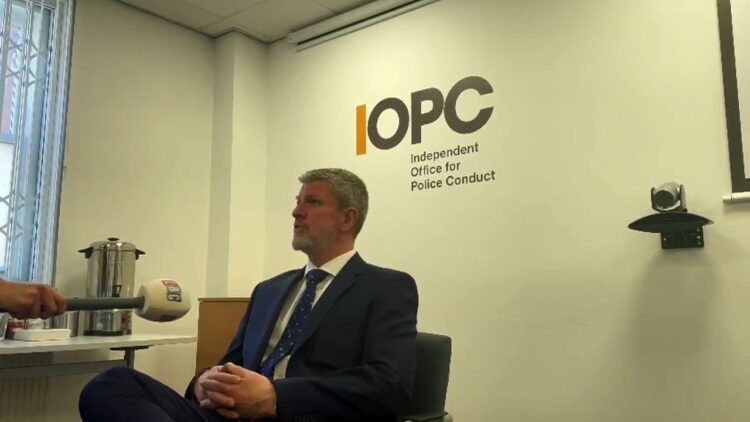
IOPC Director of Oversight and Casework, David Ford, acknowledged the increase but noted that many police forces have improved the way they handle and record complaints.

AD: Oysterian Sea Food Restaurant And Bar
He said: “We are seeing more public complaints being recorded, but it doesn’t necessarily mean that there is greater dissatisfaction with policing.
“We know some forces have improved their complaints handling process, centralising their receipt of complaints and decision-making systems. It is resulting in more matters being formally recorded and reported to us through their data submissions.
“The data also shows significant variations. While the total number of complaints has increased, some forces have reported a reduction in the number of complaints they received.
“The complaints data is an essential part of the IOPC’s oversight function, providing insights into complaints handling at national and force-level. We use this data to inform our ongoing oversight activities and engagement with forces, supporting improvements in complaints handling and performance, and identifying effective practices in complaints handling.
“Most importantly, members of the public need to have trust and confidence in the police complaints system. That’s what we’re here for, to hold policing to account in this regard. It’s right that if people believe they should have received better service from their police force, they know there is an avenue to raise concerns and ultimately, if appropriate, get independent scrutiny.”
A total of 91,750 complaints were finalised during the reporting year – a 12 per cent on 2023-24 – with around two-thirds resolved informally by forces and a third dealt with formally under Schedule 3 of the Police Reform Act 2002, the force said.
Of the 31,687 cases handled formally, 60 per cent had at least one allegation resulting in an explanation being given; eight per cent resulted in learning for an individual or a police force; and seven per cent ended with an apology or debrief, the regulator said.
The above statistics is less than impressive, and the comments of David Ford that the increase in access to the police complaints system does not reflect an increase in dissatisfaction with the police appears on the surface to be a show of favouritism towards the police by a highly placed member of the regulatory body. Indeed, higher access to the police complaint system does not prove a rise in dissatisfaction with the police, but makes that the more likely deduction than the contrary.
When The Eye Of Media.Com contacted the IOPC for a more thorough probe and analysis of their latest statistics, we were told the personnel that compiled the statistics was not immediately available to explain them. Neither did a written response come more than a couple of hours later.
The regulator did say that anyone dissatisfied with the way a complaint is handled by a police force can apply for a review which, depending on its nature, will either be considered by the Local Policing Body or the IOPC.
Last year in 2024, the IOPC received 2,428 applications to review complaints, an increase of 14 per cent on the previous year and the most received in a year under the current legislation.
The regulator said that of the 2,015 reviews completed in the 12 months, they found complaints were handled reasonably or proportionately by police forces in 70 per cent of cases.
David Ford, added: “It’s appropriate for most complaints to be dealt with by police forces themselves and they have specialist departments for this. The system allows for more complaints to be handled informally, where appropriate, with an apology or explanation.
“However, a person can request a review if they are unhappy with the way their complaint was handled.
“The number of requests we’ve received to review police complaint investigations has increased. These are detailed independent reviews in which we examine all actions taken by the respective force to resolve the complaint and determine if the proposed outcomes are reasonable and proportionate.
“It’s encouraging that 70 per cent of the reviews we carried out concluded police forces had handled complaints appropriately. This is an improvement on the previous year.
“There are numerous factors driving these improvements, but I believe it demonstrates our Right First Time oversight work with police forces – ensuring complaints are handled the right way to stop the time-consuming cycle of complaints being investigated and reviewed numerous times – is delivering results.
“This is another important strand of the IOPC’s work, ensuring there is independent scrutiny and oversight in the complaints system, in order to increase public confidence in this area.”
The Independent Office for Police Conduct (IOPC) has highlighted the importance of public trust in the police complaints system and believes it is right that people know they have an avenue to raise concerns.
The IOPC has on a number of occasions found police forces guilty of misconduct or having a case to answer, but have also sometimes been found to be appear to be soft or inadequate in ensuring accountability when serious complaints have been raised by aggrieved complainants.
Complaints can be made directly to the relevant police force (usually the professional standards department), by calling 101, or via the IOPC website, which forwards the details to the force concerned. If a person makes a complaint, they are an “interested person” and are entitled to receive updates every 28 days and the final outcome of the complaint handling process.
In serious cases investigated by the IOPC, the person who complained receives a copy of the investigation report. If a complainant is unhappy with how their complaint was handled or the outcome, they can apply for a review, which is considered by either the local policing body or the IOPC, depending on the nature of the complaint.
The public has a right to access recorded information held by public authorities, including police forces and the IOPC, under the Freedom of Information Act 2000.
However, this right is subject to exemptions, and generally does not provide access to the personal information of other people or full access to investigation documents, only specific data that is personal to the applicant.
The IOPC publishes extensive annual and quarterly data and reports on police complaints for England and Wales, available on their official website.
These reports provide aggregated, anonymized data and insights into trends, types of complaints, and outcomes. The IOPC emphasizes that the complaints data is a crucial part of its oversight function and is used to identify trends and inform improvements in police forces’ handling of complaints. They believe it is vital that the public has confidence in the system and that concerns are taken seriously.

AD: Heritage And Restaurant Lounge Bar