
By Gabriel Princewill-
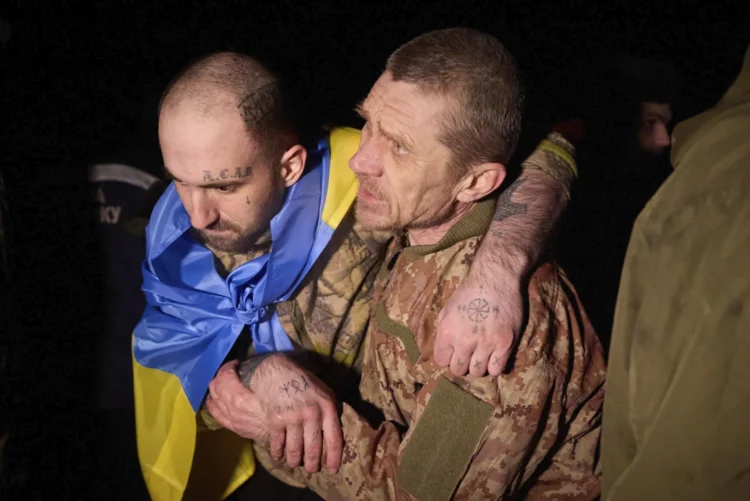
Health experts, human rights organisations, and international monitors are increasingly raising the alarm over the scale and severity of prisoner abuse in the ongoing Russia–Ukraine war. Reports of torture, executions, medical neglect, and other grave violations have surfaced in both Russian and Ukrainian captivity, prompting calls for accountability and urgent intervention.
Allegations of Widespread Torture in Russian Detention

AD: Capeesh Restaurant
Multiple investigations by the UN, Amnesty International, and other human rights bodies have documented ruthless treatment of Ukrainian prisoners of war (POWs) held in Russian custody. In a March 2024 report, the UN Human Rights Monitoring Mission in Ukraine (HRMMU) found that almost every single former Ukrainian POW interviewed described torture, including electric shocks, mock executions, prolonged stress positions, and beatings. More than half reported being subjected to sexual violence while detained. The United Nations in Ukraine
The scale of these abuses is staggering. According to a fact sheet published by OHCHR, 95% of the 454 released Ukrainian POWs said they were tortured or ill-treated while in Russian detention. A report states that Russian authorities have subjected Ukrainian POWs to systematic and widespread torture, including sexual violence, and poor conditions. Almost all (95%) of the 454 released Ukrainian POWs interviewed provided accounts of torture or ill-treatment in Russian captivity. Torture has been pervasive during interrogation and throughout all stages
of captivity. 237 of those interviewed were subjected to sexual violence.
Amnesty International, in a separate report, described the abuse as “systematic,” calling for Russian authorities to be held accountable. The ill treatment of Ukranians undoubtedly amounts to war crimes. According to one detainee, torture began almost immediately upon capture. Thousands of Ukranians are said to be missing under exceptional circumstances

AD: Oysterian Sea Food Restaurant And Bar
“They beat me with stun guns … it was very painful. I saw how the guys started to die after that … their hearts just couldn’t take it anymore.”
Amnesty also recounts instances of medical neglect. One wounded POW, Serhii Koroma, recalled receiving only a topical antiseptic and being otherwise abandoned to “heal or die”.
Conditions in detention facilities, according to a UK-invoked Moscow Mechanism investigation, often fall below international standards. Detainees are reportedly held in overcrowded cells, without adequate food or medical care, exposed to disease, and repeatedly transferred between facilities under duresss.
The OSCE Parliamentary Assembly issued a forceful condemnation of Russia’s treatment of POWs in June 2025. Its leaders highlighted reports of starvation, torture, forced confessions, and sexual violence in detention, including one chilling case in which a released soldier bore burn scars and the words “glory to Russia” carved into his body.
Human rights groups have also launched campaigns demanding that POWs and civilian detainees be prioritised in any future negotiations. In January 2025, Human Rights Watch joined Ukrainian and Russian civil society organisations in launching a “People First” effort, calling for detainee rights to be central to peace talks. Human Rights Watch
Meanwhile, a UK government-backed Moscow Mechanism report concluded that torture of Ukrainian POWs in Russian custody is widespread and systematic. GOV.UK The report notes “arbitrary killings,” coerced confessions, denial of fair trial rights, and “unsafe” transfers of prisoners — often involving forced labour. GOV.UK
Evidence of Deaths and Brutality
A grim tally from recent years underscores the human toll. According to a May 2025 Associated Press investigation, over 200 Ukrainian POWs have died in Russian captivity since the start of the full-scale invasion. In May this year, AP News reported on Autopsies on repatriated bodies frequently reveal signs of torture, decomposition, and mutilation — raising serious concerns that medical neglect or brutality played a role in many of the deaths. The Associated Press
One former detainee, Oleksandr Honcharov, told AP how years of chest pain and repeated beatings culminated in severe illness; upon release, he was diagnosed with tuberculosis — a disease commonly reported among former Russian prisoners.
The UN Independent Commission of Inquiry on Ukraine has called the treatment of POWs a crime against humanity. Human Rights Watch The commission documented patterns of torture, including suffocation, electric shocks, organised mock executions, and extreme sleep deprivation. Oscepa leaders have raised strong concerns about the treatment of Ukranian prisoners of war, with the United Nations indicating that over 95 per cent of released POWs have testified to violations of detention conditions, including torture, lack of medical care, and forced confessions.
Some of the most harrowing stories come from specific detention facilities. Taganrog Detention Center No. 2, near the Ukrainian border, has become infamous since 2022. Survivors recount regular beatings, electric shocks, forced patriotism, psychological humiliation, and isolation from the outside world.
In one particularly chilling testimony, a former senior official in Russia’s penal system said he’d been instructed: “Be cruel, have no pity on them,” highlighting that the harsh treatment of prisoners was not rogue behaviour — but a policy backed from the top reveals the true scale of torture and food deprivation Ukranian soldiers are subjected to by evil Russian soldiers.
Under the Geneva Conventions, POWs are guaranteed protection from torture, access to medical care, and communication with their families. But according to multiple international mechanisms, including the Moscow Mechanism and the UN, these protections are routinely violated in Russian detention.
The UK government, among others, has condemned these abuses, calling them “crimes against humanity.” In January, this year, Ambassador Barbara Woodward, UK Permanent Representative to the UN, rightly pointed out the responsibility Russia has to treat prisoners of war humanely. The continuing use of torture signals a disturbing level of impunity: detainees report that mock executions, death threats, and demands for televised confessions are standard interrogation methods.
Meanwhile, there’s limited access for international bodies. The International Committee of the Red Cross (ICRC) and the UN Human Rights Office reportedly face severe constraints visiting POWs in certain facilities, especially in occupied territories.
While the most damning allegations target Russia, reports also highlight mistreatment of Russian POWs in Ukrainian initial transit or unofficial detention sites. The Associated Press In a 2024 OHCHR interview, some 469 Russian POWs described beatings and threats during capture — though conditions reportedly improved once they reached formal internment camps.
Nevertheless, the scale and systematic nature of the abuse reported in Russian custody far eclipse claims made against Ukrainian forces. GOV.UK
Human Rights Groups Demand Action
Civil society and international agencies are pushing for accountability and reforms. Human rights organisations are calling on Russia to immediately grant access to independent monitors, particularly the ICRC, and to end secret detention, torture, and execution practices.
At the same time, many demand that the global community tie peace negotiations to strict guarantees for the humane treatment of all prisoners. The “People First” campaign aims to make detainee rights non-negotiable in any future exchanges.
There are also growing calls for war crimes trials. The OSCE and UN have documented so many allegations that advocates argue prosecutions are not only possible, but necessary — as a deterrent against future abuse.
The evidence paints a dire picture: tens of thousands of Ukrainian POWs may be enduring torture, starvation, and abuse at the hands of Russian captors.
“It is not just a breakdown of humanity,” said Oleksandra Matviichuk, a Ukrainian human rights lawyer. “It is a deliberate policy of degradation meant to break bodies and spirits, and to intimidate not just soldiers, but the entire nation.” According to Ukraine’s ombudsperson, 16,000 Ukrainian civilians are held unlawfully in Russia. Thousands of children who had been forcibly transferred to Russia.
In response, more governments and international institutions are demanding transparency, justice, and the enforcement of international humanitarian law. But despite mounting evidence, meaningful reforms — or even consistent access for monitors — remain elusive.
The future for many of the prisoners still in camps, the future is uncertain. Families wait in anguish, not knowing if they’ll ever hear from their loved ones again. The lack of transparency makes it hard to even determine who is detained where — complicating efforts to secure exchanges, medical care, or legal protection.
The global community now faces a fundamental practical question. Can justice for the broken souls behind barbed wire become a priority — or will the inaction continue?

AD: Heritage And Restaurant Lounge Bar