
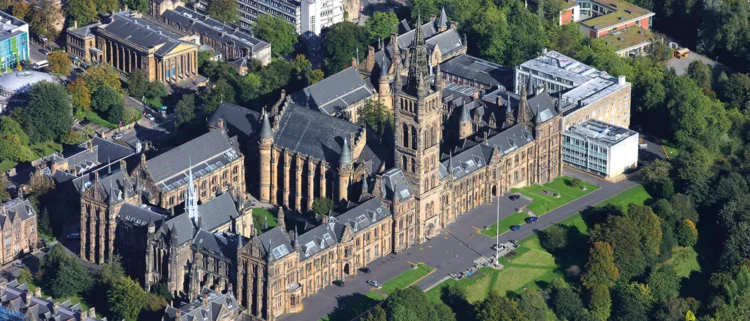
How students at Glasgow university are challenging Israel’s genocide in Palestine
By Chris Williamson-
The university of Glasgow is deeply complicit in Israel’s ongoing genocide in Palestine, according to aggrieved Palestinian students. Although the University of Glasgow (UoG) likes to present itself as a global leader in ethics, sustainability, and social responsibility, the stack reality is different. Its public image rests on the language of progressivism — of diversity, climate justice, and academic freedom. But in reality there is a deep seated hypocrisy unfolding.

AD: Capeesh Restaurant
For months, students at the University of Glasgow (UoG) have been locked in a tense standoff with their institution — demanding that it end its financial complicity in Israel’s ongoing genocide in Palestine. What began as petitions and sit-ins has now escalated into one of the most significant student protest movements in Scotland in years.
At the centre of the storm is a damning revelation: the university holds £6.8 million worth of investments in arms companies that supply weapons and technology used by Israel against the Palestinian people. Despite repeated calls from students, staff, and alumni to divest, UoG has refused to take meaningful action.
Instead, its leadership has doubled down — even going so far as to call in the police to suppress student occupations. But rather than intimidate campaigners, the crackdown has only strengthened their resolve.

AD: Oysterian Sea Food Restaurant And Bar
A Campus Divided
The protests are being led by the Glasgow University Justice for Palestine Society (GUJPS), a student group that has spent years pushing for transparency and accountability in the university’s investments. The group’s latest actions — including occupations, hunger strikes, and a new encampment outside the university library — have drawn nationwide attention.
As The National reported, the encampment was established when students pitched tents on the grassy area outside the university’s iconic library. The message was clear: they will not leave until UoG commits to full divestment from arms companies complicit in Israel’s war crimes.
The tents, festooned with Palestinian flags and banners calling for justice, have become a symbol of defiance — a small but determined space of resistance within an institution that has long prided itself on moral leadership.
This latest escalation followed the occupation of the Charles Wilson Building the previous week, during which students peacefully took over the space to demand an end to the university’s complicity in genocide. The administration’s response was swift and heavy-handed: they called in the police.
For many observers, this move crossed a moral line. Universities are meant to be bastions of free thought and debate — not places where students are met with police repression for exercising their right to protest. Yet Glasgow’s decision mirrors similar responses at other UK institutions, where administrators have increasingly turned to law enforcement to silence dissent over Palestine.
Despite police intervention, the movement shows no signs of slowing. In fact, the university’s hardline approach has backfired. Following the occupation and subsequent police involvement, the campaign has only grown in size and intensity.
The hunger strikers, now in their second week of refusing food, are demanding that UoG commit to ending its partnerships and investments in companies directly linked to Israel’s military apparatus. These include BAE Systems, Rolls-Royce, and Elbit Systems — corporations that manufacture the fighter jets, drones, and surveillance systems used in Israel’s attacks on Gaza.
According to human rights groups like Amnesty International and Human Rights Watch, these weapons have been used in indiscriminate bombardments that amount to war crimes under international law.
The students’ message is therefore simple: if Glasgow University continues to invest in these companies, it is complicit.
Institutional Hypocrisy
The University of Glasgow’s refusal to divest stands in stark contrast to its past moral commitments. In 2014, the institution became the first in Europe to divest from fossil fuels, citing its ethical responsibility to act on climate change. That decision was hailed as a landmark moment in university ethics — a recognition that institutions must align their investments with their values.
But when it comes to Palestine, that same moral courage seems to vanish.
Students have accused the administration of hypocrisy — of championing ethical leadership in some causes while turning a blind eye to others. As one protester put it during Monday’s rally:“They say they support human rights, but only when it’s convenient. Our university is profiting from genocide, and they want us to stay quiet about it.”
The administration’s strategy of repression — calling the police, issuing disciplinary warnings, and attempting to delegitimize protesters — suggests an institution more concerned with preserving its image than with upholding justice.
If the university hoped that police intervention and administrative threats would quell dissent, it has miscalculated badly. The student movement is growing, and it’s becoming increasingly organized. The encampment outside the library has become a hub of political education and solidarity. Each day, students hold teach-ins, film screenings, and open discussions about Palestine, imperialism, and the global arms trade. It’s a space that reclaims the university for its true purpose — learning, debate, and collective struggle.
As the tents multiply, so too does the sense of moral clarity. The students’ demands are not radical; they are rooted in international law and universal human rights. Their call for divestment echoes the global Boycott, Divestment, and Sanctions (BDS) movement, which seeks to pressure Israel to end its apartheid regime and comply with international law.

AD: Heritage And Restaurant Lounge Bar