
By Tim Parsons-
The biggest surprise of the 2026 FIFA World Cup is not a single upset but a growing trend. Across the tournament, nations once viewed as outsiders have matched, frustrated, and in some cases outplayed football’s traditional powers, signalling a shift in the balance of the global game.
Packed stadiums across North America to millions watching worldwide, the 2026 FIFA World Cup has produced a compelling storyline that emerging football nations are increasingly closing the gap on the sport’s traditional powers.

AD: Capeesh Restaurant
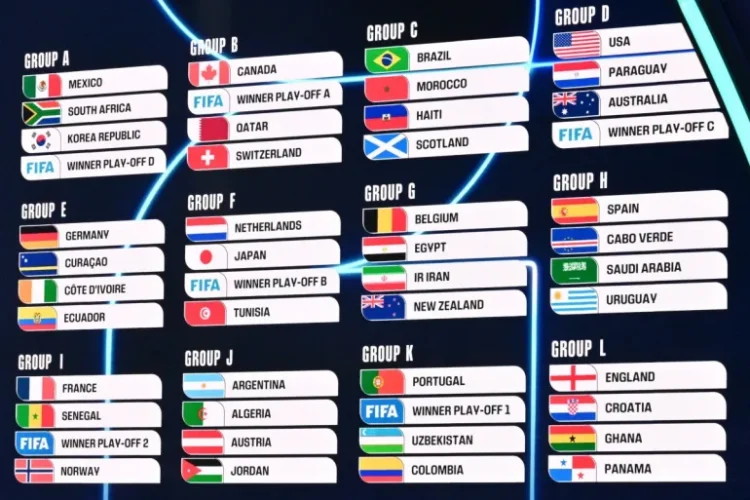
Results such as Cape Verde’s draw with Spain, Egypt’s stalemate against Belgium, Saudi Arabia’s point against Uruguay, and New Zealand’s impressive performance against Iran have demonstrated that teams once expected merely to participate are now capable of competing toe-to-toe with established contenders.
The latest round of matches offered compelling evidence. Cape Verde stunned the football world by holding Spain to a scoreless draw despite facing relentless pressure throughout the match. Spain dominated possession, completed hundreds more passes, and created numerous opportunities, yet could not break through a disciplined defensive structure led by veteran goalkeeper Vozinha.
The result instantly became one of the defining moments of the tournament and reignited conversations about the growing competitiveness of international football. Elsewhere, Egypt earned a hard-fought draw against Belgium, Saudi Arabia frustrated Uruguay, and New Zealand produced one of the most entertaining performances of the competition in a dramatic draw with Iran. On a single day, four matches involving underdogs ended level against higher-ranked opponents, a statistical rarity that reflected a broader trend unfolding across the World Cup.

AD: Oysterian Sea Food Restaurant And Bar
What makes these results particularly significant is not simply the scorelines. It is the manner in which these teams are playing. The traditional image of an underdog sitting deep, defending desperately, and hoping for a fortunate counterattack is increasingly outdated. Today’s emerging football nations are organised, tactically sophisticated, physically prepared, and unafraid to challenge established powers.
A New Generation Without Fear
For decades, football’s hierarchy appeared relatively fixed. Nations such as Spain, Brazil, Germany, Argentina, France, and Uruguay entered major tournaments with expectations of dominance. Smaller nations often arrived hoping merely to avoid embarrassment.
That mindset has changed dramatically. Cape Verde’s performance against Spain was not based on luck alone. Their defensive shape remained compact and disciplined for the entire match, while their players demonstrated confidence in possession whenever opportunities arose. Instead of panicking under pressure, they trusted their system and executed it with remarkable consistency.
New Zealand offered another example. Ranked significantly below Iran, the Oceania side refused to be overwhelmed by reputation. Their attacking approach created one of the tournament’s most entertaining encounters, showing that lower-ranked teams are increasingly willing to express themselves rather than merely survive.
The evolution extends beyond individual matches. Many of these nations have spent years investing in player development, coaching education, and tactical modernisation. The results are now becoming visible on football’s biggest stage.
Ecuador, for instance, entered the tournament with an impressive qualifying campaign and a defensive record that rivalled some of the world’s best teams. Former Manchester United captain Antonio Valencia recently described his country as a potential “surprise package,” citing a generation of players competing at elite European clubs and bringing invaluable experience back to the national team.
Morocco represents perhaps the clearest symbol of this transformation. After reaching the semifinals in Qatar in 2022, the North African nation no longer considers itself an underdog. Head coach Mohamed Ouahbi recently stated that Morocco now views itself as capable of competing with anyone, reflecting a confidence earned through years of consistent progress.
The expanded 48-team format has also contributed to this shift. Critics initially feared that adding more nations would dilute quality and create one-sided contests. Instead, the opposite appears to be happening.
More teams have gained exposure to elite competition, and many have arrived better prepared than expected. Recent tournament results suggest that football’s global development has advanced far beyond what rankings alone can measure.
The Future Belongs to the Brave
The success of these underdogs is reshaping the psychology of international football. In previous tournaments, smaller nations often entered matches against traditional powers burdened by history. Today, many players have grown up competing in the same academies, leagues, and competitions as their more famous opponents. The aura that once surrounded football’s elite has diminished.
Players from Cape Verde, Morocco, Ecuador, Ivory Coast, and other emerging nations now compete weekly in Europe’s top leagues. They share dressing rooms with superstars, face elite opposition regularly, and arrive at international tournaments believing they belong. That confidence is becoming one of the sport’s most powerful equalisers.
Statistics from the opening stages of the World Cup reinforce the trend. Several lower-ranked teams have already secured unexpected results against nations ranked considerably higher. Analysts who predicted comfortable victories for established powers have repeatedly been forced to revise their expectations as supposedly weaker teams continue to demonstrate resilience and tactical intelligence.
The phenomenon is not entirely new. Football history is filled with unforgettable underdog stories, from Senegal defeating defending champions France in 2002 to Saudi Arabia’s stunning victory over Argentina in 2022. What feels different in 2026 is the frequency with which these performances are occurring. Rather than isolated shocks, they are becoming a recurring feature of the tournament.
Fans have embraced the unpredictability. Social media discussions and football forums have been dominated by debates over which emerging nation might become the next great tournament story. Many supporters now view teams such as Ecuador, Ivory Coast, and Cape Verde as genuine threats rather than sentimental favourites.
The implications extend beyond this World Cup. Success on the global stage inspires investment, participation, and belief within developing football nations. Young players watching their national teams compete with traditional powers gain evidence that international success is achievable.
Federations gain leverage for infrastructure projects and youth development programs and entire football cultures can be transformed by a single tournament run.
The competition enters its next phase, the established powers remain favourites to progress deep into the tournament. Their talent, experience, and resources still provide significant advantages. Yet the events of recent days have delivered a clear message: reputation alone is no longer enough.
The underdogs are not simply surviving, they are competing. They are dictating portions of matches. They are earning respect rather than requesting it. Most importantly, they are changing the way football’s global hierarchy is perceived.
In a tournament already filled with surprises, one truth has emerged above all others. The world game’s future may not belong exclusively to the traditional giants. It may belong to the nations bold enough to believe they can challenge them. And in 2026, that belief is proving remarkably powerful.

AD: Heritage And Restaurant Lounge Bar