
By Theodore Brown-
In 1961, astronomer Frank Drake proposed a mathematical framework for estimating the number of communicative civilizations in our galaxy. Known as the Drake Equation, it factored in variables such as the rate of star formation, the fraction of stars with planets, and the likelihood of life developing.
At the time, most of those variables were educated guesses. Today, they are increasingly measurable.

AD: Capeesh Restaurant
Thanks to missions like the Kepler Space Telescope, scientists now know that planets are not rare anomalies. They are the norm. Our galaxy alone likely contains hundreds of billions of planets. Many orbit within the so-called “habitable zone,” where temperatures allow liquid water to exist.
Recent data from the James Webb Space Telescope has gone even further, analyzing the atmospheres of distant exoplanets for chemical signatures such as methane, carbon dioxide, and potentially even biosignatures — gases that, on Earth, are strongly associated with life.
The implication is staggering because statistically speaking, it would be more surprising if life does not exist elsewhere. But what that life comprises is of remains the subject of research and exploration.

AD: Oysterian Sea Food Restaurant And Bar
If the existence of life exists out there, and such life host aliens, what are the aliens and their full capacity and capabilities? Once living beings or living objects , not accounted for in this life with all our sophisticated technology, can be proven to exist in this dimension, then we call those aliens. Exactly where they reside and their ultimate purpose is the object of ongoing inquiry.
Astrobiologists argue that once basic conditions are present — water, energy, organic molecules — life may emerge naturally. On Earth, life appeared relatively quickly after the planet cooled. Some researchers interpret this as evidence that life is not a cosmic miracle, but a chemical tendency.
Scientists have assumed for decades that alien life would require Earth-like conditions: mild temperatures, oxygen-rich air, and stable sunlight.
That assumption collapsed with the discovery of extremophiles — organisms on Earth that thrive in environments once considered utterly hostile to life. Microbes have been found living in volcanic vents, Antarctic ice sheets, acidic lakes, and deep underground without sunlight.
If life can flourish in boiling hydrothermal vents at the bottom of Earth’s oceans, why not beneath the icy crust of Jupiter’s moon Europa? If bacteria can survive in radiation-heavy environments here, why not on Mars?
This expanding understanding of biology has dramatically widened the potential habitats for life.
NASA’s Mars rovers have uncovered compelling evidence that ancient Mars once hosted flowing rivers and lakes. Meanwhile, missions to Saturn’s moon Enceladus have detected plumes containing organic molecules and subsurface oceans.
The universe, once thought hostile and barren, is beginning to look chemically fertile.
The optimism of statistical models collides with one haunting question first posed by physicist Enrico Fermi: If intelligent civilizations are common, why haven’t we seen them? This contradiction, often referred to as the Fermi Paradox, remains one of the greatest mysteries in science.
Possible explanations range from the mundane to the existential. They include the view that intelligent life may be exceedingly rare, civilizations may self-destruct before achieving interstellar travel, and advanced beings may communicate in ways we do not yet understand, or we may simply be too early in cosmic history.
Another possibility is that interstellar travel is far harder than science fiction suggests. Even traveling at the speed of our fastest spacecraft, reaching the nearest star system would take tens of thousands of years.
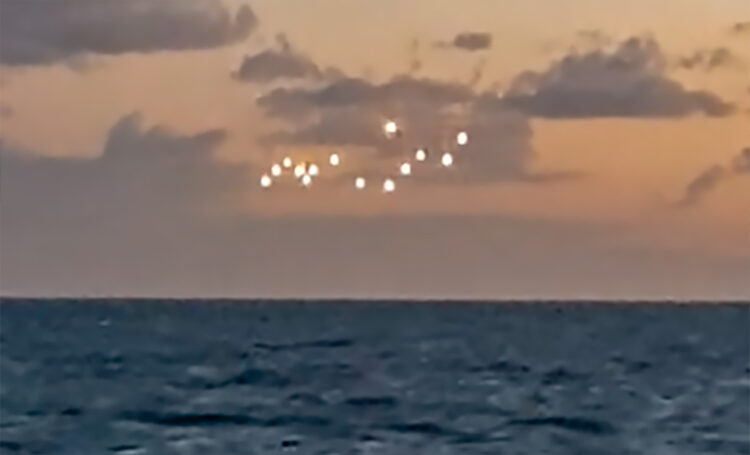
Yet, the never ending sightings of Unidentified Flying Objects(Ufos) across the world, and the few seeming reliable attestations of the Men in Black, make for a compelling case in the light of other notable information, that aliens on the balanc eof probability exist.
Government Disclosure and the UFO Question
In recent years, public interest in aliens has surged due to official investigations into unidentified aerial phenomena (UAPs). In 2020 and 2021, the Pentagon released reports acknowledging encounters with objects displaying unusual flight characteristics.
While no evidence confirmed extraterrestrial origin, the acknowledgment itself marked a turning point. Governments that once dismissed UFO sightings outright now admit that some aerial phenomena remain unexplained.
However, most scientists urge caution. “Unidentified” does not mean “alien.” It often means insufficient data.
Astrophysicist Avi Loeb of Harvard University has controversially suggested that the interstellar object ‘Oumuamua, detected in 2017, could have been artificial in origin. While many peers dispute this interpretation, Loeb’s argument highlights a broader shift: the extra-terrestrial hypothesis is no longer taboo in serious academic discussion.
The difference today is methodological rigor. Claims now demand data.
An abundance of testimony relating to Ufos over the past five decades, and in particularly the last decades, suggests to many observers and ufologists that aliens are real, if no other logical or earthly explanation exists for the incredibly fat moving multi-dimensional objects or orbs that has been seen demonstrating itself with awe in our world skies.
Multiple sightings by pilots during the second world war, and in modern times, as well as sightings from members of the public, has somewhat cemented the view that aliens exist.
One of the most profound challenges in alien research is imagination. Human assumptions are shaped by Earth’s biology. However, alien life may not resemble anything we know.
It might not be carbon-based. It might not use DNA. It might exist as microbial mats beneath alien oceans, or as atmospheric organisms floating in gas giant clouds. Some theoretical models even consider the possibility of non-biological intelligence — machine civilizations that evolved from organic precursors.
Astrobiology increasingly focuses not on “little green men,” but on chemical imbalance. Scientists search for atmospheric signatures that cannot be explained by non-biological processes. Oxygen coexisting with methane, for example, suggests continuous replenishment — potentially by living organisms.
In this framework, aliens are not creatures first. They are chemistry out of equilibrium.
The Rare Earth Hypothesis argues that while microbial life may be common, complex life requires an extraordinarily unlikely combination of factors: a large stabilizing moon, a magnetic field, plate tectonics, and protection from excessive asteroid bombardment.
Earth, in this view, may be a cosmic lottery winner.
Critics argue that declaring Earth uniquely special risks repeating historical mistakes. Humans once believed Earth was the center of the universe. Then we believed our galaxy was unique. Each time, expanding data humbled us.
With billions of galaxies, each containing billions of stars, even rare events may occur frequently in absolute numbers.
The idea that we are alone in the universe has shaped religions, philosophies, and human identity. Conversely, the confirmation of alien life — even microbial — would represent one of the most profound paradigm shifts in history.
Some researchers speculate that governments might tread cautiously not because of hidden knowledge, but because the societal implications of confirmation are immense.
Others argue that the discovery of alien microbes would likely produce excitement, not panic. Humanity has already endured revolutions in worldview — from heliocentrism to evolution — and adapted.
One sobering theory suggests that intelligent civilizations may be common but short-lived. On Earth, humanity has possessed radio technology for barely over a century. In cosmic terms, that is less than a blink. If civilizations typically last only a few hundred or thousand years before environmental collapse, war, or technological transformation, the overlap between two communicating societies might be extraordinarily small.
In that scenario, the universe could be filled with silent ruins — worlds that once hosted intelligence but no longer do.
Modern alien research is shifting from passive listening to active analysis.
Artificial intelligence now scans massive datasets for unusual signals. Spectroscopy examines planetary atmospheres with unprecedented precision. Robotic probes prepare for missions to icy moons.
Scientists increasingly emphasize interdisciplinary research: astronomy meets geology; biology meets planetary science.
The search for aliens is no longer fringe. It is institutional.
The question of whether Aliens are real appears to be highly subjective, although the probability landscape has shifted dramatically.
Fifty years ago, we did not know whether other stars hosted planets. Today, we know they do — in abundance. We have identified Earth-sized worlds in habitable zones. We have detected organic molecules across interstellar space. We have observed water beyond Earth in multiple locations.
Every major discovery has moved the needle toward possibility, not away from it.
If aliens exist, they are most likely microbial. Intelligent civilizations, if they arise, may be rare, distant, or transient.
But the silence of the cosmos is no longer interpreted as proof of emptiness. It is a scientific challenge.
The next 20 to 30 years may be decisive.
Advanced telescopes will refine atmospheric analysis. Mars sample-return missions aim to examine ancient sediments for fossilized microbes. Europa and Enceladus missions may probe subsurface oceans.
If biosignatures are confirmed on even one distant exoplanet, the philosophical implications would be enormous: life would not be a singular Earthly event, but a cosmic phenomenon.
Until then, the search continues — methodical, patient, and grounded in evidence.
Perhaps the most remarkable development is not a single discovery, but a shift in perspective.
The question “Are we alone?” is no longer speculative philosophy. It is a testable scientific hypothesis.
Whether aliens are microbes beneath alien ice or civilizations beyond our detection range, research increasingly suggests that life’s ingredients are widespread. The universe is not chemically barren. It is dynamic, complex, and fertile.
And in that vastness, the possibility of other life no longer feels like fantasy.
It feels like unfinished science, though for now, the sky remains quiet. But it is a quiet filled with data — and with growing expectation.
The reality of aliens may not arrive in the form of spacecraft descending from the clouds. It may emerge as a faint spectral line in a telescope’s data, a chemical imbalance light-years away, whispering a simple but profound truth:
We were never alone.

AD: Heritage And Restaurant Lounge Bar