
By Ben Kerrigan-
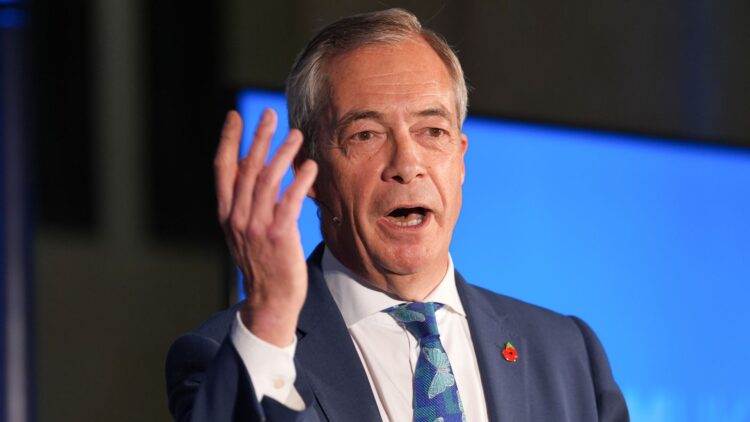
Growing political instability, declining trust in traditional parties, and frustration over immigration and public services have fuelled debates over what a government led by Nigel Farage might look like.
Once considered a fringe figure, Farage has gradually become one of the most influential voices in British politics. After decades of campaigning on issues such as Brexit, sovereignty, and border control, he now commands a significant national following.

AD: Capeesh Restaurant
Continuous defections from the Conservative party to his Reform party spells trouble for the Tories, but many political experts still believe he will struggle to secure enough seats to seize power when the time comes. Others say the threat he poses is real, and his political rivals need to stay on their toes.
Avis supporters of Farage believe he could deliver the bold changes Britain needs, while critics warn that his leadership could trigger economic volatility, diplomatic rifts, and deeper social tension. As the discussion intensifies, analysts, diplomats, and economists are trying to determine what a Farage government would realistically mean for the United Kingdom—and what Farage himself claims it would achieve.
Nigel Farage has built his political identity around confronting what he calls the “political establishment,” which he frequently accuses of ignoring the concerns of ordinary people. Supporters of a hypothetical Farage administration believe he would bring a decisive, uncompromising approach to issues that have stalled under Conservative and Labour governments.

AD: Oysterian Sea Food Restaurant And Bar
Immigration remains a central pillar of his platform. Farage has repeatedly stated that Britain’s current system is unsustainable, arguing: “We cannot have a country where net migration runs at hundreds of thousands a year and still expect our housing, our NHS, and our schools to cope. Britain must take back control of its borders—properly, this time.” His supporters argue that tighter immigration policies, paired with a skills-based points system, could reduce pressure on public services and stabilise labour markets.
Economist David Whitmore adds that, if executed carefully, moderate reductions in migration could help manage regional population growth. He explained that Farage’s proposals appeal to voters who believe rapid demographic change has outpaced investment in services and infrastructure.
Beyond immigration, supporters expect Farage to push for sweeping institutional reforms. He has long advocated for restructuring the House of Lords, cutting bureaucratic waste, and introducing more direct democracy measures such as frequent referendums.
Farage himself has said that “Britain’s political system is broken,” adding that “the civil service has too much power, Parliament is too disconnected from the people, and the country needs a political reset.” His supporters interpret these statements as a promise to modernise and streamline government.
Many also believe Farage would adopt a more assertive foreign policy stance. His emphasis on sovereignty resonates with voters who feel Britain’s international commitments—particularly to the EU and various multilateral bodies—have diluted national control.
Political sociologist Dr. Laura Hanley noted that Farage’s message appeals to voters who want a clearer sense of British identity and a firmer stance on cultural integration.
Despite Farage’s promises of renewal, a large contingent of experts warn that his leadership could create substantial economic risks. Britain’s economic ties to the European Union remain extensive, and Farage’s push for greater regulatory divergence could disrupt trade flows.
Former Treasury adviser Helen Grant explained that sudden changes in trade policy could cause market uncertainty and reduce investor confidence. She noted that businesses reliant on EU-aligned standards—such as manufacturing, pharmaceuticals, and agriculture—might face costly adjustments.
Farage has dismissed these concerns, arguing instead that “Britain thrives when it controls its own laws and its own destiny,” and insisting that trade barriers can be offset through deregulation and expansion into non-EU markets. Economists, however, remain sceptical, warning that pursuing aggressive deregulation could compromise product standards and reduce trade compatibility, thereby intensifying isolation.
Foreign-policy specialists also raise red flags regarding Farage’s stance on Britain’s international commitments. He has been openly critical of NATO funding obligations and sceptical of extensive overseas military engagement. A former Foreign Office official stated that a sudden shift away from multilateral cooperation could strain relationships with long-standing allies and weaken intelligence-sharing networks.
Critics argue that, at a time of heightened global instability, Farage’s foreign-policy approach could leave Britain vulnerable and diplomatically marginalised.
In the domestic arena, critics fear that Farage’s rhetoric about immigration and multiculturalism could fuel social tension. Political psychologist Dr. Mubarak Khan warned that framing migration primarily as a cultural or economic threat could entrench polarisation. He explained that this kind of rhetoric has historically emboldened extremist groups, increasing hostility toward minority communities.
Farage has rejected such criticisms, insisting that “telling the truth about immigration is not racism—it is realism,, and arguing that discussions about cultural cohesion have been suppressed for too long.
Public-sector unions also express concern about Farage’s calls to reduce the size of government. They fear that a push for austerity-style cuts could weaken the NHS, social welfare, environmental protections, and cultural institutions at a time when many services are already stretched thin. Critics argue that the burden of his economic reforms would fall disproportionately on vulnerable communities.
A Divided Nation Debates Whether Farage Represents Renewal or Risk
The debate over Nigel Farage’s potential leadership reflects larger fault lines in British society. Many citizens feel deeply disillusioned with mainstream parties after years of economic stagnation, declining public services, and political instability. Farage’s blunt speaking style, decades-long anti-establishment persona, and willingness to challenge institutional norms make him appealing to voters seeking dramatic change.
However, the very qualities that inspire his supporters alarm his critics. Political historian Dr. Amelia Rhodes argues that Farage embodies two competing visions for Britain: one focused on national revival and democratic empowerment, and another rooted in cultural backlash and political disruption. She emphasises that Farage’s rise is symptomatic of a broader political realignment in Britain, driven by frustration, shifting identities, and widening distrust in traditional governance.
Farage himself has framed his potential leadership as a national turning point. He recently stated that “Britain has been let down by weak leaders for too long. The country needs courage, not caution. It needs action, not excuses.” He portrays himself as the only figure willing to confront entrenched systems, challenge bureaucratic institutions, and deliver transformative change.
Whether such transformation would ultimately stabilise or destabilise the UK remains an open question. Supporters see Farage as a leader capable of revitalising British democracy, protecting national identity, and restoring sovereignty. Critics, however, believe his policies could reduce international influence, ignite social tension, and undermine the delicate political balance holding the country together.
The question is no longer simply whether Nigel Farage can lead, but whether voters believe his brand of radical change represents the country’s salvation or its greatest risk. Whatever the answer, Farage’s influence is now undeniable, and his vision for Britain has become a defining force in the national debate.

AD: Heritage And Restaurant Lounge Bar