
By Aaron Miller-
The US vice-president distances himself from a controversial plan to broadcast the execution of Fort Hood shooter Nidal Malik Hasan, intensifying a national debate over capital punishment, human dignity and the limits of government transparency.
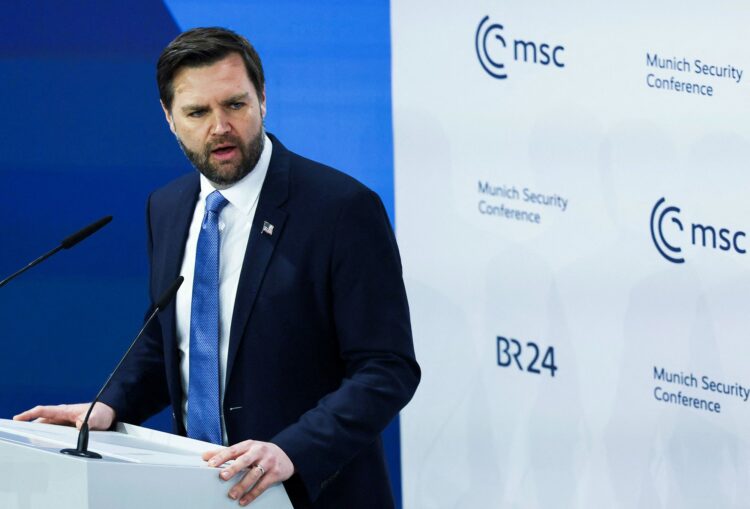
WASHINGTON, October 9, 2026 — US Vice-President JD Vance has said he would not watch the planned livestream of convicted Fort Hood shooter Nidal Malik Hasan’s execution, casting fresh doubt on the wisdom of a decision that has ignited a fierce debate over the death penalty and the public display of state-sanctioned killing.

AD: Capeesh Restaurant
His remarks come after the Pentagon confirmed that Hasan’s scheduled execution by firing squad would be made available to viewers, raising profound questions about whether transparency in criminal justice should extend to broadcasting a person’s death.
Speaking to reporters on Friday, Vance questioned whether the livestream would ultimately proceed, saying he did not know whether the plan would become reality. He nevertheless made his position clear: “If it’s ultimately livestreamed, I’m not going to be watching it.”
While stressing the gravity of Hasan’s crimes, Vance urged Americans not to allow the controversy surrounding the execution method to overshadow the lives destroyed in the 2009 Fort Hood shooting. His comments, reported by CBS News and The Associated Press, reflect the growing tension within American political and religious circles over the distinction between supporting capital punishment and endorsing its presentation as a public spectacle.

AD: Oysterian Sea Food Restaurant And Bar
Hasan, a former US Army psychiatrist, was convicted of killing 13 people and injuring 32 others during the shooting at Fort Hood, Texas, on November 5, 2009. The attack devastated military families and left a lasting scar on the Army community.
Hasan was sentenced to death following his 2013 court-martial, having largely declined to mount a conventional defence during his trial. President Donald Trump approved his execution, which the Army has scheduled for December 3, 2026, at Fort Hood.
If carried out as planned, it would mark the first US military execution in more than 65 years, and an extraordinary return to a method of capital punishment that has largely disappeared from the military’s modern practice.
The decision to livestream the execution has transformed what might otherwise have been a narrowly defined military and legal proceeding into a national controversy. Defence Secretary Pete Hegseth initially declared that the execution would be public, before Pentagon officials clarified that it would be livestreamed.
The announcement has prompted criticism from religious leaders, legal experts and politicians who question the purpose of allowing the public to watch a person being put to death. Critics argue that the decision risks turning punishment into entertainment, blurring the boundary between the administration of justice and the deliberate staging of violence.
Supporters of greater transparency contend that public access could expose the realities of capital punishment and prevent the state from concealing the consequences of its most severe power. The controversy has also placed renewed scrutiny on the firing squad itself. Although the method is sometimes defended as a more predictable alternative to lethal injection, it remains an undeniably violent form of execution.
In recent years, several US states have reconsidered or authorised firing squads amid difficulties obtaining lethal-injection drugs, concerns about the participation of medical professionals, and disputes over whether execution protocols can reliably prevent unnecessary suffering. Legal and academic experts have argued that a firing squad may, in some circumstances, produce a quicker death than a botched injection.
Yet the practical argument does not resolve the deeper moral inquiry into the justificatiom of a government in deliberately ending a human life, and whether doing so before a live audience adds anything to justice.
The renewed debate follows the troubled execution of Christa Pike in Tennessee, which prompted the state’s governor to halt further executions there for the remainder of the year. The case has intensified scrutiny of the methods used by American authorities to carry out death sentences, particularly the possibility that procedures presented as controlled and humane may go wrong. Against that backdrop, the proposed livestream has raised an uncomfortable dilemma.
Catholic Faith
Vance’s intervention carries particular significance because of his Catholic faith. The Catholic Church has long opposed capital punishment, maintaining that human dignity must be respected even when a person has committed grave crimes.
On Friday, Archbishop Paul S. Coakley, president of the US Conference of Catholic Bishops, condemned the proposed livestream, describing it as a promotion of a culture of death and calling for the decision to be reconsidered.
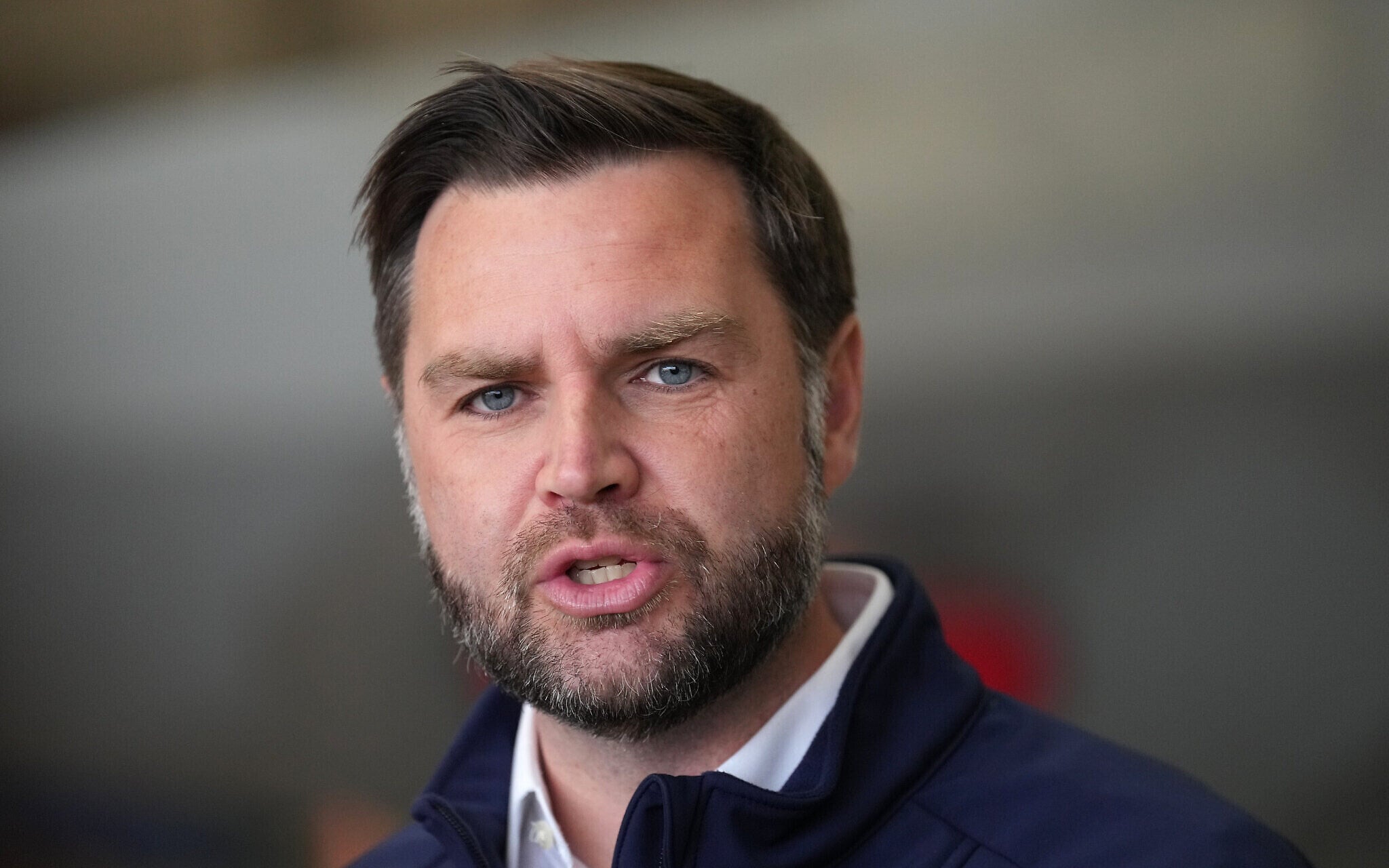
Vance did not announce a change in his position on Hasan’s death sentence, but his refusal to watch the broadcast highlights a distinction that has become central to the controversy: supporting the punishment of a convicted killer does not necessarily mean supporting the public display of that punishment.
The political implications extend beyond the vice-president’s remarks. Trump has publicly defended Hasan’s death sentence, declaring that he deserves execution by firing squad. Yet the livestream proposal has also exposed an apparent contradiction in the administration’s approach to public executions abroad.
Trump has previously condemned the prospect of public executions in Iran, while his administration now faces questions over whether a similar display of state power should be presented to an American audience.
The circumstances and legal systems are different, but critics argue that the comparison raises a fundamental issue of consistency: whether public executions should be rejected as degrading spectacles everywhere or accepted when carried out by a government claiming to act in the name of justice.
The Federal Communications Commission has deferred to the Pentagon on the prospect of television networks airing the event, while major online platforms have yet to clarify whether they would permit such a broadcast. Some services have policies restricting graphic depictions of death, creating uncertainty over how a government-sponsored livestream might be handled.
The division surrounding Hasan’s execution forces the United States to confront the relationship between punishment, accountability and spectacle at a time when the death penalty remains deeply divisive. Dtaunch opponents of capital punishment consider the proposed broadcast as risking normalising the deliberate taking of life under the authority of the state.
Many analysts believe Vance’s declaration that he will not watch the livestream will resonate with the American public as more than a personal statement of distaste. Some day it captures the central contradiction at the heart of the proposal in which a government may insist that an execution demonstrates justice, deterrence and accountability, yet still struggle to explain why the public must be invited to witness the moment of death.
The challenge Washingtom faces relates to the impact broadcasting that punishment will have on the country. It will either illuminate the workings of justice—or turn the final exercise of state power into a spectacle whose consequences extend well beyond the execution chamber.

AD: Heritage And Restaurant Lounge Bar