
By Theodore Brown-
The United States has issued a sharp warning to China, stating that it could face tariffs of up to 50% on all exports to America if it is found supplying weapons to Iran during the ongoing Middle East conflict.
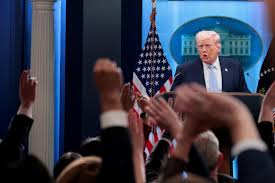
The announcement, made by U.S. President Donald Trump on April 12, 2026, marks a significant escalation in the already strained trade and security relationship between Washington and Beijing.

AD: Capeesh Restaurant
The warning comes amid intensifying allegations from U.S. intelligence agencies that China may be preparing to transfer air-defence systems and other military equipment to Iran through indirect channels. Beijing has denied the claims, insisting it does not provide arms to parties engaged in active warfare and calling for restraint and diplomatic engagement instead.
The tariff threat builds on earlier measures announced by Washington in early April 2026, when President Donald Trump first signalled a sweeping 50% tariff on any country supplying military weapons to Iran.
That policy, introduced shortly after a fragile ceasefire in the Middle East, marked a significant escalation in the use of trade tools as geopolitical leverage. On April 12, 2026, the administration further clarified that the same tariff framework would also apply to China amid intelligence reports suggesting potential Chinese involvement in arms transfers to Tehran.

AD: Oysterian Sea Food Restaurant And Bar
According to reports, Trump explicitly linked Beijing to the policy during his remarks, warning that if China is found assisting Iran militarily, it would face the same 50% tariff penalty as other states under investigation.
Markets reacted cautiously to the announcement, with investors weighing the possibility of renewed U.S.–China trade escalation against ongoing ceasefire negotiations in the region. Analysts say the move underscores how economic policy is increasingly being used as a tool of geopolitical pressure rather than purely trade regulation.
The warning is rooted in intelligence assessments suggesting that China may be preparing to supply Iran with man-portable air-defence systems and related missile technology via third-party intermediaries. These reports have not been independently verified, but they have already influenced high-level discussions in Washington and among allied governments.
U.S. officials argue that even limited transfers of dual-use military technology could significantly strengthen Iran’s battlefield capabilities, particularly in contested airspace where American and allied forces continue to operate. The concern is that such systems could alter the balance of power if fighting resumes after the fragile ceasefire period.
China has rejected the allegations, stating that it maintains a neutral position in the conflict and supports diplomatic efforts to restore stability in the region. Chinese officials have also pointed to their involvement in mediation initiatives, including joint diplomatic proposals with regional partners aimed at stabilising maritime routes through the Strait of Hormuz.
Reports published over the past week suggest that Washington is increasingly concerned about indirect supply chains involving Chinese defence-related firms and third countries. According to U.S. sources cited in international reporting, such networks could allow sensitive military equipment to reach Iran without direct state-to-state transfers.
The broader geopolitical context remains volatile. The Iran conflict, which escalated earlier in 2026 following coordinated military strikes involving Israel and the United States, has already disrupted regional shipping lanes and energy markets. China has maintained economic ties with Iran throughout the crisis, particularly in the energy sector, which remains a key strategic interest for Beijing.
The proposed 50% tariff would represent one of the most severe trade penalties yet considered under the current U.S. administration, reflecting an escalation of economic statecraft tied to security concerns. Market analysis indicates that the measure is designed to apply broadly to imports from countries found supplying military assistance to Iran, rather than targeting specific sectors or product categories.
If implemented against China, the tariff would extend across a wide range of exports entering the U.S. market, including high-value industrial goods such as electronics, machinery, semiconductors, and manufacturing components.
With China’s export footprint to the United States is heavily concentrated in these sectors, meaning the policy could ultimately affect hundreds of billions of dollars in annual trade flows and disrupt deeply integrated global supply chains.
Despite these constraints, the political signalling is clear. Washington is linking economic access to geopolitical behaviour, signalling that trade benefits may depend on compliance with U.S. security expectations regarding Iran. Officials argue this approach is necessary to deter indirect arms transfers that could prolong or intensify the conflict.
China, however, has warned that such measures risk undermining global trade stability. Beijing has consistently opposed unilateral sanctions and tariffs, arguing that they distort international markets and worsen geopolitical tensions. Chinese officials have also indicated that retaliatory economic measures could be considered if broad tariffs are imposed.
Financial markets have already begun factoring in the possibility of renewed trade disruption. Investors remain particularly sensitive to developments affecting supply chains, as China remains one of the largest exporters to the United States. Any significant tariff increase could raise costs for American consumers and disrupt manufacturing networks that depend on Chinese inputs.
The situation is further complicated by ongoing diplomatic efforts aimed at stabilising the Middle East conflict. Ceasefire negotiations, mediated through regional intermediaries, remain fragile, with concerns that renewed fighting could rapidly draw in additional global powers.
Energy markets are also closely watching developments. The Strait of Hormuz, a critical global shipping route, has already been affected by the conflict, with any further escalation potentially triggering sharp volatility in oil prices and shipping insurance costs.
Diplomatic observers say the coming weeks will be critical in determining whether the situation escalates into a wider economic confrontation or whether negotiations between Washington and Beijing can defuse tensions before tariffs are formally enacted.
The warning stands as one of the strongest signals yet that global trade policy and military conflict are becoming increasingly intertwined in 2026.

AD: Heritage And Restaurant Lounge Bar