
By Theodore Brown-
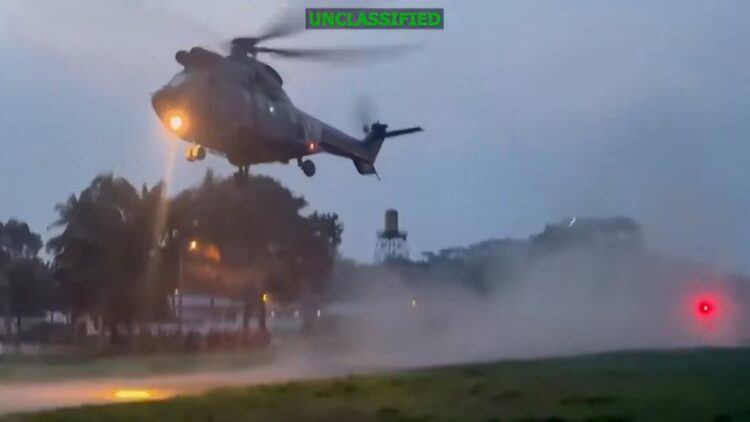
In a marked shift in American military engagement in Latin America, the United States and Ecuador have launched their first combined ground operation against drug cartels on Ecuadorian soil a mission both nations say is aimed at confronting the growing scourge of narco-terrorism that has upended security in the Andean nation.The U.S. Southern Command (SOUTHCOM) confirmed that Ecuadorian and U.S. forces initiated joint operations on March 3, 2026, targeting what they described as “designated terrorist organisations” involved in drug trafficking and related violence.
The announcement, made in a terse statement on social media, underscored the depth of cooperation between Quito and Washington and signalled a new era in how the United States is applying military tools to a problem long treated primarily as a law-enforcement issue.

AD: Capeesh Restaurant
Military analysts say the campaign represents a significant escalation in the U.S. role in Latin America’s war on drugs, moving beyond previous tactics that often focused on naval interdiction and aerial strikes against smuggling vessels.
While specific details of the operation have not been disclosed by either government, observers say the joint offensive underscores Ecuador’s deteriorating security environment and the willingness of its president, Daniel Noboa, to invite foreign military assistance.
The cartels operating in Ecuador now form part of a broader constellation of criminal organizations that stretch from Colombia and Peru to the Caribbean and into Mexico. The United States has recently reclassified some Ecuador-based groups as “narco-terrorists,” a designation that expands Washington’s legal and strategic justifications for kinetic action in partnership with host governments.

AD: Oysterian Sea Food Restaurant And Bar
In many years, the U.S. military’s role in combating illegal drugs in the Western Hemisphere has largely revolved around interdiction at sea, intelligence sharing, and support for partner nations’ law enforcement.
In recent years, operations such as strikes on suspected cocaine smuggling boats in the Pacific and Caribbean highlighted a strategy aimed at disrupting supply chains before narcotics reached U.S. shores. But this new operation in Ecuador, involving boots on the ground alongside local forces, signals a strategic inflection point.
According to the United States Southern Command, this is the first time American forces have taken part in a land campaign in South America explicitly against drug cartels groups now formally labelled as terrorist organisations by the U.S. government. The joint force action targets networks that have terrorised communities, fueled corruption and contributed to a surge in violence across Ecuador.
Ecuador’s publicly available data paints a sobering picture: once considered one of South America’s safer countries, it has been beset by cartel-linked homicides, extortion and organised crime that exploit its strategic geographic position. The country’s coastal ports, particularly Guayaquil and Manta, have become vital transit hubs for illegal drugs en route to global markets.
With Quito, the decision to intensify cooperation with Washington reflects both desperation and pragmatism as it confronts criminal networks whose reach extends across borders.
President Noboa’s administration has framed the joint military action as part of a broader “offensive” against narco-terrorism and illegal mining two intertwined threats to Ecuador’s state institutions and social fabric.
In a message on social media, he announced that national security forces, backed by international partners, would escalate operations throughout March, adding that Ecuador was confronting an existential challenge that demanded unprecedented cooperation.
With Washington’s perspective, the move reflects a broader shift in policy. In recent months, the U.S. government has amplified its hardline stance on drug cartels, labelling some organisations as terrorist groups, and deploying intelligence-led task forces to assist partner nations in taking direct action.
In February 2026, a U.S. military-led group played a role in a high‐profile raid in Mexico that resulted in the death of a major cartel leader one of the most significant blows to cartel leadership in years.
But the decision to escalate into a ground engagement with Ecuadorian forces carries both operational and political implications. Latin America’s history with U.S. military involvement is complex and often fraught with controversy, and critics warn that deeper military engagement could inflame nationalist sentiments or undermine local sovereignty. Governments must balance immediate security needs with the political costs of foreign military presence inside their borders.
Despite these risks, the Biden and Trump administrations coming through different policy lenses have found common cause in treating cartel-linked violence not only as a criminal justice challenge, but as a national security priority worthy of military resources and strategic attention.
In the U.S. Southern Command’s statement announcing the operation, GEN Francis L. Donovan highlighted the importance of partnership and commitment in confronting “narco-terrorists who have long inflicted terror, violence, and corruption on citizens throughout the hemisphere.”
The command praised Ecuadorian troops for their “courage and resolve,” framing the action as a collaborative effort rather than a unilateral U.S. incursion.
Yet some observers caution that the full contours of the U.S. involvement remain opaque. Ecuador’s Defense Ministry has classified many details of the offensive, and Washington has limited its public disclosures to broad statements on intent and cooperation.
This has led to speculation about the extent of U.S. military roles whether advisory, logistical, or involving direct operational support and how these roles will evolve if hostilities intensify.
What is clear from the available announcements and reporting that in the recent operation in Ecuador represents a departure from years of predominantly maritime interdiction and support roles by U.S. forces.
Traditionally, U.S. anti‑drug efforts in the region focused on strikes against suspected smuggling boats and intelligence sharing, but the March 3 confirmation that Ecuadorian and U.S. forces are conducting joint operations against designated narco‑terrorist organisations marks a more direct, land‑based military engagement in Latin America than seen in recent memory.
The U.S. Southern Command described the actions as “a powerful example of the commitment of partners in Latin America and the Caribbean to combat the scourge of narco‑terrorism,” highlighting deeper cooperation between regional governments and Washington.
This evolving approach, which expands beyond naval interdiction into combined ground efforts, may set precedents for future engagements as drug trafficking, violence and narco‑terrorism continue to pose persistent transnational threats
The broader context of this development also intersects with domestic politics in both countries. In Ecuador, President Noboa’s outreach to Washington comes amid challenges to his leadership and public calls for security reforms.
In the United States, the Trump administration has positioned an assertive counter-cartel strategy as part of its foreign policy agenda, tying drug-related violence in the hemisphere to broader regional stability and migration concerns.
Regional reactions have been mixed. Some neighboring nations have expressed solidarity with Ecuador’s struggle against organised crime, while civil society advocates have urged caution, warning that militarised strategies could result in collateral damage or civil rights abuses if not paired with robust accountability mechanisms.
Despite these debates, the current joint military operation continues to unfold on the ground. As forces press forward, both governments indicate that they plan to sustain the offensive beyond its initial phase, leveraging intelligence sharing, logistical coordination and shared security priorities.

AD: Heritage And Restaurant Lounge Bar