
By Aaron Miller-
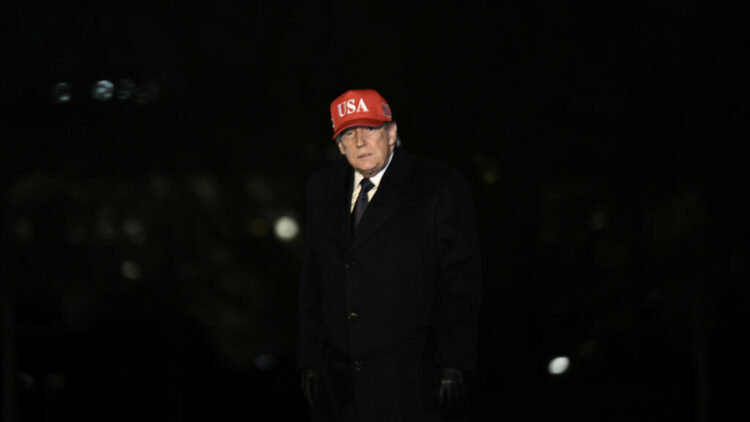
President Donald Trump has refused to rule out deploying U.S. ground troops to Iran, even as the conflict sparked by a major U.S.- Israeli military operation continues to claim American lives and escalate across the Middle East. The assertion coming amid mounting military and diplomatic pressures intensifies debate in Washington and abroad about how far the United States is prepared to go in its confrontation with Tehran.
In a series of public remarks and interviews on Monday, Trump and top defence officials made clear that although no U.S. troops are currently stationed inside Iran, the option to send forces “if necessary” remains on the table as part of what the White House calls Operation Epic Fury the offensive aimed at dismantling Iran’s military infrastructure and nuclear capabilities.

AD: Capeesh Restaurant
Trump’s remarks echoed those of Defense Secretary Pete Hegseth, who said the U.S. would not be “bogged down” in a long war reminiscent of Iraq but declined to categorically rule out boots on the ground.
The conflict has already resulted in significant casualties. On Monday, U.S. Central Command confirmed that six American service members have been killed so far in combat operations and related retaliatory attacks by Iranian forces, with additional personnel wounded.
The deaths represent the highest U.S. military toll in direct operations against Iran in decades and underscore the intensity of the ongoing campaign.

AD: Oysterian Sea Food Restaurant And Bar
The rising death toll has sharpened scrutiny of Trump’s strategy, both domestically and internationally. The president acknowledged the losses and warned that more Americans could die before the operation concludes.
Over recent days, U.S. troops based in Kuwait and other regional outposts have been targeted in Iranian missile and drone strikes, part of a broader wave of retaliation since the joint offensive began last weekend.
While Trump has portrayed the campaign as necessary to safeguard U.S. interests and prevent Tehran from acquiring nuclear weapons, critics in Congress and across global capitals have pressured the administration for clearer objectives and an exit strategy.
Fears of mission creep particularly the potential for ground engagements have sparked intense debate about the risk of a broader, protracted conflict that could draw in allied and regional forces.
Behind closed doors in the Pentagon, military planners are reportedly refining contingency options that would see U.S. forces operating more directly on Iranian territory a move that would mark a dramatic escalation after months of air and naval strikes.
Analysts warn that such a shift could complicate relations with regional actors and potentially trigger further retaliation from Iran’s allies and proxy groups. The Pentagon, however, maintains it is assessing all options to protect American personnel and achieve its objectives.
At home, Trump’s stance has provoked political friction. Senior lawmakers from both parties have demanded briefings on the administration’s plans, including what conditions would trigger a deployment of ground troops. Some legislators argue that only Congress has the constitutional authority to sanction such a move, raising questions about legal and democratic oversight of military actions.
Public opinion is likewise divided: early polling suggests a significant portion of Americans are uneasy about the expanding conflict and wary of further troop commitments, reflecting broader historical sensitivities to U.S. ground wars in the Middle East.
Internationally, allied governments have expressed cautious support for continued operations intended to neutralise immediate threats, but many have stopped short of endorsing potential ground interventions. Diplomats in Europe and the Middle East have reiterated calls for de-escalation, urging both Washington and Tehran to seek avenues for negotiation even as military engagements persist.
Iran, for its part, has shown no sign of relenting. Iranian state media report ongoing hostile operations and quotations from Iranian military officials describing further actions to counter U.S. strikes, including extended missile and drone barrages. Proxy groups aligned with Tehran have also signalled continued resistance against U.S. and allied forces in neighbouring countries.
With the conflict now entering its third day, Trump’s refusal to categorically exclude the possibility of a ground invasion has spotlighted the uncertain trajectory of what many analysts are calling the most consequential U.S.–Iran confrontation in decades.
The situation remains fluid, with potential military escalation, diplomatic fallout, and regional instability hanging in the balance, raising urgent questions about where the war might lead and at what cost.
Military experts and defence analysts warn that even initially limited U.S. ground deployments often framed as protective or advisory missions can expand rapidly once forces are embedded in a complex and hostile environment.
Officials have cautioned that a sustained campaign against Iran, a state with extensive ballistic missile arrays and regional proxy networks, would present far more unpredictable challenges than limited strikes alone, and that escalation management could strain existing military resources and strategic planning.
Iran’s regional sway through allied militia groups in Iraq, Lebanon and Yemen adds to the risk of asymmetric engagements that could draw U.S. forces deeper into conflict, a dynamic defence observers say was evident in past confrontations where proxy warfare significantly complicated U.S. objectives.
Strategically, the geography of the Persian Gulf and particularly the Strait of Hormuz amplifies this uncertainty. Roughly 20 per cent of the world’s crude oil and a significant share of liquefied natural gas pass through this narrow chokepoint, making it uniquely vulnerable to disruption during high-intensity military operations.
Recent industry and shipping reports indicate that heightened tensions have already prompted warnings for vessels to avoid the area, reflecting how quickly energy trade routes can become embroiled in broader conflict dynamics.
Any sustained disruption to oil exports through Hormuz would reverberate across global markets, raising insurance costs, shipping delays and energy prices as insurers withdraw war-risk coverage and vessels reroute to avoid danger zones.
Analysts argue that even short-lived interruptions or fears of blockade could have outsized economic impacts a reality that underscores how military escalations in the region tend to ripple far beyond the battlefield.
Diplomatically, the stakes are equally high. European allies are pressing for backchannel negotiations, while regional powers are recalibrating their own security postures in response to Washington’s signals. A ground invasion could strain alliances, especially if civilian casualties mount or if international law concerns intensify.
At the United Nations, emergency consultations are expected to focus on de-escalation measures, humanitarian corridors and mechanisms to prevent miscalculation between rival forces operating in close proximity.
Domestically, the political ramifications are growing sharper. Lawmakers are debating war powers authority and the threshold for congressional approval should troop deployments materialise.
Public sentiment, shaped by memories of earlier Middle East wars, appears cautious if not wary. For now, the administration insists all options remain under review a posture that keeps adversaries guessing but leaves both allies and critics seeking clarity in an increasingly volatile moment.

AD: Heritage And Restaurant Lounge Bar