
By Aaron Miller-
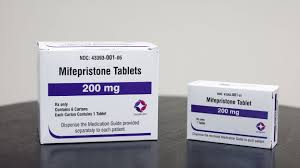
The U.S. Supreme Court on Monday restored broad access to the abortion medication mifepristone, allowing it once again to be prescribed via telehealth consultations and delivered through mail-order services and pharmacies, Iin a temporary but significant decision that reopens a central pathway for abortion care across the United States.
The ruling comes amid a rapidly escalating legal battle over reproductive rights following the court’s 2022 decision overturning Roe v. Wade, which shifted authority over abortion regulation to individual states. In its latest action, the Court blocked a lower federal appeals court ruling that had imposed stricter requirements, including in-person doctor visits before obtaining the drug.

AD: Capeesh Restaurant
The order was issued by Justice Samuel Alito and keeps existing access rules in place while the Court considers further arguments. It effectively pauses new restrictions that would have sharply limited how patients receive mifepristone, a drug that is used in combination with misoprostol to terminate early pregnancies and manage miscarriage care.
The Supreme Court’s intervention does not resolve the underlying legal dispute, but it preserves the regulatory framework that has been in place since federal rules were relaxed in recent years to expand access to medication abortion.
According to reports, the decision allows patients to continue obtaining mifepristone without an in-person consultation, a shift that has been widely credited with increasing accessibility, especially in rural areas and states with limited clinic availability.

AD: Oysterian Sea Food Restaurant And Bar
The case stems from a lawsuit filed in Louisiana challenging federal Food and Drug Administration (FDA) regulations that permitted telehealth prescribing and mail distribution of the drug. State officials argued that the rules undermined state abortion bans, while abortion providers and pharmaceutical manufacturers warned that tighter restrictions would disrupt established medical practice and limit access to care.
The Supreme Court’s order will remain in effect for a limited period, reportedly about a week, while both sides submit additional legal arguments.
Mifepristone has become central to abortion care in the United States, where medication abortion now accounts for the majority of all abortions nationwide .
Approved by the U.S. Food and Drug Administration in 2000 following clinical trials that established its safety and effectiveness , the drug has since played a defining role in reproductive healthcare.
In recent years, regulatory changes have significantly expanded how it can be accessed, including 2021 FDA revisions that removed long-standing in-person dispensing requirements and allowed certified pharmacies and telehealth providers to prescribe and distribute the medication .
Medication abortion now widely accessed through telemedicine and mail-order services where permitted has fundamentally reshaped abortion access, especially for patients facing geographic, financial, or legal barriers in states with restrictive laws .
Health experts and providers have long argued that medication abortion via telemedicine is safe and effective, with outcomes comparable to in-clinic care. A growing body of research over the past decade has also highlighted the role of telehealth in improving access for patients facing travel barriers, cost constraints, or privacy concerns.
The Court’s latest move arrives at a politically charged moment, as abortion continues to be a defining issue in U.S. elections and state-level policymaking. Since the overturning of Roe v. Wade, Republican-led states have imposed a range of restrictions, while Democratic-led states have moved to protect telehealth prescribing and shield providers from out-of-state legal threats.
Legal analysts say the temporary reinstatement of access underscores the unsettled nature of abortion law in the United States, where federal court rulings, state bans, and FDA regulations are increasingly in tension. The Supreme Court is expected to revisit the issue again as the underlying litigation continues.
Advocacy groups on both sides reacted swiftly. Reproductive rights organizations welcomed the decision as a necessary safeguard for patient access, while anti-abortion advocates criticized it as prolonging what they view as unlawful federal overreach. Meanwhile, pharmaceutical manufacturers involved in the case had urged the Court to preserve access while broader questions about FDA authority are resolved.
The ruling does not establish a final precedent, but it maintains the status quo in a legal landscape that remains highly unstable. As further arguments are prepared, the Court’s eventual decision could have lasting implications for how abortion medication is regulated and distributed across the country.
Patients can continue to access mifepristone through telehealth services, mail delivery, and pharmacies, an option that remains central to abortion care in the United States, even as its future remains uncertain.
The availability of medication abortion through these channels has reshaped how reproductive healthcare is delivered, shifting significant portions of care away from traditional clinic-based settings and into remote medical systems that can be accessed from home.
Telehealth provision typically involves a remote consultation with a licensed healthcare provider, during which medical eligibility is assessed and prescriptions are issued electronically. Patients then receive mifepristone either by mail or through certified pharmacies, depending on state regulations and provider systems.
This structure has been widely adopted since federal regulators eased in-person dispensing requirements during the COVID-19 pandemic, a shift that normalised remote prescribing practices across a range of medical fields, including reproductive health. Studies and public health data have consistently shown that this model maintains high levels of safety and effectiveness, comparable to in-person clinical care.
Mail-order access has been particularly significant in expanding reach. It allows patients in rural or underserved areas to avoid long travel times, time off work, childcare arrangements, and the financial burden associated with in-person visits.
Pharmacies certified to dispense mifepristone have further broadened access in states where abortion remains legal, embedding medication abortion more firmly within mainstream healthcare infrastructure. For many providers, this integration has reduced logistical barriers and allowed earlier intervention in pregnancy, which is medically associated with simpler and safer outcomes.
Despite these developments, access to mifepristone remains politically and legally contested. Since the overturning of Roe v. Wade in 2022, abortion regulation has been largely determined at the state level, resulting in a fragmented legal landscape.
Some states have moved to restrict or ban medication abortion entirely, while others have expanded protections for telehealth prescribing and shield laws for providers. Ongoing litigation in federal courts continues to challenge the authority of the Food and Drug Administration’s regulatory framework, creating uncertainty about the long-term stability of current access pathways.
Healthcare providers and reproductive rights advocates argue that maintaining telehealth and mail-based access is essential to preserving timely and equitable care. However, this continue to challenge these models in court, focusing on regulatory authority and state-level restrictions.
With legal proceedings continue to evolve, patients, clinicians, and pharmacies remain in a period of uncertainty, where access is simultaneously widely used and frequently contested.
Mifepristone remains accessible through telehealth, mail, and pharmacy distribution systems in much of the country, ensuring that medication abortion continues to play a central role in reproductive healthcare delivery, even as its regulatory and legal future remains unsettled.

AD: Heritage And Restaurant Lounge Bar