
By Theodore Brown-
The Republican-led U.S. Senate has once again rejected a Democratic effort to halt military involvement in Iran, underscoring the deep political divide over war powers even as some lawmakers signal growing unease about Congress’s limited role in authorising the conflict.
The latest vote, which failed 47–52, marks the fourth unsuccessful attempt this year to pass a resolution requiring congressional approval for continued military action, reflecting a pattern of resistance among Republicans to constrain presidential authority during wartime.

AD: Capeesh Restaurant
Democrats argue that the conflict now weeks into active operations amounts to an “unauthorised war,” and have repeatedly pushed measures under the War Powers Resolution to force a withdrawal of U.S. forces unless Congress explicitly approves continued engagement.
Republicans, however, have largely backed President Donald Trump’s handling of the conflict, citing national security concerns and Iran’s nuclear capabilities as justification for maintaining executive flexibility in military decision-making.
Yet beneath the party-line votes, cracks are beginning to emerge. A small but notable number of Republican lawmakers have expressed discomfort with Congress being sidelined, raising the possibility that future votes on war powers could look different if the conflict drags on or escalates further.

AD: Oysterian Sea Food Restaurant And Bar
The Senate vote reflects a broader trend in which Republican lawmakers have consistently blocked attempts to limit presidential war authority, even as Democrats continue to press the issue with renewed urgency. In the latest vote, only a handful of senators broke with their party, highlighting the continued strength of GOP support for Trump’s military strategy.
Republican leaders have framed their opposition as a matter of national security, arguing that imposing congressional restrictions during an active conflict could undermine military effectiveness and signal weakness to adversaries. This argument has resonated with much of the party, particularly among those who view Iran as a significant and immediate threat.
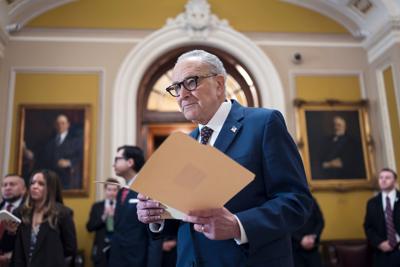
Democrats have intensified their criticism, warning that Congress is failing in its constitutional duty to authorise war. Senate Minority Leader Chuck Schumer and other Democratic leaders have accused Republicans of effectively “ceding” war-making authority to the executive branch, a charge that reflects longstanding tensions over the balance of power between Congress and the presidency.
The repeated failure of war powers resolutions also highlights the limitations of legislative tools designed to check executive authority. While the War Powers Resolution of 1973 was intended to ensure congressional oversight of military engagements, it has often proven difficult to enforce in practice, particularly in politically polarised environments where party loyalty can outweigh institutional concerns.
Recent history reinforces this pattern. Presidents from both parties have launched military operations without explicit congressional approval, relying on broad interpretations of their commander-in-chief powers. This precedent has made it increasingly challenging for Congress to reassert its authority, even when lawmakers express concern about being excluded from key decisions.
Growing Unease And Prospect Of Future Growth
Despite the current stalemate, signs of unease within the Republican Party suggest that the debate over war powers is far from settled. Some GOP lawmakers have begun to signal that their support for the administration’s approach is not unconditional, particularly as the conflict shows signs of prolonging beyond initial expectations.
Reporting indicates that while Republicans are willing to back the president “for now,” there is increasing anxiety about the long-term trajectory of the war and the political and economic costs associated with it. Concerns over rising fuel prices, military spending, and public opinion could all influence future votes, especially if the conflict intensifies or fails to reach a clear resolution.
A small number of Republican senators have already broken ranks in previous votes, joining Democrats in supporting measures to limit presidential authority. Only a handful of GOP lawmakers backed efforts to rein in the president’s war powers, underscoring that while defections remain limited, they are politically significant.
Others, while not yet voting against their party, have publicly questioned whether Congress is being sidelined and signalled concern that lawmakers should play a more active role in authorising and overseeing military action, reflecting growing unease within the party even as most Republicans continue to support the administration.
This emerging tension reflects a broader debate within the Republican Party about the balance between strong executive leadership and constitutional checks and balances. For some lawmakers, particularly those aligned with a more traditional view of congressional authority, the current situation raises concerns about precedent and institutional integrity.
Democrats, for their part, are unlikely to abandon the issue. Senate leaders have indicated that additional war powers resolutions will continue to be introduced, potentially on a weekly basis, in an effort to keep pressure on Republicans and maintain public attention on the issue.
This strategy reflects both a policy objective and a political calculation, as Democrats seek to frame the conflict as an example of executive overreach.
The broader implications extend beyond the current conflict. The outcome of these debates could shape how future administrations approach military action and how Congress responds. If lawmakers ultimately succeed in passing a war powers resolution or even in narrowing the margins of opposition it could signal a shift toward greater legislative involvement in decisions of war and peace.
However, the balance of power remains tilted toward the executive branch. The Senate’s latest vote confirms that, despite ongoing debate and occasional dissent, Republican support for the president’s authority in the Iran conflict remains largely intact.
Whether that support will hold as the war evolves is an open question. While the conflict continues and political pressures mount, the prospect of future votes on war powers suggests that the issue is far from resolved and that Congress’s role in authorising military action may yet become one of the defining debates of this moment.
Much will depend on how the situation develops on the ground in Iran and the broader region, as well as whether the conflict expands in scope or duration beyond what many lawmakers initially anticipated.
If casualties rise or the economic consequences deepen, including continued pressure on fuel prices and defence spending, lawmakers who have so far backed the administration may come under increasing pressure to reassess their position.
Public opinion is likely to remain a critical factor shaping congressional calculations. Historically, prolonged military engagements that lack clear congressional authorisation tend to erode political support over time, particularly when voters begin to feel the domestic impact.
While Republican unity has largely held, the emergence of even limited dissent suggests that future votes could become more contested if circumstances shift.
Democrats are expected to continue forcing repeated war powers votes, keeping the issue on the legislative agenda and ensuring sustained scrutiny of executive authority. In that context, Congress’s struggle to define its role in authorising and overseeing military action may increasingly come to symbolise broader tensions over the balance of power in Washington.