

By Lucy Caulkett–
Public safety is now “at risk” because of a significant policy shift moving a greater volume of inmates into minimum-security open prisons, according to a stark warning issued by a serving governor.
Mark Drury, who represents open prison governors at the Prison Governors’ Association (PGA), revealed that Category D sites which maintained perfect security records for “many years” are now “suddenly” recording a worrying rise in escapees.

AD: Capeesh Restaurant
The governor’s alarming statement emerges as authorities launch yet another manhunt for a foreign national offender who recently absconded from a low-security facility, intensifying the crisis surrounding the Open Prison Transfer Risk. This escalating situation poses direct dangers to victims and severely undermines public trust in the correctional system.
Open prisons, officially known as Category D jails, maintain minimal security perimeter controls and feature relatively relaxed routines, offering inmates greater independence. They traditionally serve a crucial purpose: housing prisoners nearing the end of their sentence, allowing them to participate in work placements and day-release programs to practice essential integration skills before re-entering society.
The UK operates approximately 11 to 12 open prisons across England and Wales, playing a vital role in gradual rehabilitation. However, intense overcrowding across higher-security jails has forced the Ministry of Justice to implement sweeping policy changes. These adjustments now make a greater number of prisoners eligible for transfer to these open conditions much earlier in their sentences.

AD: Oysterian Sea Food Restaurant And Bar
The unintended consequence of accelerating this process is a demonstrable Open Prison Transfer Risk, placing individuals who have not yet sufficiently demonstrated reform closer to the general population. For example, Ola Abimbola, serving a 21-year term for kidnapping and grievous bodily harm, absconded from HMP Ford in Sussex last month; Sussex Police are still actively searching for the foreign national offender.

Ola Abimbola absconded from an open prison. Pic: Sussex Police
For survivors of extreme violence, the decision to relax security for their attackers is not a bureaucratic matter, but a terrifying threat to their lives and mental stability.
Natalie Queiroz, a courageous victim who survived an appalling attack, embodies this harrowing reality. Ms. Queiroz was stabbed 24 times by her ex-partner, Babur Raja, while she was eight months pregnant with their child.
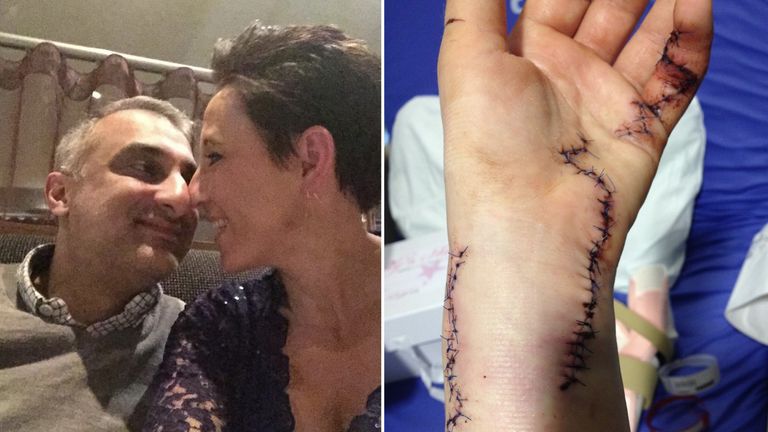
Natalie Queiroz was stabbed 24 times by her ex-partner. Pic: Sky News
The knife inflicted injuries to all of her major organs and arms, narrowly missing her unborn baby by a mere two millimeters; “Nobody expected either of us to survive,” she emotionally recalled. Raja received an 18-year sentence for attempted murder, but Ms. Queiroz recently learned he is slated for a move to an open prison four years earlier than his initially scheduled transfer date.
The prospect that her ex-partner, who inflicted such “untold horror,” could soon be walking out of an open prison gate any day now is deeply unsettling for Ms. Queiroz. She stated the potential transfer “doesn’t feel right, it’s terrifying, and it also doesn’t feel like justice” for the trauma she endured.

Ms Queiroz says her ex-partner Babur Raja caused ‘untold horror’. Pic: Sky News
These distressing feelings are directly fueled by the recent policy changes that have fast-tracked transfer eligibility. Previous rules stipulated a move to an open prison could only occur within three years of parole eligibility, and no earlier than five years before automatic release. Although the five-year component was dropped last year, the parole eligibility element was recently extended to five years in April 2025. Raja is due for release in 2034, with parole eligibility in 2028 (12 years into his sentence).
Under these relaxed rules, his Open Prison Transfer Risk eligibility became a reality this year, creating an acute threat to the victim. Ms. Queiroz is now campaigning fiercely to make violent offenders and domestic abuse perpetrators permanently ineligible for early open prison transfers, fighting tirelessly to protect other survivors.
The increasing number of absconders, including Abimbola, and the premature transfer of dangerous individuals like Raja demonstrate a profound systemic flaw, raising the overall Open Prison Transfer Risk to the general public. Beyond the direct threat to named victims, every absconder poses a diffuse risk of property crime, further violence, and general disorder in the local communities surrounding the low-security facilities.
When Ms. Queiroz met with ministers to challenge Raja’s transfer, they allegedly admitted that assessing the risk posed by such dangerous offenders is extremely difficult. Ms. Queiroz recalled telling the minister: “How can you make a risk assessment for someone like that?” and the honest reply was, “If we’re honest, we can’t.”
Governor Mark Drury supports this skepticism, describing current risk assessments as nothing more than an “algorithm tick box” exercise, exacerbated by intense pressure placed on offender management units to alleviate overcrowding in higher-security facilities. This pressure inevitably compromises the thoroughness needed to ensure public safety remains the top priority.

Mark Drury, a representative of the Prison Governors’ Association. Pic: Sky News
The escalating Open Prison Transfer Risk compounds recent embarrassment for the Prison Service, following the administrative errors that led to the mistaken release of migrant sex offender Hadush Kebatu last month, and two further individuals this week. The Ministry of Justice acknowledged the severity of the crisis, stating they “inherited a justice system in crisis, with prisons days away from collapse,” which forced “firm action to get the situation back under control.” The government promises to deliver 14,000 new prison places by 2031 and introduce comprehensive sentencing reforms, but these long-term commitments provide little comfort to victims facing imminent danger today. The fundamental safety issue is one of capacity versus risk.

AD: Heritage And Restaurant Lounge Bar


