

By James Simons-
The discovery of two disease-carrying mosquito species in England represents a clear and present challenge to the nation’s public health security.
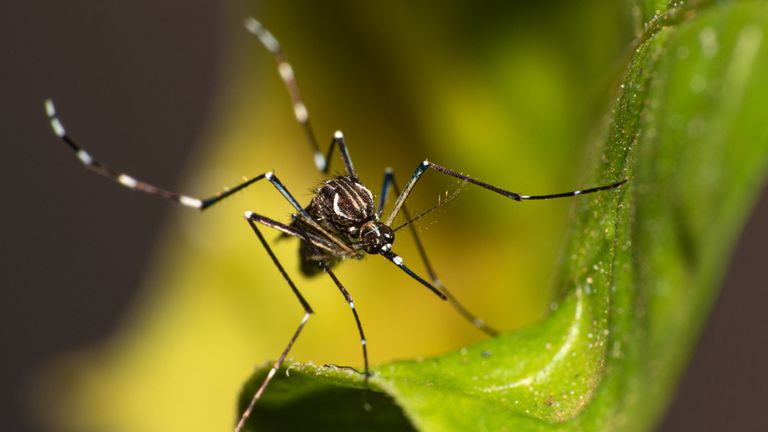
Aedes aegypti, also known as the Egyptian mosquito. Pic: iStock
For decades, the UK benefited from a climate too cold to sustain tropical vectors, but now, the combination of rising global temperatures and incessant international freight transport has breached that natural barrier.

AD: Capeesh Restaurant
Scientists from the UK Health Security Agency (UKHSA), conducting critical surveillance work, confirmed the presence of both the Aedes aegypti and the Aedes albopictus—widely known respectively as the Egyptian and Asian tiger mosquitoes.
These findings were published in a peer-reviewed study, providing the foundational scientific data for the current public health response to Invasive Mosquitoes UK.
The context of the discoveries is particularly concerning, underscoring the mechanisms by which these non-native species are arriving.

AD: Oysterian Sea Food Restaurant And Bar
Eggs of the Egyptian mosquito, Aedes aegypti, were found in September 2023 at a freight storage facility located perilously close to London’s Heathrow Airport.
A year later, in August 2024, the tenacious Asian tiger mosquito, Aedes albopictus, was seen for the first time since 2019 at a motorway service station in Kent.
These locations—a major international air freight hub and a motorway nexus—demonstrate that global commerce is acting as the primary carrier, effectively shipping tiny, unwanted guests into the country.
The recurring threat of Invasive Mosquitoes UK requires a coordinated border defense strategy.
Furthermore, environmental shifts are enabling these incursions to become potential establishments.
While historically confined to subtropical and tropical zones, the Asian tiger mosquito, Aedes albopictus, has already demonstrated a remarkable ability to adapt, establishing robust populations across central and southern Europe.
Milder winters and increasing average temperatures in the UK create a far more hospitable environment for these species to survive and reproduce.
Experts recognize that the northward movement of these Invasive Mosquitoes UK is a direct consequence of long-term climate change trends, putting new, previously unaffected populations at risk of disease transmission.
The scientific consensus suggests that without effective counter-measures, the UK faces an increasing and perpetual risk of these pests taking permanent residence.
Understanding the Risk from Invasive Mosquitoes UK
The true concern surrounding the presence of these two species lies in their ability to act as vectors, transmitting severe viral diseases that are entirely foreign to the British ecosystem.
Both Aedes aegypti and Aedes albopictus carry a suite of debilitating and sometimes deadly pathogens.
They are known to transmit yellow fever, dengue fever, chikungunya, and the Zika virus, alongside dirofilariasis (heartworm).
While no localized transmission of these diseases has been confirmed in the UK yet, the potential for a disease outbreak exists the moment an infected traveler arrives and is bitten by one of the newly arrived Invasive Mosquitoes UK.
The mere presence of these vector mosquitoes elevates the public health risk from hypothetical to tangible. Should these species establish themselves widely, public health officials would need to manage the dual threat of both mosquito control and widespread human infection. The diseases they carry often lead to high fever, severe joint pain, and, in the case of Zika, significant congenital disorders if contracted by pregnant women.
Although the current findings are described as isolated incursions, the fact that both major threats—Aedes aegypti and Aedes albopictus—have now been detected demands immediate vigilance. This is not the first time the UK has dealt with vector-borne threats; recent news of West Nile virus being found in native mosquitos shows the complexity of managing these issues.
Monitoring the movement of these Invasive Mosquitoes UK is vital for safeguarding the population.
The UKHSA study’s lead author, senior medical entomologist Colin Johnston, emphasized the critical importance of the rapid response. He noted that swift, enhanced local surveillance and control measures were deployed immediately following each discovery.
The crucial fact that no further specimens were subsequently found provides reassurance, strongly suggesting that authorities successfully prevented the initial, isolated incursions from evolving into established local populations.
However, the recurring nature of these arrivals mandates continuous, proactive measures to enhance the country’s resilience against emerging vector-borne disease risks.
Surveillance and Strategy
Protecting the UK from the permanent establishment of Invasive Mosquitoes UK requires a multi-faceted and highly collaborative approach spanning government agencies and the general public.
The UKHSA’s current strategy involves intensive, active surveillance, specifically targeting high-risk areas.
Traps are regularly set at all major ports, land transport sites across England, Wales, and Northern Ireland, and particularly vulnerable ecological areas like the warm, wet Kent marshes—a prime habitat for newly arrived mosquitoes.
This network of surveillance traps is designed to provide an early warning system against both initial incursions and localized population growth.
The public also plays a critical, often underappreciated role in this national defense effort through the Mosquito Recording Scheme (MRS).
This citizen-science project encourages members of the public to submit any unusual or invasive specimens they find, particularly following nuisance biting incidents.
Although the scheme primarily recorded native UK species between 2005 and 2021, its continued operation provides invaluable data, assisting scientists in tracking and identifying unusual movements of species.
Cooperation between the UKHSA, local authorities, and landowners proved essential in rapidly mobilizing to prevent the establishment of the recently detected Invasive Mosquitoes UK.
Looking forward, the long-term containment strategy requires political and legislative support to address the root causes and adapt to future threats.
Rising global temperatures mean the UK must fundamentally rethink its public health strategy to cope with tropical and subtropical species attempting to colonize.
Without decisive action to curb global climate change and bolster border biosecurity, these mosquito species will continue to arrive, necessitating increasingly complex and costly eradication efforts. The findings underscore the immediate need for sustained funding and public awareness to keep the threat of Invasive Mosquitoes UK at bay, providing a crucial lesson for other temperate nations.

AD: Heritage And Restaurant Lounge Bar


