
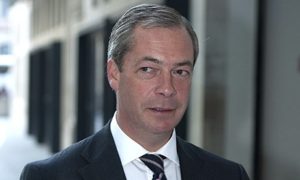
The political storm surrounding Nigel Farage intensified dramatically this week after Parliament’s standards watchdog confirmed that the Reform UK leader is facing a formal ethics investigation over an undeclared £5 million gift from cryptocurrency billionaire Christopher Harborne, a controversy that has rapidly become one of the most explosive questions about transparency and political finance in modern British politics.
The inquiry, launched by the Parliamentary Commissioner for Standards, centres on whether Farage breached parliamentary rules by failing to declare the extraordinary payment, which he received shortly before announcing his candidacy in the 2024 general election.
Farage insists the money was a purely personal gift intended to fund private security and therefore did not require registration, but critics across the political spectrum argue that the sheer scale of the payment and the circumstances surrounding it raise profound questions about accountability, influence, and the integrity of public office.

AD: Capeesh Restaurant
The affair has erupted at a pivotal moment in British politics, with Reform UK riding a wave of electoral momentum and Farage once again positioning himself at the centre of national debate. Instead of consolidating that success, the veteran populist now finds himself under mounting scrutiny over a financial arrangement that opponents claim cuts directly against his long-cultivated image as an anti-establishment insurgent battling elite privilege.
The controversy first emerged after reports revealed that Harborne, a Thailand-based crypto investor and already one of Reform UK’s largest financial backers, had provided Farage with £5 million in 2024 before he formally entered Parliament as MP for Clacton.

AD: Oysterian Sea Food Restaurant And Bar
Parliamentary rules state that MPs must register financial interests and benefits received in the year prior to election if they could reasonably be seen as relevant to their public role. Whether the Harborne payment falls into that category is now the central issue facing investigators.
Farage has repeatedly defended himself, arguing that the payment was “unconditional” and unrelated to political activity. According to his allies, the money was provided because of concerns over his personal safety after years of threats, protests and high-profile confrontations. Reform UK figures have argued that Farage, as one of Britain’s most recognisable and controversial politicians, required long-term security protection that exceeded what public funding could reasonably cover.
Supporters insist that because the payment was private and not directly linked to campaigning, no declaration was legally necessary. “No rules were broken,” a spokesperson for Farage said after news of the investigation became public, adding that the party looked forward to the matter being “put to bed once and for all.”
But the explanations have failed to quieten criticism. Opposition politicians, ethics campaigners and constitutional experts have questioned how a £5 million payment from a billionaire donor could possibly be viewed as irrelevant to public life, especially when the recipient soon afterwards launched a parliamentary campaign and returned to frontline politics.
Labour figures have accused Farage of attempting to evade scrutiny, while Conservatives — themselves facing accusations over standards failures during previous administrations — formally referred the case to the watchdog. The issue has become particularly sensitive because Harborne is not simply a wealthy acquaintance but a major financial supporter of Reform UK whose donations have played a significant role in the party’s rise.
Most analysts believe voters have a right to know the full nature of any financial relationship between politicians and individuals capable of exerting influence through immense personal wealth. The parliamentary investigation will reportedly examine whether Farage breached Rule 5 of the MPs’ Code of Conduct, which requires new MPs to declare “relevant financial interests” and registrable benefits received within the twelve months prior to election.
While the wording of the rules leaves room for interpretation, experts say the commissioner is likely to examine not only the technical structure of the payment but also the broader context surrounding it. Questions are expected to focus on whether the gift could reasonably be perceived as connected to political activity, whether it conferred significant advantage, and whether failing to disclose it undermined public confidence in Parliament’s transparency regime.
If investigators conclude that serious breaches occurred, the case could ultimately be referred to the Commons Standards Committee, which has the power to recommend sanctions ranging from apology and suspension to triggering recall procedures in extreme circumstances.
The controversy has also reignited wider concerns about money, lobbying and influence in Westminster, where public trust in politics remains fragile after years of scandals involving expenses, procurement contracts, lobbying controversies and undeclared interests.
The Farage affair is not merely about whether one politician correctly completed parliamentary paperwork, but whether Britain’s rules on political finance are robust enough to cope with the growing power of ultra-wealthy donors operating across international business networks, including the volatile and often opaque cryptocurrency sector.
Harborne himself has become an increasingly influential figure in British political funding, donating millions to right-wing causes and parties in recent years. His financial relationship with Farage has therefore attracted exceptional attention because it sits at the intersection of politics, global finance and the culture wars that increasingly dominate British public life.
The political storm surrounding Nigel Farage intensified dramatically this week after Parliament’s standards watchdog confirmed that the Reform UK leader is facing a formal ethics investigation over an undeclared £5 million gift from cryptocurrency billionaire Christopher Harborne, a controversy that has rapidly become one of the most explosive questions about transparency and political finance in modern British politics.
The inquiry, launched by the Parliamentary Commissioner for Standards, centres on whether Farage breached parliamentary rules by failing to declare the extraordinary payment, which he received shortly before announcing his candidacy in the 2024 general election. Farage insists the money was a purely personal gift intended to fund private security and therefore did not require registration, but critics across the political spectrum argue that the sheer scale of the payment and the circumstances surrounding it raise profound questions about accountability, influence, and the integrity of public office.
The affair has erupted at a pivotal moment in British politics, with Reform UK riding a wave of electoral momentum and Farage once again positioning himself at the centre of national debate. Yet instead of consolidating that success, the veteran populist now finds himself under mounting scrutiny over a financial arrangement that opponents claim cuts directly against his long-cultivated image as an anti-establishment insurgent battling elite privilege.
The controversy first emerged after reports revealed that Harborne, a Thailand-based crypto investor and already one of Reform UK’s largest financial backers, had provided Farage with £5 million in 2024 before he formally entered Parliament as MP for Clacton. Parliamentary rules state that MPs must register financial interests and benefits received in the year prior to election if they could reasonably be seen as relevant to their public role. Whether the Harborne payment falls into that category is now the central issue facing investigators.
Farage has repeatedly defended himself, arguing that the payment was “unconditional” and unrelated to political activity. According to his allies, the money was provided because of concerns over his personal safety after years of threats, protests and high-profile confrontations. Reform UK figures have argued that Farage, as one of Britain’s most recognisable and controversial politicians, required long-term security protection that exceeded what public funding could reasonably cover.
Supporters insist that because the payment was private and not directly linked to campaigning, no declaration was legally necessary. “No rules were broken,” a spokesperson for Farage said after news of the investigation became public, adding that the party looked forward to the matter being “put to bed once and for all.”
But the explanations have failed to quieten criticism. Opposition politicians, ethics campaigners and constitutional experts have questioned how a £5 million payment from a billionaire donor could possibly be viewed as irrelevant to public life, especially when the recipient soon afterwards launched a parliamentary campaign and returned to frontline politics. Labour figures have accused Farage of attempting to evade scrutiny, while Conservatives — themselves facing accusations over standards failures during previous administrations — formally referred the case to the watchdog.
The issue has become particularly sensitive because Harborne is not simply a wealthy acquaintance but a major financial supporter of Reform UK whose donations have played a significant role in the party’s rise. Critics argue that voters have a right to know the full nature of any financial relationship between politicians and individuals capable of exerting influence through immense personal wealth.
The parliamentary investigation will reportedly examine whether Farage breached Rule 5 of the MPs’ Code of Conduct, which requires new MPs to declare “relevant financial interests” and registrable benefits received within the twelve months prior to election. While the wording of the rules leaves room for interpretation, experts say the commissioner is likely to examine not only the technical structure of the payment but also the broader context surrounding it.
Questions are expected to focus on whether the gift could reasonably be perceived as connected to political activity, whether it conferred significant advantage, and whether failing to disclose it undermined public confidence in Parliament’s transparency regime. If investigators conclude that serious breaches occurred, the case could ultimately be referred to the Commons Standards Committee, which has the power to recommend sanctions ranging from apology and suspension to triggering recall procedures in extreme circumstances.
The controversy has also reignited wider concerns about money, lobbying and influence in Westminster, where public trust in politics remains fragile after years of scandals involving expenses, procurement contracts, lobbying controversies and undeclared interests. For critics, the Farage affair is not merely about whether one politician correctly completed parliamentary paperwork, but whether Britain’s rules on political finance are robust enough to cope with the growing power of ultra-wealthy donors operating across international business networks, including the volatile and often opaque cryptocurrency sector.
Harborne himself has become an increasingly influential figure in British political funding, donating millions to right-wing causes and parties in recent years. His financial relationship with Farage has therefore attracted exceptional attention because it sits at the intersection of politics, global finance and the culture wars that increasingly dominate British public life.
The political optics are especially damaging for Reform UK because the party has built much of its appeal around attacking what it portrays as a detached political class corrupted by privilege and hidden influence. Farage has long presented himself as a champion of ordinary voters against elite institutions, banking interests and metropolitan power structures.
Opponents now argue that accepting £5 million from a crypto billionaire while resisting disclosure fundamentally contradicts that message. Labour chair Anna Turley accused Farage of “trying to avoid scrutiny”, while Liberal Democrats and anti-corruption campaigners have demanded complete transparency about the origin, purpose and use of the money. Some have also questioned whether any of the funds may have indirectly supported political activity despite claims that they were solely intended for security.
Farage’s handling of media questions has done little to calm the controversy. During recent appearances, he repeatedly declined to discuss details of the arrangement, frustrating journalists and fuelling accusations of evasiveness. At one event celebrating Reform UK’s local election gains, Farage brushed aside questions about the donation and attempted to redirect attention toward the party’s electoral successes.
Yet the refusal to provide fuller explanations has only intensified pressure for disclosure. Analysts note that political scandals often become more damaging not because of the original allegation alone, but because of the perception that politicians are withholding information or failing to engage openly with legitimate scrutiny.
The investigation also arrives against a backdrop of growing concern about standards in public life more broadly. Since Brexit, British politics has experienced repeated clashes over transparency, ethics and accountability, with scandals affecting governments and opposition parties alike. From lobbying rows to pandemic contract controversies, confidence in Westminster’s ability to police itself has been repeatedly tested. In that climate, Farage’s case has become symbolically larger than the legal technicalities at its centre.
For many observers, it represents another test of whether powerful politicians are genuinely subject to the same standards as everyone else or whether wealth and influence continue to distort democratic accountability.
Meanwhile, Reform UK insists the investigation is politically motivated and designed to undermine a movement that has shaken Britain’s political establishment. Party figures point to recent electoral gains as evidence that voters are more interested in immigration, economic pressures and national identity than Westminster ethics disputes. Some allies of Farage have accused rival parties and sections of the media of weaponising parliamentary procedures in an attempt to damage Reform’s momentum before future elections. Supporters also argue that Farage has faced years of threats and hostility that justify extraordinary security measures, claiming critics are deliberately ignoring the reality of risks faced by high-profile political figures.
Yet even among some commentators sympathetic to Reform UK’s broader agenda, unease has emerged over the scale of the payment and the decision not to disclose it proactively. Ethics experts note that transparency rules exist not merely to punish corruption after the fact, but to prevent suspicion from taking root in the first place. In that sense, the issue may ultimately hinge less on whether investigators can prove explicit wrongdoing and more on whether Farage exercised appropriate judgement expected of a senior parliamentarian seeking public trust. The fact that parliamentary guidance advises MPs to register interests whenever “there is any doubt” could become a significant factor in determining whether the commissioner believes the omission was reasonable.
The investigation remains in its early stages, and no conclusions have been reached. Farage continues to deny wrongdoing and insists the payment complied fully with the rules. But the political damage may already be substantial.
Questions about hidden influence and billionaire money strike at the heart of democratic legitimacy, especially at a time when public cynicism toward politics remains dangerously high.Whether the ethics inquiry ultimately clears or condemns Farage, the controversy has already exposed the increasingly blurred boundaries between private wealth and political power in modern Britain.
As Parliament’s watchdog begins examining the facts behind one of the largest undeclared gifts ever associated with a serving MP, the outcome could carry consequences not only for Farage’s political future, but for wider public confidence in the standards governing British democracy itself.
The political optics are especially damaging for Reform UK because the party has built much of its appeal around attacking what it portrays as a detached political class corrupted by privilege and hidden influence. Farage has long presented himself as a champion of ordinary voters against elite institutions, banking interests and metropolitan power structures.
Opponents now argue that accepting £5 million from a crypto billionaire while resisting disclosure fundamentally contradicts that message. Labour chair Anna Turley accused Farage of “trying to avoid scrutiny”, while Liberal Democrats and anti-corruption campaigners have demanded complete transparency about the origin, purpose and use of the money.
Some have also questioned whether any of the funds may have indirectly supported political activity despite claims that they were solely intended for security.
Farage’s handling of media questions has done little to calm the controversy. During recent appearances, he repeatedly declined to discuss details of the arrangement, frustrating journalists and fuelling accusations of evasiveness.
At one event celebrating Reform UK’s local election gains, Farage brushed aside questions about the donation and attempted to redirect attention toward the party’s electoral successes. The refusal to provide fuller explanations has only intensified pressure for disclosure. Analysts note that political scandals often become more damaging not because of the original allegation alone, but because of the perception that politicians are withholding information or failing to engage openly with legitimate scrutiny.
The investigation also arrives against a backdrop of growing concern about standards in public life more broadly. Since Brexit, British politics has experienced repeated clashes over transparency, ethics and accountability, with scandals affecting governments and opposition parties alike.
Confidence in Westminster’s ability to police itself has been repeatedly tested. In that climate, Farage’s case has become symbolically larger than the legal technicalities at its centre. For many observers, it represents another test of whether powerful politicians are genuinely subject to the same standards as everyone else or whether wealth and influence continue to distort democratic accountability.
Meanwhile, Reform UK insists the investigation is politically motivated and designed to undermine a movement that has shaken Britain’s political establishment. Party figures point to recent electoral gains as evidence that voters are more interested in immigration, economic pressures and national identity than Westminster ethics disputes.
Some allies of Farage have accused rival parties and sections of the media of weaponising parliamentary procedures in an attempt to damage Reform’s momentum before future elections. Supporters also argue that Farage has faced years of threats and hostility that justify extraordinary security measures, claiming critics are deliberately ignoring the reality of risks faced by high-profile political figures.
Ethics experts note that transparency rules exist not merely to punish corruption after the fact, but to prevent suspicion from taking root in the first place. In that sense, the issue may ultimately hinge less on whether investigators can prove explicit wrongdoing and more on whether Farage exercised appropriate judgement expected of a senior parliamentarian seeking public trust. The fact that parliamentary guidance advises MPs to register interests whenever “there is any doubt” could become a significant factor in determining whether the commissioner believes the omission was reasonable.
Questions about hidden influence and billionaire money strike at the heart of democratic legitimacy, especially at a time when public cynicism toward politics remains dangerously high. Whether the ethics inquiry ultimately clears or condemns Farage, the controversy has already exposed the increasingly blurred boundaries between private wealth and political power in modern Britain.
As Parliament’s watchdog begins examining the facts behind one of the largest undeclared gifts ever associated with a serving MP, the outcome could carry consequences not only for Farage’s political future, but for wider public confidence in the standards governing British democracy itself.

AD: Heritage And Restaurant Lounge Bar
-
Share On
- Categories
- Date