

By David Young-
A healthcare company whose primary commitment is driven towards the detection of cancer early when it can be cured, and the University of Oxford, have announced that positive long-term results from an extended registry follow-up of the SYMPLIFY study will be presented on Oct. 21 at the Early Detection of Cancer Conference (EDCC) in Portland, Oregon.
SYMPLIFY-a prospective observational study- is the first large-scale evaluation of a multi-cancer early detection (MCED) test in individuals who presented with symptoms to primary care and were referred for diagnostic follow-up for suspicion of cancer. In SYMPLIFY, the Galleri® test was used to assess blood samples from more than 6,000 participants with symptoms of cancer who followed standard diagnostic pathways. However, as a non-interventional study, the results of the tests were unknown to physicians and did not inform the approach to diagnosis. No MCED results were returned to participants or their clinicians during the study
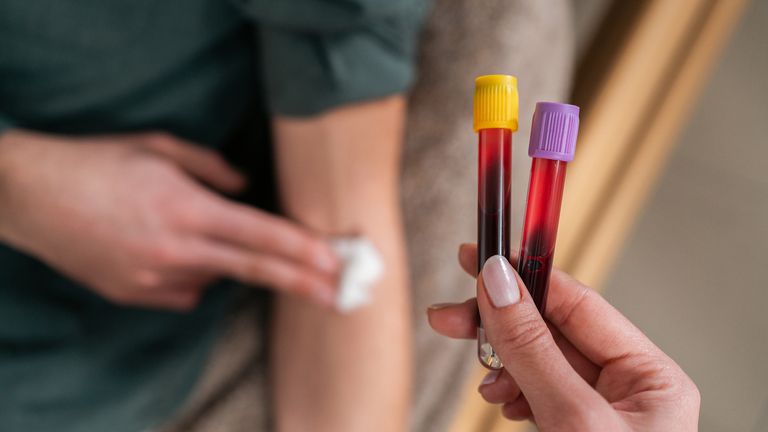
The groundbreaking study reveals a pioneering blood test accurately identified cancer in almost two-thirds of the positive cases it highlighted, a major step toward earlier diagnosis. The test, known as the Galleri blood test, screens for more than 50 different cancers and is currently being trialled within the NHS in the UK. This non-invasive diagnostic tool searches for a “fingerprint” of numerous deadly cancers by identifying DNA shed by cancer cells circulating in the bloodstream, signalling the disease before physical symptoms even appear.

AD: Capeesh Restaurant
Pic: iStock
The massive Pathfinder 2 trial analysed over 23,000 asymptomatic people from the United States and Canada, assessing them for at least a year. The results were compelling: among those found to have a “cancer signal” detected in their blood, a remarkable 61.6% subsequently received a cancer diagnosis. Furthermore, the Galleri blood test, developed by the US biotechnology firm Grail, demonstrated high accuracy in ruling out the disease, correctly reporting a negative result in almost all, or 99.6%, of cases. This high degree of specificity is vital to prevent unnecessary worry and further testing.
For individuals who received a cancer diagnosis following the test, the Galleri blood test was highly successful in identifying the specific organ or tissue affected, achieving a 92% success rate. This powerful capability could save significant time and money by streamlining the diagnostic pathway, reducing the need for extensive, time-consuming scans and other invasive tests. The Pathfinder 2 study sought to understand how the Galleri blood test might be effectively used in a real-world clinical setting, complementing regular screening programs for established cancers such as breast and bowel cancer.
Sir Harpal Kumar, the president of international business and biopharma at Grail, championed the trial results, stating the test detected “seven times as many cancers as the other screening programmes put together.” He suggests this incredible efficiency will be key in “transforming cancer outcomes” globally. Experts model that the Galleri blood test could be most effective as an annual screening tool for people beginning at age 50, which is when cancer cases start increasing rapidly. Earlier research published in the journal BMJ Open supports this approach, finding that an annual multi-cancer blood test could lead to a 49% reduction in late-stage diagnoses and a 21% reduction in deaths within five years.
Professor Nitzan Rosenfeld, director of the Barts Cancer Institute in London, described the initial Galleri test results as “impressive,” acknowledging the test’s potential as a powerful early warning system. However, not all experts have reacted with the same level of enthusiasm. Professor Clare Turnbull from the Institute of Cancer Research, for example, called for further independent research to conclusively determine if such tests translate directly into a measurable reduction in overall cancer death rates.
“The conversion of false positive results to cancer diagnosis in this updated analysis of the SYMPLIFY study highlights the importance of proactive follow-up on positive MCED results, as one third of the apparent false positive results were actually cancers the standard-of-care diagnostic process couldn’t immediately identify,” said Brian D. Nicholson, MRCGP, DPhil, Associate Professor at the Nuffield Department of Primary Care Health Sciences, University of Oxford, United Kingdom and co-lead investigator of the study. “Additionally, the results underscore the value of Galleri’s Cancer Signal Origin prediction, which aligned with the eventual diagnosis in almost all of the cases initially considered to be false positives. We are pleased to present these data at EDCC and have submitted this analysis for full publication.”
Most people diagnosed with cancer visit primary care with symptoms before diagnosis1. Many of these people report common, non-specific symptoms such as bloating, unexplained weight loss or abdominal pain, which can be attributed to various conditions as well as cancer2.
The primary analysis of the SYMPLIFY study, previously published in The Lancet Oncology, supported the feasibility of using the Galleri test to assist clinicians with decisions regarding referral from primary care. In that analysis, which followed participants until diagnostic resolution or up to nine months, Galleri’s positive predictive value (PPV) was 75.5%. When a cancer signal was detected, the test accurately predicted the Cancer Signal Origin (CSO) in 84.8% of cases.
Anna Schuh, a professor of molecular diagnostics at the University of Oxford, warned about the test’s limitations regarding false positives. She noted the test gives a positive result incorrectly “almost half of the time,” which she called “disappointing as it is only fractionally better compared to tossing a coin” when it calls a positive result. Nevertheless, the NHS continues with its own large-scale Galleri trial aimed at screening asymptomatic individuals, with results expected next year.

AD: Oysterian Sea Food Restaurant And Bar
Updated results :Importance Of Continued Follow Up
Patients reported to have a false positive Galleri result were followed for 24 months in national cancer registries for England and Wales. The analysis showed that 35.4% (28 of 79 participants) were later diagnosed with cancer within 24 months of enrollment. This reduction in false positives from 79 to 51 resulted in an increase of PPV to 84.2%. In aggregate, 27 of these 28 participants had a correct CSO prediction which could have led to a faster or more efficient diagnosis. In more than half of these cases, the cancer type diagnosed was not congruent with the original diagnostic clinic to which the patient was referred by the general practitioner based on the clinical presentation:
16 of the 28 (57.1%) were diagnosed with cancer within nine months of enrollment.
Eight of the 16 (50%) were diagnosed with cancers that were correctly predicted by the Galleri test’s CSO finding, but were incongruent with the diagnostic pathway chosen by the general practitioner based on the participants’ presenting symptoms.
12 of the 28 (42.9%) were diagnosed 10-24 months after enrolment.
Seven of the 12 (58.3%) were diagnosed outside the original referral pathway; in those cases, the CSO also was correct, matching the site that was ultimately diagnosed.
“The SYMPLIFY study, focused on patients presenting with symptoms, adds to the breadth of our clinical experience in asymptomatic populations. This robust data demonstrates the potential benefit of the Galleri test as a diagnostic tool for individuals presenting with symptoms of cancer, particularly where those symptoms are non-specific. The fact that, in all but one of the additional patients diagnosed with cancer, a Galleri CSO prediction correctly identified the cancer type, including in many cases where the symptoms were non-specific, further reinforces the value of the Galleri test’s CSO capability,” said Sir Harpal Kumar, President, International Business & BioPharma at GRAIL. “Furthermore, the 24-month follow-up data being presented at EDCC underscore the importance of continued follow-up to help identify cancers that may initially be missed in diagnostic evaluation. These latest results add to the body of evidence that Galleri could support clinical decision-making in primary care for referral to urgent diagnostic investigations of cancer and drive more efficient use of diagnostic capacity.”
About the SYMPLIFY Study
SYMPLIFY is a prospective multicentre observational study and represents the first large-scale evaluation of an MCED test in symptomatic patients who were referred from the primary care setting due to clinical suspicion of cancer. The study enrolled 6,238 patients, aged 18 years and older, in England and Wales who were referred for urgent imaging, endoscopy or other diagnostic modalities to investigate symptoms suspicious for possible cancer. Of the total enrolled patients, there were 5,461 evaluable patients who achieved diagnostic resolution. GRAIL’s MCED test was performed in batches, blinded to clinical outcome, and results were compared with the diagnosis obtained by standard of care pathways to assess the test’s performance.
The University of Oxford sponsored the SYMPLIFY study and was responsible for data collection, analysis and interpretation. The study was funded by GRAIL with support from National Health Service (NHS) England, NHS Wales, the National Institute for Health and Care Research (NIHR) and NIHR Oxford Biomedical Research Centre.
Important Galleri Safety Information
The Galleri test is recommended for use in adults who have an an elevated risk for cancer. The test does not detect all cancers and should be used in addition to routine cancer screening tests recommended by a healthcare provider. The Galleri test is designed to detect cancer signals and predict where in the body the cancer signal is located. Use of the test is not recommended in individuals who are pregnant, 21 years old or younger, or undergoing active cancer treatment.
Results should be interpreted by a healthcare provider in the context of medical history, clinical signs, and symptoms. A test result of No Cancer Signal Detected does not rule out cancer. A test result of Cancer Signal Detected requires confirmatory diagnostic evaluation by medically established procedures (e.g., imaging) to confirm cancer.
For more information on UK cancer screening guidelines, consult the NHS website. Readers can also examine the detailed findings of the Pathfinder 2 trial on multi-cancer early detection.

AD: Heritage And Restaurant Lounge Bar


