
By Isabelle Wilson-
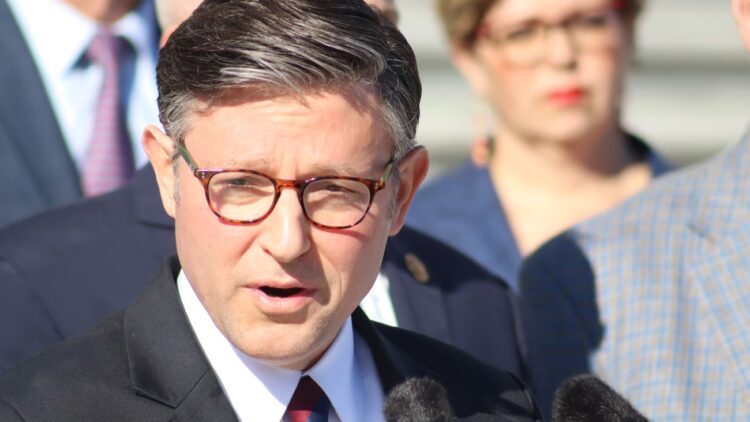
House Speaker Mike Johnson has drawn sharp criticism from civil rights groups, Democrats and some members of his own party for refusing to explicitly condemn inflammatory anti‑Muslim comments made by Republican lawmakers this week, choosing instead to focus on broader ideological concerns about “Sharia law.”
The remarks, coming at a fraught time in American politics, have reignited debates over religious tolerance, political rhetoric, and where elected leaders draw the line between free speech and bigotry.

AD: Capeesh Restaurant
The controversy erupted after Tennessee Republican Rep. Andy Ogles posted on social media that “Muslims don’t belong in American society,” a statement widely decried as Islamophobic by critics on both sides of the aisle.
Though Ogles defended his words as part of a discussion on religious law and constitutional values, many observers took issue with the underlying sentiment and its echoes of exclusionary politics.
Ogles’s comments came on the heels of earlier remarks by Florida Republican Rep. Randy Fine, who faced blowback for comparing Muslims unfavourably to dogs language that civil rights advocates called dehumanizing and harmful.

AD: Oysterian Sea Food Restaurant And Bar
Despite the mounting criticism, Speaker Johnson declined to denounce his colleagues’ positions outright when asked by reporters, saying only that he had spoken to lawmakers about “tone and message” and framing the issue as one of constitutional conflict rather than religious prejudice.
“We have a lot of energy in the country and a lot of popular sentiment that the demand to impose Sharia law in America is a serious problem,” Johnson told the press at a Republican retreat, suggesting that concerns about religious law not Muslims themselves were at the center of the discussion, even as advocacy groups warned that his comments could embolden discriminatory rhetoric.
Outcry and Calls for Accountability
Critics were swift to condemn Johnson’s response, saying it fell short of the moral clarity expected of the nation’s third‑highest ranking official.
The Council on American‑Islamic Relations (CAIR), one of the country’s largest Muslim civil rights organisations, issued a statement calling on Johnson to stop shielding lawmakers whose rhetoric they described as “anti‑Muslim fascist” and to take a firmer stance against prejudice.
According to CAIR, Johnson’s reluctance to censure Ogles and Fine “gives a green light for further expressions of hate” and risks normalising bigotry in Congress.
“Speaker Johnson had a choice: condemn the hateful, un‑American extremism coming from members of his own caucus or reinforce such extremism,” Robert S. McCaw, CAIR’s Government Affairs Director, said in the group’s press release. “He chose the latter.”
Democratic lawmakers joined in the rebuke, highlighting that rhetoric targeting a religious group especially one practiced by millions of Americans should draw unequivocal opposition from leaders regardless of political affiliation.
“We should not accept any elected official defending discrimination,” said House Minority Leader Hakeem Jeffries, emphasising the need for congressional leaders to make clear distinctions between lawful debate and harmful prejudice.
At the same time, some Republicans have largely remained silent, opting not to publicly distance themselves from Ogles and Fine. This silence has prompted frustration among observers who argue that failing to repudiate discriminatory language only deepens divisions and undermines efforts to build a more inclusive political discourse.
Supporters of Ogles and his perspective have framed their remarks around concerns about religious law and national identity, focusing particularly on fears grounded more in political rhetoric than evidence that certain interpretations of Islamic legal principles might clash with U.S. constitutional norms. Yet critics counter that such framing obscures the real issue: singling out an entire religious community for criticism or exclusion.
The Senate has seen similar tensions in recent months, with some lawmakers pursuing or promoting proposals that critics say veer into discriminatory territory, including controversial immigration measures aimed at predominantly Muslim countries.
While not directly related to the current House row, these broader developments underscore a rising tide of anxiety and political rhetoric that can easily spill into prejudice when unchecked.
The dispute over Johnson’s response comes against a backdrop of broader national conversation about the role of political leaders in shaping public discourse. Religious minorities, including American Muslims, have faced waves of scrutiny and stereotype‑driven criticism in recent years, often amplified by social media and polarised political debates.
With many advocates, the recent events illustrate how quickly elected officials can shift from discussing policy disagreements to endorsing rhetoric that marginalises entire communities.
Civil rights groups say that leaders bear a responsibility not only to defend constitutional freedoms like free speech but also to denounce language that fosters discrimination or exclusion. Failure to do so, they argue, risks normalising hate and sending a message that bigotry is acceptable in political dialogue.
The debate has also sparked deeper questions about the intersection of religion, law, and national identity in American politics. While Johnson emphasised constitutional concerns about religious law, critics dismissed that framing as a diversion from the clear intent of his colleagues’ remarks, which they see as targeting Muslims as a group rather than critiquing any legitimate legal issue.
As the controversy continues, several Muslim advocacy organisations are planning a series of community forums and congressional briefings aimed at promoting interfaith understanding and countering bigotry.
These efforts seek to highlight not only the harmful effects of discriminatory rhetoric but also the contributions of Muslim Americans to civic life, the economy, and cultural fabric of the nation. Such initiatives underscore the broader struggle over inclusivity and respect in a diverse society.
With his part, Johnson has so far stood by his approach, underscoring the importance of discussing issues in terms of constitutional principles. Yet as calls for clearer condemnation grow louder, the speaker faces mounting pressure to clarify his stance not only on the specific remarks at issue but on how leaders should respond when prejudice surfaces within their own ranks.
But for now, the episode has thrust questions of religious tolerance, political accountability, and the limits of acceptable discourse into the centre of American political debate leaving voters and leaders alike to grapple with what it means to represent a nation built on pluralism and respect for diverse faiths.

AD: Heritage And Restaurant Lounge Bar