
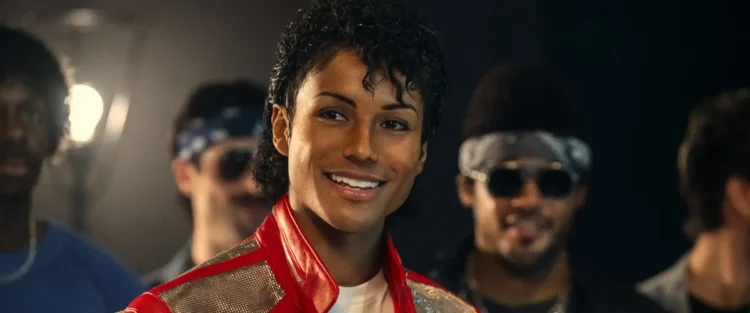
A new biographical film chronicling the life of the late King of Pop Michael Jackson, will be released in cinemas today, both in the U.S and the UK.Michael” is a 2026 American musical biographical drama that chronicles the life of Michael Jackson, the “King of Pop.”
Directed by Antoine Fuqua (Training Day, The Equalizer) and written by John Logan (Gladiator, Skyfall), the film focuses on Jackson’s journey from his early days with the Jackson 5 in the 1960s through his rise as a global solo superstar.
The film arrives burdened not only by the weight of Jackson’s unparalleled cultural legacy but also by the enduring controversies that clouded his final years and continue to shape public perception long after his death.

AD: Capeesh Restaurant
Directed as a sweeping portrait of one of the most influential entertainers in modern history, Michael stars Jackson’s real-life nephew Jaafar Jackson in the titular role. The casting alone has generated intrigue, with some fans hopeful that a familial connection might lend authenticity to the portrayal, while others question whether such proximity risks softening the more troubling aspects of Jackson’s life story.
Early critic reviews, however, suggest that the film may struggle to balance these competing expectations. Several outlets have already panned the project, citing uneven storytelling and an apparent reluctance to grapple meaningfully with the darker chapters of Jackson’s biography.

AD: Oysterian Sea Food Restaurant And Bar
That tension has spilled onto social media, particularly on Twitter, where debates over the film have quickly broadened into a wider conversation about the successes and failures of music biopics. One viral post declared, “Nothing is worse than that Tupac biopic,” referencing the widely criticised All Eyez on Me. The remark acted as a spark, prompting users to compile their own lists of disappointing portrayals of iconic musicians.
Among the films dragged into the discourse was Bohemian Rhapsody, the commercially successful but critically divisive account of Freddie Mercury and the band Queen. While the film triumphed at the box office and during awards season, longtime fans have consistently questioned its historical accuracy and narrative choices, arguing that it sanitised or simplified key elements of Mercury’s life. Similarly, the made-for-television film Aaliyah:
The Princess of R&B—produced by Wendy Williams—was widely criticised even before its release, largely due to casting decisions and a perceived lack of involvement from Aaliyah’s family. Selena: The Series also came under scrutiny for its portrayal of Selena Quintanilla, with critics arguing that it failed to capture the charisma and cultural significance of the beloved star.
Even earlier attempts to dramatise Jackson’s life have not escaped ridicule. The 2004 television film Man in the Mirror: The Michael Jackson Story, starring Flex Alexander, resurfaced in the conversation as an example of how difficult it is to convincingly portray an artist whose persona was as singular and enigmatic as Jackson’s.
The scrutiny surrounding Michael goes beyond the typical pitfalls of the biopic genre. It reflects a deeper unease about how to reckon with a figure whose life encompassed both extraordinary artistic achievement and deeply troubling allegations.
Jackson’s influence on music, dance, and popular culture is virtually unparalleled. Albums such as Thriller, Bad, and Dangerous redefined the possibilities of pop music, blending genres and setting new standards for production, choreography, and visual storytelling. Thriller alone remains the best-selling album of all time, a testament to Jackson’s global reach and enduring appeal.
His innovations extended beyond music into the realm of music videos, where he transformed the medium into an art form in its own right. Elaborate productions like “Thriller,” “Billie Jean,” and “Smooth Criminal” showcased a cinematic ambition that influenced generations of artists. Jackson’s signature dance moves, including the moonwalk, became instantly recognisable symbols of his artistry, while his meticulous approach to performance elevated the standards for live entertainment worldwide.
Jackson’s life was at the same time marked by a series of controversies that have proven impossible to separate from his legacy. Allegations of child sexual abuse first emerged in the early 1990s, leading to a highly publicised investigation and a civil settlement in 1994. A decade later, Jackson faced criminal charges in a separate case, culminating in the People v. Jackson trial, where he was ultimately acquitted on all counts.
Despite the legal outcome, the allegations left an indelible mark on his reputation, fuelling ongoing debate about his behaviour and the extent to which his work should be celebrated or reassessed.
These questions have resurfaced repeatedly in the years since his death, particularly following the release of the 2019 documentary Leaving Neverland, which reignited public discussion about the accusations against him. For some, Jackson remains an untouchable icon whose contributions to music and culture outweigh the controversies; for others, those controversies cannot be ignored, complicating any attempt to portray his life in a purely celebratory light.
Jackson’s death on June 25, 2009, added another layer of tragedy and complexity to his story. He died at the age of 50 from acute propofol intoxication, a powerful anaesthetic administered by his personal physician, Conrad Murray. The circumstances surrounding his death led to Murray’s conviction for involuntary manslaughter and raised broader questions about the pressures
Jackson faced in his final years, including his preparations for the planned “This Is It” concert series in London. The image of a global superstar driven to the brink by the demands of fame and the pursuit of perfection has since become a defining element of his narrative.
Against this backdrop, the release of Michael feels less like a straightforward cinematic event and more like a cultural flashpoint. The film’s reception will likely hinge on how it navigates the delicate balance between celebration and critique—between honouring Jackson’s undeniable achievements and acknowledging the controversies that continue to shape his legacy.
Early reactions suggest that the film may struggle to satisfy either camp fully, with some critics arguing that it glosses over difficult truths while others contend that it fails to capture the full scope of Jackson’s genius.
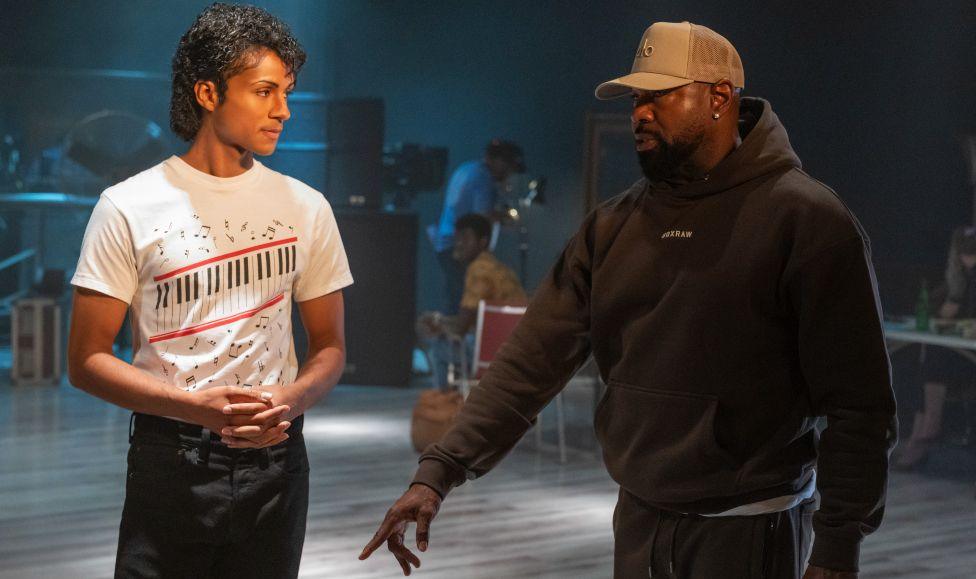
The film is directed by Antoine Fuqua, who was also behind Training Day and The Equalizer
Clarise Loughrey of The Independent, describes the film as a “ghoulish, soulless cash grab”.
She commented that “the line between ‘cinema’ and ‘merchandise’ has come close to being obliterated”.
“All Michael does is recreate, in mechanical style, the most famous visuals of Jackson’s career,” she said. “It’s certainly easier that way. Why bother to depict a human being when you can simply turn them into a product. This view was echoed by The Telegraph’s Robbie Collin said, external the resulting film was a “whitewash”, adding that the avoidance of any mention of the allegations was a “borderline-fatal problem”.
“It is simply not credible for a film to claim to be about Michael Jackson without addressing, even obliquely, the accusations, controversies and sadness that dogged his later life,” Collin said.
“You don’t have to dramatise these things; you should, at least, acknowledge or foreshadow them.”
The debate unfolding on Twitter underscores the broader challenge facing any attempt to dramatise the lives of real-life icons. Biopics are, by their nature, acts of interpretation, shaped by the perspectives and priorities of their creators. When the subject is as polarising as Michael Jackson, those choices become even more consequential, inviting scrutiny from audiences who bring their own assumptions and expectations to the viewing experience.
The online discourse has become as compelling as the film itself. for many observers. The comparison to other maligned biopics highlights a growing scepticism toward the genre, particularly when it comes to stories about beloved musicians whose lives resist easy categorisation. The question is no longer simply whether a film is entertaining or well-made, but whether it is truthful—and, if so, whose truth it represents.
As Michael prepares to make its theatrical debut, it enters a landscape where the boundaries between art, memory, and accountability are increasingly contested. The film’s success or failure may ultimately depend less on its box office performance than on its ability—or inability—to engage meaningfully with the complexities of its subject.
In revisiting the life of Michael Jackson, the filmmakers have taken on a task that is as daunting as it is inevitable. More than a decade after his death, Jackson remains a figure who defies easy categorisation: a musical revolutionary, a global icon, and a deeply controversial individual whose story continues to provoke debate. Whether Michael can do justice to that complexity remains to be seen, but one thing is certain. the conversation it has sparked is far from over.

AD: Heritage And Restaurant Lounge Bar
-
Share On
- Categories
- Date