
By Gabriel Princewill-
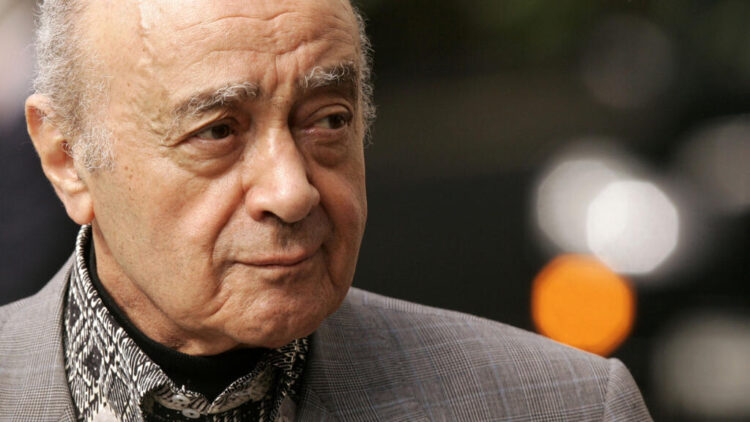
A serving officer with the Metropolitan Police and four former officers are under investigation for potential misconduct over the force’s handling of allegations of sexual abuse made against the late billionaire businessman, Mohamed Al Fayed.
The latest development that has intensified scrutiny of how repeated complaints against the former Harrods owner were dealt with over several decades.
The investigation, confirmed by the Independent Office for Police Conduct, marks the first time that individual current and former officers have been formally notified they are being investigated in connection with complaints linked to Al Fayed. The watchdog said the inquiry concerns the handling of reports made by four victim-survivors and centres on whether police responses to allegations of sexual abuse and exploitation amounted to misconduct.
The same watchdog first announced its investigation into the complaints in January 2025, at the time stressing part of its focus to see if there were any missed opportunities by police . Three months later, Cathy Newman conducted a Dispatches Review for channel 4 , aimed at giving as raw as possible a portrayal of what had transpired relating to the allegations against the Harrods boss, as well as tracking down any of his enablers.
The case has become one of the most serious institutional accountability questions facing the Metropolitan Police in recent years, unfolding against the backdrop of mounting allegations that opportunities to investigate and potentially prosecute Al Fayed were repeatedly missed while he remained one of Britain’s most high-profile and influential businessmen.

AD: Capeesh Restaurant
Al Fayed, who died in 2023 aged 94, owned the luxury London department store Harrods for 25 years and cultivated a public image as a flamboyant billionaire with close ties to the British establishment. However, since his death, hundreds of women have come forward with allegations accusing him of rape, sexual assault, trafficking and systematic abuse, stretching back decades.
Public awareness of the scale of the allegations dramatically intensified after a BBC documentary broadcast in September 2024 detailed claims from multiple women who alleged they had been sexually abused, manipulated or exploited by Al Fayed while working for him, or encountering him through his business and social networks. T
The programme triggered renewed examination of previous police investigations and raised serious questions about why criminal proceedings were never brought against him despite numerous complaints.

AD: Oysterian Sea Food Restaurant And Bar
In the aftermath of the documentary, the Metropolitan Police disclosed that before Al Fayed’s death it had received allegations from 21 women accusing him of offences including rape, sexual assault and human trafficking. Despite those complaints, he was never charged with a criminal offence during his lifetime.
The Metropolitan Police Service later referred two complaints connected to allegations first reported in 2008 to the police watchdog in November 2024. A third complaint was referred in February 2025, prompting the IOPC to widen its inquiry. The watchdog confirmed that a directed investigation formally began in January 2025 and is being carried out by the Met’s Directorate of Professional Standards under the IOPC’s direction and control.
In a statement, the watchdog said five individuals had now been informed they are under investigation for potential misconduct. Those being investigated include one currently serving Metropolitan Police officer and four former officers.
The IOPC stressed that no decision had yet been made on whether any officer has, or would have had if still serving, a disciplinary case to answer. The issuing of misconduct notices is considered a procedural step and does not automatically result in disciplinary proceedings. Nevertheless, the announcement represents a significant escalation in the inquiry and reflects the seriousness with which the watchdog is examining historic police actions.
The watchdog stated: “At this stage, five individuals – a serving Met officer and four former Met officers – have been advised that they are being investigated for potential misconduct.”
The investigation is understood to focus on whether allegations made by women were appropriately assessed, investigated and acted upon by officers at the time they were reported. Questions are also likely to centre on whether the status, wealth and influence of Al Fayed affected policing decisions or contributed to institutional failures.
A spokesperson for the Metropolitan Police confirmed the force was cooperating fully with the watchdog investigation. The spokesperson said: “We are assisting the IOPC as it carries out an independent investigation into our handling of reports of sexual offending by Mohammed Al-Fayed.
“As part of this, the IOPC is investigating complaints against five officers. One serving and four former officers are being investigated for potential misconduct. The serving of notices does not mean that misconduct proceedings will necessarily follow.
“Our investigation into individuals who may have facilitated or enabled offending by Mohamed Al Fayed remains active.”
It is understood that the serving officer under investigation remains on full duties and has not been placed under restrictions while the inquiry continues.
The misconduct investigation comes as the Metropolitan Police continues to simultaneously pursue a wider criminal inquiry into people suspected of assisting or enabling Al Fayed’s alleged offending. In March, the force announced that three women and one man had been interviewed under caution on suspicion of offences including human trafficking for sexual exploitation and facilitating rape.
The Metropolitan Police also revealed early in the year that at least 154 victims had now come forward with allegations involving sexual assault, rape, sexual exploitation and trafficking linked to Al Fayed. The rapidly rising number of complainants has transformed the case into one of the largest and most significant sexual abuse investigations involving a prominent public figure in modern British history.
The allegations have drawn comparisons with other historic abuse scandals in which powerful men were accused of exploiting status, wealth and institutional connections to avoid accountability. Campaigners and survivors’ groups have argued that the Al Fayed case demonstrates longstanding systemic failures in the treatment of women reporting sexual violence, particularly when allegations involve influential individuals.
Many of the women who have spoken publicly since the BBC documentary aired described experiences of intimidation, disbelief and fear about reporting abuse. Some alleged they felt unable to challenge a man with enormous financial resources and celebrity connections, while others claimed they were discouraged from pursuing complaints or believed police would not take action.
Critics have also questioned whether opportunities to identify patterns of offending were missed over the years because allegations were viewed in isolation rather than as part of a broader picture of alleged predatory behaviour.
Al Fayed occupied a uniquely prominent position within British public life for decades. As owner of Harrods from 1985 until 2010, he became one of the UK’s most recognisable business figures, known for his outspoken personality, political interventions and connections to high society. He also owned Fulham Football Club and remained a controversial figure due to his long-running claims surrounding the deaths of his son, Dodi Fayed, and Diana, Princess of Wales.
However, behind that public image, allegations of sexual misconduct had circulated for years. Some claims emerged publicly during his lifetime, though they rarely resulted in criminal proceedings or sustained public scrutiny on the scale now unfolding after his death.
The renewed focus on the handling of allegations against Al Fayed has also intensified wider criticism of the Metropolitan Police, which has faced a succession of crises over standards, misogyny and public confidence in recent years. The force has been under pressure to rebuild trust following a series of scandals involving serving officers convicted of serious offences, including rape and murder, as well as repeated accusations of institutional sexism and failures in handling violence against women and girls.
The IOPC investigation is therefore likely to be viewed not only as an examination of individual conduct, but also as a test of broader police accountability and institutional culture.
Legal experts say the inquiry could ultimately examine whether officers failed to pursue reasonable lines of inquiry, inadequately assessed evidence or neglected safeguarding responsibilities toward complainants. The investigation may also consider whether information-sharing failures or organisational shortcomings prevented a fuller understanding of the allegations emerging sooner.
The announcement for survivors and campaigners that officers are now formally under investigation represents an important step toward accountability, though many have stressed that significant questions remain unanswered about how allegations against Al Fayed were repeatedly handled over such a long period without resulting in prosecution.
The case has further reignited debate around the challenges faced by victims of sexual abuse when allegations concern wealthy or powerful individuals. Advocacy groups have argued that institutional hesitation, concerns about reputation, and fear of legal consequences can create barriers to robust investigations, potentially discouraging victims from coming forward.
Attention is also likely to focus on how police forces review historic allegations involving serial offenders and whether mechanisms exist to connect complaints made across different periods and jurisdictions. Critics have argued that fragmented investigative approaches can allow patterns of abuse to remain hidden for years.
The BBC documentary that triggered the latest wave of scrutiny was widely seen as a turning point because it brought together multiple accounts from women whose experiences displayed strikingly similar allegations of manipulation, coercion and abuse. Following the broadcast, pressure mounted on authorities to explain why earlier opportunities to investigate had not led to criminal charges.
The Metropolitan Police has stated that its current investigation into possible facilitators or enablers remains active and ongoing. Detectives are understood to be examining whether individuals connected to Al Fayed may have assisted, ignored or concealed alleged offending.
The scale of the allegations now emerging has prompted renewed calls for broader institutional reviews involving not only policing but also businesses and organisations associated with Al Fayed during his lifetime. Campaigners have questioned whether warning signs were overlooked within professional environments where he held considerable authority and influence.
The IOPC has emphasised that no conclusions have yet been reached regarding the officers involved. However, the decision to formally notify both serving and former officers that they are under investigation signals the seriousness of the watchdog’s concerns and the growing pressure for answers over how allegations against Mohamed Al Fayed were handled for so many years without leading to accountability in the criminal courts.

AD: Heritage And Restaurant Lounge Bar