
By Tony O’ Reilly-
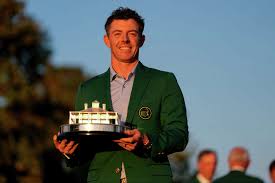
A relaxed Rory McIlroy says he feels “more motivated than ever” following his historic back-to-back triumph at the Masters, insisting that completing one of golf’s most elusive feats has not dulled his competitive edge but instead sharpened it further as he prepares for the next phase of his career.
The Northern Irishman’s latest reflections come after a defining stretch that saw him secure a second consecutive Green Jacket at Augusta National, joining an elite group of players to defend the title successfully. Far from signalling a sense of completion, McIlroy’s tone suggests a renewed hunger to extend his major championship tally and further cement his legacy in the sport.

AD: Capeesh Restaurant
According to recent reports, McIlroy has repeatedly emphasised that his motivation remains undiminished despite finally achieving long-sought career milestones, including the career Grand Slam and multiple Masters victories.
His comments also reflect a broader shift in mindset that has followed his recent success. Where earlier in his career Rory McIlroy often carried the weight of expectation particularly at Augusta, where his long pursuit of the Masters title became one of golf’s most closely followed narratives he now describes a noticeable sense of freedom that has reshaped how he approaches competition.
Speaking after his breakthrough at the Masters, McIlroy said he feels “much more relaxed” following the achievement, explaining that the emotional release of finally completing the career Grand Slam has lifted a burden he had carried for years, even as his competitive drive remains intact.

AD: Oysterian Sea Food Restaurant And Bar
This shift has allowed him to approach tournaments with greater clarity and calm, no longer defined by the pressure of chasing a missing major but instead by a more balanced perspective on performance and ambition.
That psychological release, however, has not translated into complacency. Instead, it appears to have created space for more ambitious goals, both in terms of major championship totals and consistency across the PGA Tour.
McIlroy’s back-to-back Masters wins have placed him in rare historical company, but those achievements have also reframed his own expectations. The golfer himself has spoken about how the completion of the career Grand Slam altered his perspective, shifting his focus from “what if” questions about legacy-defining wins to “what now” ambitions about sustained excellence.
That shift is evident in how McIlroy has approached the months following his latest Augusta victory. Rather than scaling back competitive intensity after a landmark achievement, he has instead taken a brief break before returning to the PGA Tour with renewed focus.
His preparation for upcoming events has included a deliberate emphasis on physical recovery and mental reset, but also a clear intention to remain at the centre of elite competition.
Observers note that this phase of McIlroy’s career resembles a transition from pursuit to preservation and expansion of greatness. Having already secured five major championships and completed the Grand Slam, he now finds himself in a position where every additional victory further strengthens an already historic résumé.
The competitive environment remains as demanding as ever, with a new generation of contenders and an increasingly deep field on the PGA Tour.
In interviews, McIlroy has acknowledged that success has not diminished his drive but has instead reframed it. The satisfaction of finally conquering Augusta appears to have removed psychological barriers that once weighed heavily on him, particularly during high-pressure Sunday rounds. In their place is a clearer focus on performance, consistency, and longevity at the top level.
McIlroy’s presence remains central to the sport’s biggest storylines. Whether contending at signature PGA Tour events or preparing for the next major championship, his form and mindset are being closely watched. What is increasingly evident is that, rather than slowing down after reaching one of golf’s ultimate milestones, he is treating it as a platform for what comes next.
With McIlroy, the narrative has shifted decisively. The question is no longer whether he can complete golf’s most difficult achievements, but how far he can push a legacy that already places him among the modern greats and, more importantly, how many chapters remain to be written.
That change in framing matters because for much of his career, McIlroy was defined as much by what he had not yet done as by what he had already achieved. His early dominance, four major championships by the age of 25, created expectations that he might redefine the sport’s record books entirely.
The years that followed brought near misses, public scrutiny, and a persistent focus on the one major missing from his collection: the Masters.
Now that that final piece has been secured, the conversation around him has fundamentally altered. The pressure that once followed him into Augusta National each spring has eased, and in its place is a more open-ended set of possibilities. Instead of being measured against a checklist of unfinished business, McIlroy is now judged against history itself. He is no longer a player trying to complete something; he is a player trying to extend something already significant.
That shift also changes how his performances are interpreted. A second or third-place finish in a major no longer carries the same narrative weight it once did.
Where previously such results might have been framed as missed opportunities in a career still searching for closure, they are now seen through the lens of sustained excellence. The expectation has moved from “when will he finish the set?” to “how long can he stay at this level?”
What makes this phase of McIlroy’s career particularly compelling is that it does not appear to be one of winding down or preservation. If anything, his own descriptions of his mindset suggest the opposite. He has repeatedly spoken about feeling lighter, more focused, and more present in competition since achieving the career Grand Slam.
That sense of psychological release has not diluted his ambition; it has recalibrated it. Rather than chasing validation, he is now chasing expression trying to maximise the version of his game that has already proven capable of defining eras. In that sense, the “legacy” question becomes more complex. McIlroy is already widely regarded as one of the defining figures of modern golf, but the contours of that status are still being shaped.
Additional major victories would not simply add to his résumé; they would shift his position within historical comparisons, particularly against contemporaries and past greats. Consistency at the highest level, longevity across different stages of his career, and continued competitiveness in majors now matter as much as any single milestone.
There is also the broader context of the sport itself. Men’s golf is currently in a highly competitive era, with a deep field of emerging and established talent across all four majors.
Maintaining relevance at the very top requires more than reputation; it demands continual reinvention. McIlroy’s ability to remain a central figure in that landscape, even after achieving what once seemed like his defining goal, speaks to the durability of his game and mindset.
What makes this stage of his career so intriguing is its openness. The story is no longer about completion but continuation. McIlroy has already answered the question that followed him for more than a decade. What remains now is a different kind of pursuit one defined not by pressure to finish, but by freedom to define what comes next.

AD: Heritage And Restaurant Lounge Bar