
By Stephen Oduntan-
The growing debate over police traffic stops is unfolding in Los Angeles after new data showed that a policing tactic known as “pretextual stops” disproportionately affects Black and Latino residents.
The issue came into sharp focus during a March 6 hearing of the Los Angeles City Council, where policymakers, community advocates and police officials clashed over whether the stops improve public safety or lead to unnecessary police encounters.

AD: Capeesh Restaurant
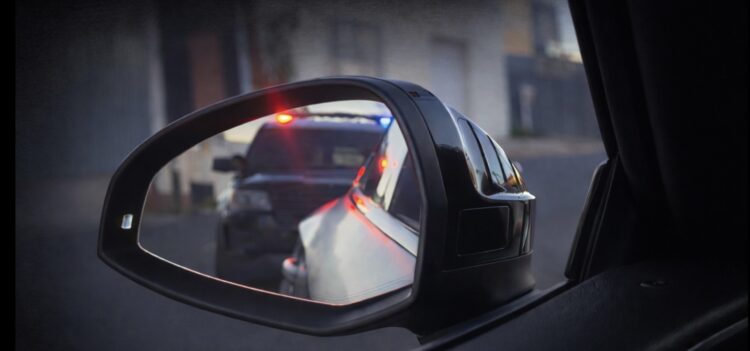
Pretextual stops allow officers to pull drivers over for minor traffic violations — such as broken taillights or expired registration — while investigating other suspected crimes.
Police officials say the tactic remains a valuable investigative tool, allowing officers to uncover illegal weapons, outstanding warrants or suspects connected to violent crimes during routine traffic stops. Critics argue the practice disproportionately targets communities of color while producing few arrests or meaningful public safety benefits.
Data presented during the hearing by the City Council’s Chief Legislative Analyst showed that approximately 760,000 individuals were stopped by police between April 2022 and September 2025.

AD: Oysterian Sea Food Restaurant And Bar
Analyst Henry Flatt told council members the figures were drawn from traffic stop data collected under California’s Racial and Identity Profiling Act, a law requiring police departments to document demographic information during stops.
More than two-thirds of those encounters resulted only in warnings, with no further enforcement action. Nearly half occurred in four council districts — Districts 8, 9, 14 and 15 — areas largely covering South and East Los Angeles.
“Eighty-six percent of pretextual stops involve individuals perceived by officers to be Black or Latino,” Flatt told the committee.
Researchers and policy advocates say the numbers reflect patterns that have persisted for years.
Jessie Borden of Catalyst California, a public policy research organization, told councilmembers that Black residents account for between 27 and 32 percent of stops for minor violations while representing roughly 8 percent of Los Angeles’ population.
“In other words,” Borden said, “Black residents are being stopped about six times their share of the population.”
Los Angeles City Council President Marqueece Harris-Dawson, who introduced the motion under discussion, said the figures reflect long-standing concerns about racial disparities in policing.
“Pretextual stops are racially biased and ineffective,” Harris-Dawson said during the hearing. “They do not deliver greater safety — neither traffic safety nor crime reduction — in any demonstrable way.”
Harris-Dawson said many Black families feel compelled to prepare their children for encounters with police before they begin driving.
“Before you can operate a car, your family has the talk about what to do if you’re pulled over by police,” he said. “Keep your hands on the steering wheel. Don’t raise your voice. Don’t make sudden movements — because one small thing can result in serious injury or death.”
He also described his own experience.
“As a member of this council driving in a government-issued vehicle, I’ve been stopped four times — as recently as Wednesday,” Harris-Dawson said. “It was as traumatic on Wednesday as it was when I was 16.”
Community members who testified during the hearing described similar encounters.
Sequaria McCoy told councilmembers her nephew died following a police encounter that began with a stop.
“I can’t talk to him. I can’t hug him or kiss him because of a pretextual stop,” McCoy said. “He was on his bicycle in a crosswalk when police chased him down two streets and shot him.”
Brian Jointer described being pulled over while driving with his two sons.
“I was driving with my sons, 14 and 13, when officers from the Los Angeles Police Department pulled me over for a supposed issue with my license plate,” he said.
“What followed was an encounter where I was stopped at gunpoint with my boys in the car.”
After officers searched the vehicle for 45 minutes, he said they found nothing.
“No ticket. No explanation. Just humiliation.”
Community violence intervention advocate Skipp Townsend told councilmembers such encounters often produce long-lasting trauma.
“Now I have seven sons of my own,” Townsend said. “And I’m transferring that trauma to them.”
Police officials pushed back against calls to eliminate the tactic entirely.
Capt. Shannon Whyte of the Los Angeles Police Department acknowledged concerns about racial disparities but said the numbers must be viewed in context.
“It pains me to see the numbers high,” Whyte said during the hearing. “But it’s not just about the census — it’s also about what is going on in the community and who victims are describing as their suspects and perpetrators in crimes.”
California Assemblymember Isaac Bryan, who attended the hearing, said the issue has been debated in Los Angeles for more than a decade.
“Pretextual stops for things like broken taillights disproportionately affect Black and brown Angelenos and people living in certain ZIP codes,” Bryan said.
“If the city of Los Angeles gets this right,” he added, “it can save lives, increase public safety and deepen trust between communities and law enforcement.”
The committee took no formal action following the hearing, directing staff to continue analysing possible policy changes.
The debate over pretextual stops is expected to continue as city officials consider whether to place limits on the practice.

AD: Heritage And Restaurant Lounge Bar