
By Ben Kerrigan-
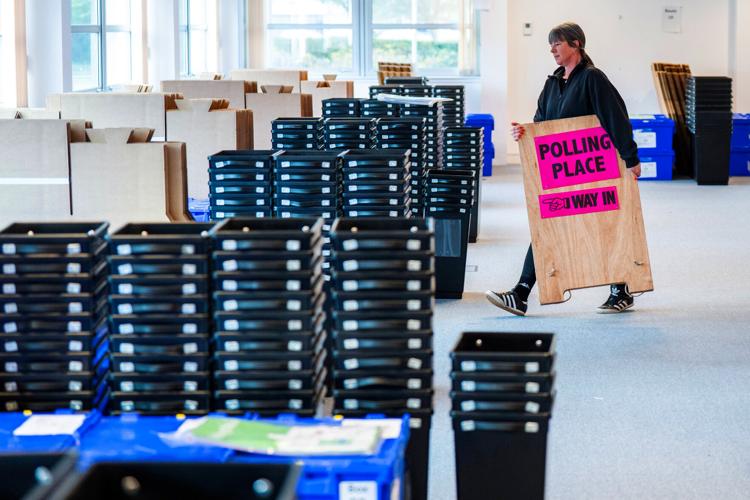
British voters headed to the polls in local and regional elections that have rapidly become more than a routine test of council politics. Instead, the contests across England, Scotland and Wales are being interpreted as a sweeping judgement on Prime Minister Keir Starmer and the direction of the Labour government less than two years after its landslide general election victory.
With roughly 5,000 council seats, mayoralties and devolved parliamentary positions at stake, the elections have evolved into what many political observers describe as the most serious challenge yet to Starmer’s authority. Labour insiders fear the results could trigger internal unrest within the party if expected losses materialise across traditional strongholds.

AD: Capeesh Restaurant
The elections come at a time of growing public frustration over living costs, pressure on public services and questions about whether Labour has delivered the change voters expected after fourteen years of Conservative rule. Polling ahead of the vote suggested many Britons remain unconvinced by Starmer’s leadership style, with critics portraying him as cautious, technocratic and disconnected from ordinary voters.
Starmer attempted to frame the elections as a choice between responsible government and political instability. During the final days of campaigning, he warned voters against backing smaller parties, arguing that Britain faced a period of international uncertainty requiring serious leadership.
Yet the prime minister entered election day under mounting pressure from both sides of the political spectrum. On the right, Nigel Farage and Reform UK sought to capitalise on concerns about immigration and economic stagnation. On the left, the Green Party targeted disillusioned progressive voters who believe Labour has drifted too far from its traditional social-democratic roots.

AD: Oysterian Sea Food Restaurant And Bar
Political analysts say the local elections reveal a broader fragmentation in British politics that is eroding the dominance of the two-party system. Reform UK has gained traction in former Labour heartlands, while Greens and Liberal Democrats have continued making advances in urban and suburban areas alike.
The pressure on Starmer has intensified because expectations for Labour were once extraordinarily high. After sweeping to power in the 2024 general election with a commanding parliamentary majority, Labour promised economic renewal, NHS reform and greater political stability following years of Conservative turmoil. Instead, many voters now appear impatient with the pace of progress.
Critics within Labour argue that the government has struggled to define a compelling identity. A recent report from University College London’s Policy Lab concluded that Starmer’s failure to project clear values has alienated progressive supporters who once formed a crucial part of Labour’s electoral coalition.
Some Labour MPs have privately voiced fears that severe local election losses could reignite questions over whether Starmer should lead the party into the next general election. Potential rivals including Angela Rayner, Wes Streeting and Andy Burnham are frequently mentioned in Westminster speculation, although no formal leadership challenge has emerged.
A Political Earthquake in the Making
Historically, governing parties often suffer in midterm local elections, as voters use them to register frustration without changing the national government. But several commentators believe this year’s contests may signal something deeper and potentially more dangerous for Labour.
Researchers at the London School of Economics argued that the projected scale of Labour’s setbacks goes beyond normal “midterm blues” and instead points toward an existential crisis for Starmer’s administration.
The party is particularly vulnerable in parts of northern England and the Midlands, where Reform UK has targeted working-class voters who once formed Labour’s electoral backbone. Farage has portrayed Reform as the authentic voice of ordinary Britons frustrated with mainstream politics, a strategy that echoes the populist campaigns that transformed British politics during the Brexit era.
Conservative leader Kemi Badenoch also sought to reassert her party’s relevance after its crushing defeat in 2024. However, the Conservatives themselves face the prospect of substantial losses as right-wing voters migrate toward Reform UK.
The emergence of a five-party political battlefield involving Labour, Conservatives, Reform UK, Greens and Liberal Democrats has created one of the most volatile electoral landscapes Britain has seen in decades. Analysts warn that such fragmentation could make future governments less stable and complicate efforts to build broad national coalitions. Meanwhile, financial markets have begun paying close attention to the political turbulence. Investors fear that a weakened Starmer government could trigger internal Labour divisions over spending and taxation policy. Some economists warn prolonged instability may unsettle Britain’s bond markets, which remain sensitive after the economic turmoil surrounding former Prime Minister Liz Truss in 2022.
Starmer’s allies insist the government still has time to recover before the next general election, which must take place by 2029. They argue Labour inherited severe economic problems and overstretched public services after years of Conservative rule, making rapid improvements difficult. Supporters also note that local elections traditionally produce lower turnout and often exaggerate protest voting.
Nevertheless, the symbolism of these contests is difficult to ignore. Local elections usually revolve around practical concerns such as housing, potholes, waste collection and local transport. This year, however, they have become inseparable from the national political mood.
The atmosphere around Labour has shifted markedly since the optimism that followed its return to government. Questions once focused on how dominant Starmer’s administration might become; now the conversation centres on whether his leadership can survive mounting dissatisfaction.
Even before the ballots were counted, nervousness was spreading through Labour ranks. Several MPs publicly urged colleagues to avoid destabilising leadership speculation, warning that internal feuding could further damage the party’s standing with voters. With Starmer himself, the stakes are intensely personal. During his years as opposition leader, he transformed Labour from a divided opposition movement into an election-winning force. Yet British political history shows how quickly fortunes can change once in power.
The local election results may not immediately determine Starmer’s future, but they will almost certainly shape the political narrative heading into the second half of Labour’s first term. Strong performances by Reform UK and the Greens would signal that many voters are no longer satisfied with the traditional political choices offered by Westminster. Ballot counting kicks off throughout Britain, and the message from voters is already clear: the honeymoon phase for Labour has ended, and the prime minister now encounters the toughest challenge of his leadership to date.

AD: Heritage And Restaurant Lounge Bar