
By Tim Parsons-
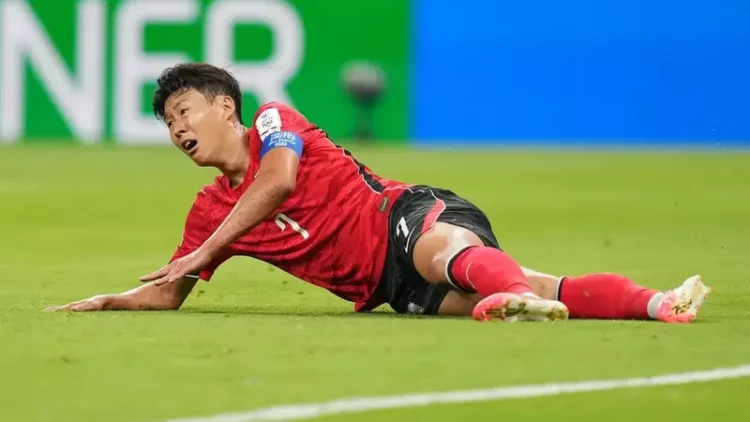
A wave of controversy has swept through the South Korea national football camp after leaked remarks reportedly referencing captain Son Heung-min triggered internal unrest and public backlash just weeks before a major international tournament.
While details of the comments remain unverified in full, South Korean media outlets have reported that the remarks were circulated within team circles before quickly spreading beyond the training base, prompting immediate concern among coaching staff and federation officials.

AD: Capeesh Restaurant
The incident has placed renewed scrutiny on the fragile balance of elite tournament preparation, where media pressure, internal competition, and national expectation converge in an already high-stakes environment. World Cup cycles are shaped by intense scrutiny in which squad decisions, performances, and even off-field dynamics are continuously analysed in real time as narratives develop across global media platforms.
Similarly, FIFA’s own framing of the World Cup underscores the scale of global expectation placed on participating teams, with national squads operating under worldwide attention where every result and internal development is magnified.
Within this environment, Reuters reporting on international football regularly notes how quickly internal team issues and competitive pressures can spill into broader public discourse, reinforcing how elite squads must manage not only on-pitch demands but also constant external interpretation of their preparation and cohesion.

AD: Oysterian Sea Food Restaurant And Bar
According to reports, the controversy stems from leaked remarks that circulated within the South Korea camp and quickly spilled into the public domain, intensifying scrutiny on squad dynamics ahead of a major international tournament.
The report notes that while the comments have not been officially verified, their spread has triggered internal discomfort and external backlash, with officials moving to limit further disruption and refocus attention on preparation.
Within the camp, the mood is described as tense but controlled, with coaching staff reportedly moving quickly to contain speculation and prevent disruption to training routines. The Korea Football Association has not issued a detailed public statement on the content of the leaked remarks, but has acknowledged awareness of “internal matters” being circulated in the media and emphasised the need to maintain focus ahead of competition.
The timing of the leak has proved particularly disruptive. Preparations for major international tournaments are typically built on tightly managed communications strategies, where even minor internal disagreements are carefully contained.
In this case, however, the speed at which the alleged remarks spread beyond the camp has amplified their impact, drawing attention not only from domestic media but also from international football observers tracking squad dynamics.
Coverage from global sports outlets has highlighted how quickly internal narratives can escalate when they involve high-profile figures such as Son Heung-min, who remains one of Asia’s most prominent footballers and a central figure in South Korea’s tactical system. Son continues to sit at the centre of both tactical discussion and public expectation, with debate around squad direction and performance often quickly becoming headline narratives that extend beyond the training camp itself.
Analysts note that any perceived division within the squad risks undermining cohesion at a time when consistency and unity are typically prioritised above all else, particularly in high-pressure tournament environments where South Korea are expected to perform on the global stage.
There is little indication that training itself has been materially disrupted. Reports suggest sessions have continued as scheduled, with players maintaining professional routines despite increased media attention. However, observers close to the camp describe an “unusual quietness” during public training sessions, with players reportedly more reserved than in previous build-ups.
The South Korea camp is no stranger to pressure, particularly given the heightened expectations that accompany international tournaments, where performance on the global stage is subject to intense media scrutiny and national expectation. World Cup environments consistently highlights how squads operate under sustained public and press attention, with even minor developments often amplified due to the scale and visibility of the tournament.
But internal leaks of this nature are relatively rare in elite national team settings, and their emergence has raised wider questions about information control, discipline, and narrative management within professional football environments, where federations typically aim to tightly regulate communications during major competition cycles.
Officials linked to the Korea Football Association have privately stressed the importance of maintaining discipline and unity, with sources indicating that internal discussions have focused on limiting further speculation. While no disciplinary measures have been publicly announced, it is understood that team leadership has urged players and staff to avoid engaging with rumours and to allow internal processes to address the situation.
The story continues to circulate, with attention shifting toward how the federation and coaching staff will manage both the immediate narrative and its longer-term implications. In modern elite sport, internal leaks can rapidly evolve into broader questions about leadership, dressing-room harmony, and tactical cohesion, particularly when they involve a captain of Son Heung-min’s stature.
Sports coverage has noted in broader reporting on international football environments that national team camps are increasingly vulnerable to external pressures amplified through social media and digital reporting cycles, where unverified claims can spread before official clarification is possible. In such contexts, federations often find themselves responding not only to the content of reports but also to their rapid circulation and interpretation among supporters.
The challenge for South Korea’s management team is therefore twofold: addressing the immediate reputational impact of the leak while ensuring that preparation for upcoming fixtures remains uninterrupted. Historically, teams at this level have sought to neutralise similar incidents by reinforcing internal communication discipline and limiting media access during sensitive phases of preparation.
Public reaction has been sharply divided, with BBC Sport reporting that football controversies involving high-profile national teams often generate contrasting interpretations among supporters, particularly in the immediate aftermath of leaks or unexpected media developments. Despite the noise, there has been no public indication from Son Heung-min regarding the controversy, with the forward maintaining his usual restrained approach to off-field speculation and keeping attention on football matters.
The profile of Son consistently highlight his long-standing role as captain of the South Korea national team, underlining his importance not only as a leading player but also as a central leadership figure within the squad structure.
Being captain, his position means he is frequently the focal point for scrutiny whenever issues arise within the camp, with BBC reporting on international football emphasising how leadership figures naturally attract heightened media attention and become symbolic of broader squad narratives. Football analysts point out that such episodes are not uncommon in the lead-up to major tournaments, where squad selection debates, competition for starting positions, and media scrutiny often intersect.
What distinguishes this case is the speed at which the alleged remarks moved from internal circulation to public discourse, reflecting the increasingly porous boundary between team environments and external media ecosystems.
In previous tournament cycles, federations have attempted to tighten information control by restricting unofficial communications and reinforcing internal confidentiality protocols. Yet even these measures have struggled to fully prevent leaks in an era where digital messaging and informal reporting channels are deeply embedded in sporting culture.
Attention is likely to remain fixed on how the squad responds collectively on the pitch. The upcoming fixtures will offer the clearest indication of whether the controversy has any lasting impact on performance or cohesion. However, officials appear focused on containment rather than escalation, seeking to draw a line under the incident before it further distracts from sporting objectives.
Coverage from FIFA’s official platforms has repeatedly emphasised the importance of team stability and preparation discipline during tournament cycles, noting that successful campaigns are often defined as much by internal harmony as by tactical execution. South Korea’s immediate priority will be restoring a sense of normality within the camp and ensuring that attention returns to football rather than internal speculation.

AD: Heritage And Restaurant Lounge Bar