
By Aaron Miller-
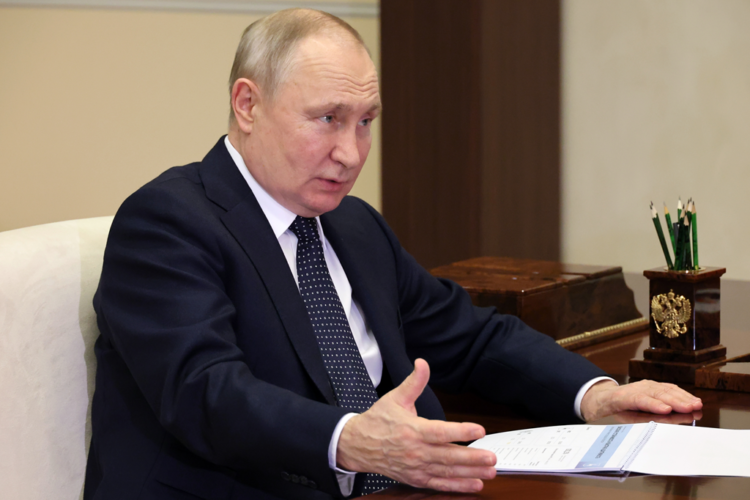
President Vladimir Putin sought to project unwavering confidence through a state-aligned video address, reaffirming to the Russian public that the ongoing military campaign in Ukraine constitutes a “righteous war.”
The address strategically aimed to boost national morale and solidify domestic support for the protracted conflict, characterising the invasion as a necessary defence against Western aggression.

AD: Capeesh Restaurant

Moscow consistently employs this rhetoric to justify the full-scale invasion launched in February 2022, framing the conflict as an existential battle for Russia’s geopolitical future.
However, this optimistic assurance follows one of the most significant aerial bombardments in months, where Russian forces launched hundreds of missiles and drones at Ukrainian cities, resulting in at least four civilian deaths and injuring over eighty people.
Significantly, the Kremlin amplified the narrative presented in Putin’s defiant war message by directly challenging Kyiv’s leadership. Spokesman Dmitry Peskov publicly dismissed recent warnings from Ukrainian President Volodymyr Zelenskyy about potential strikes on power centres inside Russia.

AD: Oysterian Sea Food Restaurant And Bar
Dismissing the warning, Peskov claimed Zelenskyy attempts only to look like a “brave soldier” for his European financiers.
Furthermore, the spokesman asserted that the tactical situation on the front line demonstrates an “inexorably deteriorating” state of affairs for Ukraine with every passing day, naturally harming Kyiv’s overall negotiating leverage.
These coordinated statements reveal a powerful internal propaganda effort designed to minimise the war’s cost and maximise the perception of Russian military momentum among its own populace.
Western Tensions Spike Following Putin’s Defiant War Message
The aggressive rhetoric contained within Putin’s defiant war message has predictably amplified existing geopolitical tensions, particularly among NATO member states bordering Russia.
Recently, several European countries, including Denmark, Germany, and Estonia, have reported unexplained or confirmed violations of their airspace involving Russian drones and fighter aircraft. Such incidents have prompted NATO to deploy extra assets to solidify its Eastern flank defences and triggered discussions about establishing a permanent “drone wall” along Europe’s eastern borders.
Therefore, the coordinated Russian attacks and the concurrent political defiance suggest a deliberate strategy intended to fragment Western resolve.
Compounding the atmosphere of high tension, the US administration publicly acknowledged considering Ukraine’s request to purchase long-range Tomahawk missiles from European nations.
Vice President JD Vance stated the final decision ultimately rests with President Donald Trump, confirming the high stakes involved in the arms transfer debate.
These missiles, capable of reaching targets up to 2,500km away, would substantially enhance Kyiv’s counter-offensive capabilities, thereby representing a major escalation in Western support. This latest episode underscores the deep disconnect between the self-assured victory narrative presented in Putin’s defiant war message and the reality of a globalised conflict dragging the world closer to a new confrontation.

AD: Heritage And Restaurant Lounge Bar


