
By Aaron Miller-
An Utah judge has issued a significant pretrial ruling, determining that the man charged with the aggravated murder of prominent conservative activist Charlie Kirk, can avoid wearing prison uniform in open court. Judge Tony Graf, overseeing the high-profile case, mandated, however, that the 22-year-old defendant, Tyler Robinson, must be physically restrained due to documented safety concerns within the courtroom.
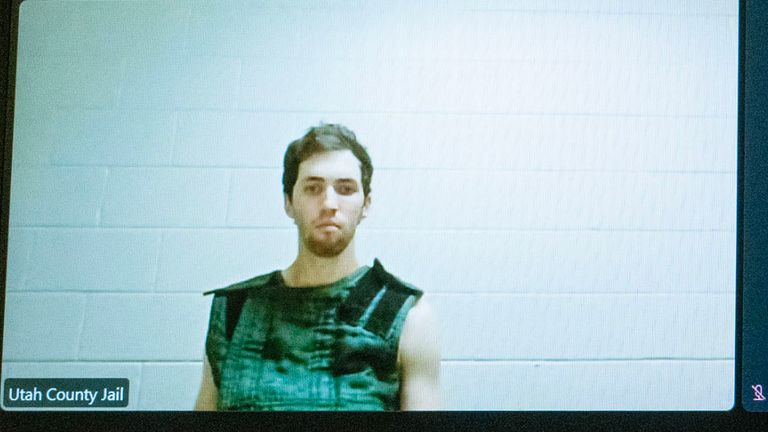
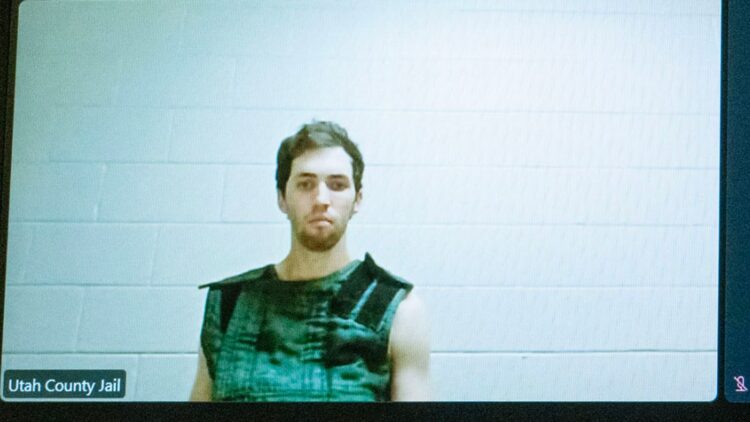
Charlie Kirk shooting suspect Tyler Robinson is said to present safety concerns in court. Pic: US pool
This decision reflects the delicate legal balance between maintaining security and protecting the defendant’s fundamental right to the presumption of innocence. Prosecutors are aggressively seeking the death penalty for Robinson, who is accused of carrying out the 10 September shooting of the conservative commentator on a crowded Utah Valley University campus.

AD: Capeesh Restaurant
Robinson’s defense team strongly argued that presenting their client in a standard prison uniform, alongside visible shackles, could severely prejudice future jurors. Given the case’s extensive media coverage and intense public interest, the defense lawyers claimed any images of the shackled defendant would inevitably spread widely, corrupting the jury pool before the trial even begins.
Judge Graf acknowledged the validity of their concern, confirming that the case had already drawn “extraordinary” attention from both the media and the general public.
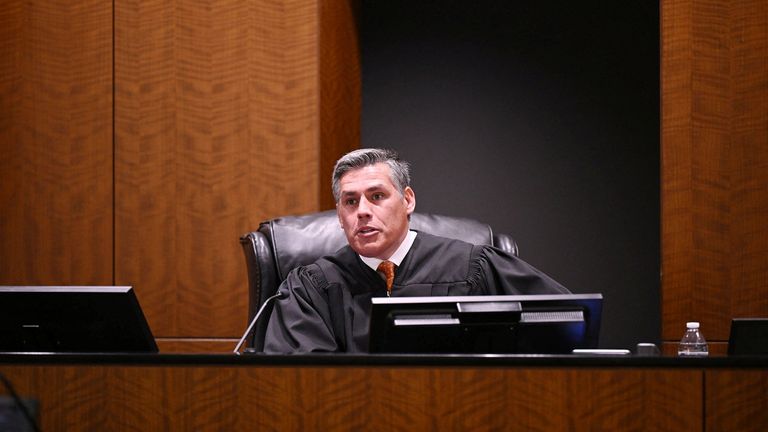
Judge Tony Graf speaks during the first court appearance of Tyler Robinson. Pic: Reuters
During a virtual court hearing, Judge Graf issued his directive: “Mr Robinson shall be dressed as one who is presumed innocent.” Although the accused has no prior criminal history, the charges he faces are extremely serious, and he reportedly presents clear safety concerns in the courtroom, necessitating the physical restraints. .

AD: Oysterian Sea Food Restaurant And Bar
While the legal system permits Robinson to appear in civilian clothing, Judge Graf has deemed the use of physical restraints essential for maintaining order and security during the Charlie Kirk murder trial uniform ruling. Robinson will therefore have to appear in restraints, although the media will be explicitly blocked from photographing or filming them.
This measure is a common judicial tool used to mitigate the risk of disruption or escape in highly charged legal proceedings, especially those involving serious violence. The defendant faces an aggravated murder charge following the deadly shooting of Mr. Kirk, a fervent supporter of President Donald Trump who dedicated his work to steering young voters toward conservatism.
The prosecution alleges Robinson shot the activist from a rooftop overlooking a busy courtyard at Utah Valley University, an act which immediately generated huge national attention. Robinson was apprehended the night after the shooting when he voluntarily turned himself in to law enforcement officials. Prosecutors have since disclosed compelling text messages and DNA evidence they assert directly connect Robinson to the killing, strengthening their case.
During his initial court appearance in September, Robinson only spoke to confirm his name via video link from the Utah County Jail. He otherwise remained silent and appeared calm during the brief hearing. This is a developing story, and the legal maneuveres surrounding the Charlie Kirk murder trial uniform ruling are being watched closely by legal analysts nationwide. .
The judge’s ruling that the defendant can avoid wearing prison uniform while mandating restraints sets a crucial precedent for balancing the defendant’s rights against the need for courtroom security. The fundamental legal principle that defendants are presumed innocent until proven guilty is key to the judicial decision regarding civilian clothes.
However, the requirement for physical restraint underscores the gravity of the charges and the perceived risk the defendant poses to court personnel. Judge Graf has ordered Robinson to appear on 16 January and 30 January for his first public in-person hearings. These appearances will mark the first time the defendant is physically present in the courtroom following his initial video link appearance.
The legal battle is only beginning, with the prosecution’s pursuit of the death penalty indicating the intense judicial resources that will be allocated to this case. The upcoming hearings are expected to focus on preliminary matters, including further evidence presentation and motions regarding the scope of the trial. The case, due to its political overtones and high-profile nature, has already spurred significant movement on issues related to campus security and political discourse, making the Charlie Kirk murder trial uniform ruling a widely discussed element.

AD: Heritage And Restaurant Lounge Bar
