
By Ben Kerrigan-
In a dramatic clash of narratives that has rippled across global markets and geopolitical arenas, the Islamic Republic of Iran has emphatically denied that it has engaged in any form of talks with the United States, directly contradicting recent public statements made by U.S. President Donald Trump. Tehran’s blunt repudiation of Washington’s claims has thrust diplomatic uncertainty back into the spotlight at a moment when tensions in the Middle East remain perilously high, and energy markets are already reeling from weeks of conflict and disruptions.
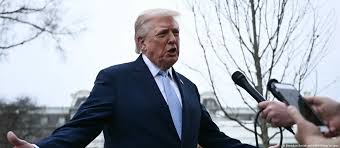
The unfolding standoff began earlier this week when President Trump asserted in public remarks that U.S. and Iranian officials had engaged in what he described as “productive conversations,” hinting that these interactions laid the groundwork for a potential de‑escalation of hostilities.

AD: Capeesh Restaurant
The president’s comments came as he announced a pause in planned strikes against Iranian energy infrastructure, citing progress in communications and suggesting that there were “major points of agreement” between the two sides that could lead to a broader resolution of the ongoing conflict.
Yet within hours of the president’s declaration, Iranian government spokespeople and state media issued blistering denials, insisting there had been no direct or indirect communication with U.S. officials since the outbreak of hostilities.
Tehran’s Foreign Ministry spokesperson reiterated that “there is no dialogue between Tehran and Washington,” framing the U.S. president’s narrative as both inaccurate and politically motivated.

AD: Oysterian Sea Food Restaurant And Bar
The stark contrast between public statements from Washington and Tehran has sparked confusion among diplomats and analysts, who are struggling to parse whether the disconnect reflects genuine communication failures, divergent messaging strategies, or deeper strategic calculations by both capitals.
Trump’s claim of constructive talks was immediately seized upon by investors and traders as a sign that a broader de‑escalation might be on the horizon. Following his remarks, major U.S. stock indices rallied, and oil prices already volatile due to supply concerns in the Middle East tumbled sharply as traders bet on a reduced risk of further escalation.
Despite the market’s tentative relief, Iranian authorities swiftly moved to quash any suggestion that negotiators have been in contact. According to Iranian state‑linked outlets and official comments, no negotiation, whether direct or indirect, has taken place with the United States, and the notion of talks is being dismissed as a mischaracterisation or even a strategic ploy by the White House.
One Iranian source cited by external media described Trump’s claim as an attempt to “buy time” and ease global energy prices, rather than a reflection of substantive diplomatic engagement. The statement suggested that Washington’s narrative was designed to calm markets and provide political cover while the United States pursues its broader military and strategic objectives in the region.
The backdrop to these conflicting claims is the ongoing war between U.S.-led forces and Iranian targets, which has seen both sides exchange blows in the air and at sea since early February.
The situation was further exacerbated when Trump had threatened strikes on Iranian power plants and energy infrastructure, triggering fears of widespread disruption to global oil flows and heightened volatility in already fragile markets.
Analysts caution that discrepancies in official narratives are not necessarily indicative of the absence of all channels of communication, but they reflect the extreme complexity of diplomacy during active conflict.
In modern crises, states often resort to back‑channel or third‑party intermediaries to exchange messages discreetly, particularly when domestic political dynamics make public acknowledgment of talks politically fraught.
In past negotiations between Iran and Western powers, Oman has frequently played such a mediating role, relaying messages between capitals when direct contact was too sensitive or politically perilous to acknowledge publicly.
While Tehran has denied any formal communication with Washington, there are unverified reports circulating in regional media that talks could occur behind the scenes, potentially in a neutral location such as Islamabad, with senior officials from both sides possibly engaging through intermediaries.
A source speaking to an Israeli news outlet hinted at such developments, though these claims remain unofficial and have not been confirmed by either government.
President Trump’s own messaging has been a source of contention, with critics arguing that his public statements have sometimes outpaced the verified diplomatic record.
Fact‑checking analyses of recent statements on Iran show a pattern of assertions about talks and agreements that have not been independently corroborated, raising questions about how much of the narrative is rooted in verifiable progress versus strategic posturing.
Tehran’s rejection of the U.S. position also carries its own set of strategic incentives. Within Iran, domestic political pressures remain intense, and government officials have been keen to project strength and resolve in the face of external threats.
Acknowledging negotiations with a country with which Iran is at war could be politically sensitive, potentially undermining hard‑liner narratives that frame Tehran’s resistance as principled and uncompromising.
Through publicly denying contact with the United States, Iran’s leadership reinforces its own narrative of defiance and self‑determination, even as behind‑the‑scenes communications may still occur through third parties.
The ripple effects of this diplomatic tug‑of‑war are not confined to the corridors of power. Markets have clearly reacted to the conflicting signals: oil prices experienced one of their most dramatic swings in recent weeks, plunging sharply after Trump’s statements before partially recovering as scepticism over the existence of talks took hold.
The volatility underscores how political communication can directly influence global economic conditions, particularly in a world still grappling with the economic fallout of the ongoing conflict.
Meanwhile, investors and policymakers alike are watching closely to see whether this narrative disconnect will be reconciled, whether through future statements, leaked diplomatic correspondence, or confirmation of indirect talks mediated by neutral actors.
Some international relations experts argue that even a brief pause in hostilities and the possibility of dialogue however murky could create a platform for more substantive negotiations. Others warn that mixed messaging could exacerbate mistrust and fuel further escalation.
While the diplomatic theatre unfolds, both capitals continue to spin their own versions of events, leaving the global public to decipher between rhetoric, strategic messaging, and the ground reality of a conflict that has already reshaped energy markets and regional alignments.
Whether President Trump’s optimistic framing of U.S.-Iran communications holds any kernel of truth or remains largely aspirational will likely become clearer in the days ahead, as independent mediators and foreign governments seek to clarify the full picture behind the headlines.

AD: Heritage And Restaurant Lounge Bar