
By Sammy Jones-
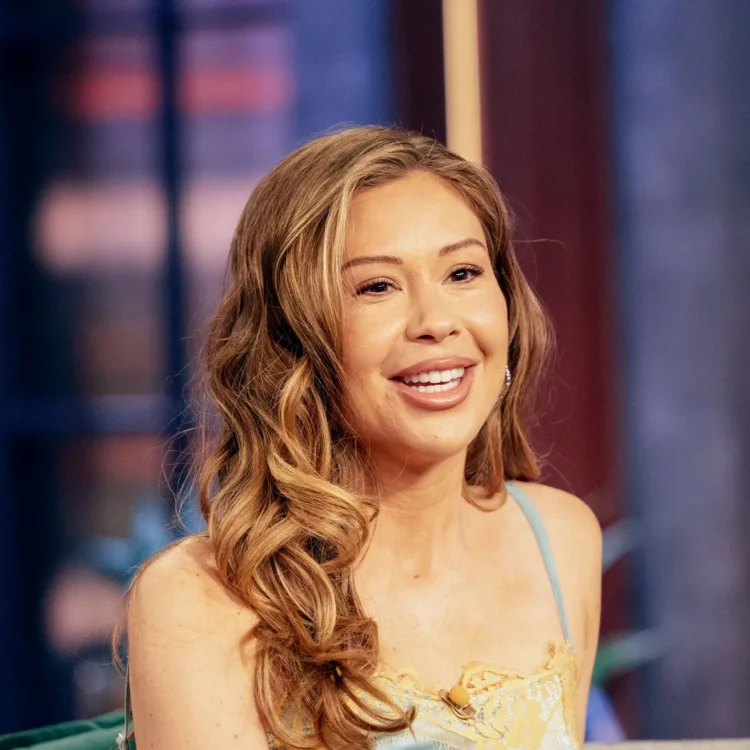
Gabriela “Gabby” Windey has navigated the choppy waters of reality television with a blend of charm, resilience, and self-awareness that has kept viewers invested in her story for years. Now, with the premiere of ABC’s Love Overboard this past weekend, Windey takes her most ambitious step yet: transitioning from a beloved contestant to the captain of her own show. It is a role that feels both natural and revolutionary in the context of modern reality TV, where few performers have successfully navigated the leap from participant to host.
Windey’s rise is familiar for fans, yet still remarkable. She first captured national attention in 2021 as a contestant vying for love on The Bachelor, where her candid personality, emotional intelligence, and unguarded humour won her a devoted following. By 2022, she had co-led The Bachelorette, sharing the spotlight and carrying the emotional weight of guiding men through one of television’s most scrutinized romantic journeys. Her trajectory might have seemed conventional—a fan-favourite contestant becomes a lead—but Windey leveraged these experiences into a platform that transcends the archetypal reality TV narrative.

AD: Capeesh Restaurant
Love Overboard, streaming on Hulu and Disney+, marks the culmination of this evolution. In the series, 22 singles board a luxurious Mediterranean yacht, navigating romantic connections, alliances, and social hierarchies under the watchful eye of cameras—and Gabby herself. Unlike hosts who occupy distant roles as arbiters of rules or commentators, Windey occupies a hybrid space. She is both mentor and mediator, a presence that simultaneously comforts and challenges contestants. Her decades in the public eye have equipped her with a rare skill set: an ability to understand vulnerability while maintaining authority, a capacity to empathize without losing the structure of the game.
The format of Love Overboard mirrors the duality that defines Windey’s public persona. Only four couples at a time enjoy the privileges of the top deck, while the rest live below, working and strategizing to earn the same luxury. It is a construct that demands both social intelligence and emotional dexterity—qualities that Windey herself has demonstrated in spades throughout her career. Her role as host is to guide these young adults through heightened stakes and public scrutiny, to facilitate intimate conversations, and, when necessary, to mediate disputes that could upend both relationships and alliances.
ABC’s choice to premiere the series this past weekend underscores the network’s confidence in Windey’s draw. In a move that surprised many viewers, the show filled the prime Sunday night slot vacated by the canceled new season of The Bachelorette. For audiences tuning in expecting roses and heartbreak, Windey delivered a different promise: romance with strategy, heightened drama with a steadying guide, and a host who embodies both relatability and authority. Early viewer reactions have been polarized but fervent, with social media abuzz over Windey’s hosting style, predictions about contestants’ romantic trajectories, and playful debates about her ability to maintain order on a yacht full of competitive singles.

AD: Oysterian Sea Food Restaurant And Bar
The significance of Windey’s role cannot be overstated. In an era when reality hosts often function as detached narrators, she brings lived experience to the table. She has walked the path that contestants aspire to follow: enduring rejection and triumph on national television, navigating complex interpersonal dynamics, and emerging with a distinct public persona that blends authenticity and performance. This dual insight allows her to intervene with empathy when tensions flare, guide contestants through moments of self-reflection, and encourage vulnerability without sacrificing the show’s competitive tension.
Windey’s journey from contestant to host reflects a broader evolution in reality television itself. The genre has long relied on audience investment in both drama and intimacy, but it has rarely elevated former contestants to positions of authority within the narrative. By hosting Love Overboard, Windey bridges that gap, transforming her personal brand into a tool for storytelling that feels organic rather than manufactured. Her emotional intelligence is as central to the show as the yachts, cocktails, and sunset confessions, positioning her as both an anchor and a catalyst for the unfolding drama.
Her career trajectory also highlights the changing landscape of fame in the streaming era. Windey is not merely a television personality; she is a media ecosystem. Her co-win on The Traitors, combined with her substantial social media following, positions her as a cross-platform force capable of influencing audience engagement, generating online discourse, and drawing attention to new ventures. This reach amplifies Love Overboard’s impact, ensuring that Windey’s hosting style is scrutinized, celebrated, and dissected in real time by a digitally literate, participatory audience.
Crucially, Windey’s appeal rests on her authenticity. In interviews on Good Morning America and other outlets, she has emphasized the show’s balance of gameplay and emotional transparency. Contestants, she notes, are not just competing for status on the top deck—they are navigating genuine feelings, insecurities, and desires under extraordinary conditions. By framing the show in this way, Windey positions herself as both guide and participant in the human drama, lending a gravitas that few reality hosts can claim.
Her ascent is also culturally resonant. Reality television has always offered audiences mirrors of themselves, but few figures embody both the aspirational and the accessible in the way Windey does. Viewers do not simply watch her—they project onto her journey, recognizing in her experiences their own desires, mistakes, and resilience. Hosting Love Overboard allows Windey to amplify this connection, transforming her personal narrative into a communal experience that blends instruction, empathy, and entertainment.
The yacht setting adds another layer to this dynamic. Love Overboard leverages the Mediterranean backdrop not simply for escapist glamour, but as a crucible for testing relationships, strategy, and emotional stamina. Windey’s guidance in this environment is critical; the isolation and luxury create conditions in which interpersonal dynamics are intensified, forcing contestants to reveal aspects of themselves they might otherwise conceal. In this way, Windey’s role is almost psychological: she shapes the conditions under which vulnerability becomes performative, tension becomes narrative, and love—or its absence—becomes a story worth watching.
Her influence extends beyond the mechanics of the game. Windey represents a new kind of reality television authority, one that values emotional literacy alongside charisma and media savvy. By steering conversations about connection, strategy, and authenticity, she elevates the role of host from mere facilitator to co-architect of the viewer experience. In doing so, she challenges the traditional hierarchy of reality TV production, positioning herself as a figure who not only mediates drama but shapes the narrative’s moral and emotional stakes.
Windey’s career evolution is instructive for anyone observing the interplay between reality television, personal branding, and cultural influence. Few former contestants have successfully pivoted to positions of sustained authority on the shows that made them famous. Windey’s trajectory suggests that the combination of on-screen intelligence, empathy, and strategic media engagement can redefine what it means to “graduate” from participant to leader. The role she occupies in Love Overboard—part mentor, part guide, part narrative anchor—demonstrates that reality television is no longer a passive platform; it is an arena in which skill, insight, and emotional acuity translate into both authority and cultural relevance.
Critics and culture watchers are already noting the broader implications of Windey’s hosting. Beyond the drama of romantic entanglements, the series invites reflection on modern connection, emotional labor, and the performative pressures of public life. Windey’s empathetic approach underscores a subtle but profound point: reality television, at its best, is not just spectacle but a lens through which we examine human behaviour, societal norms, and the sometimes fraught pursuit of intimacy. Her presence ensures that Love Overboard is not only entertaining but instructive, offering audiences a model of emotional intelligence applied in high-stakes, visible environments.
Even in its early episodes, the show demonstrates Windey’s ability to balance entertainment and insight. She mediates tense moments, encourages introspection, and subtly guides contestants toward growth, all while keeping the competitive narrative engaging. Social media reactions, ranging from playful memes to in-depth analysis of her hosting style, reflect the centrality of her presence. Viewers are responding not just to the contestants’ romantic strategies but to Windey herself—as a figure whose personal journey informs her public authority.
The premiere of Love Overboard also highlights a shift in programming strategy. ABC’s decision to fill the cancelled Bachelorette slot with a fresh concept led by a familiar and trusted personality underscores the network’s recognition of Windey’s audience draw. In a television landscape saturated with options, the move signals confidence not only in the series’ format but in Windey’s capacity to anchor it, to sustain attention, and to generate conversation across both traditional and social media platforms.
In reflecting on Windey’s career arc, one sees a pattern of deliberate risk-taking paired with authenticity. The broad range of her endeavours, from competing for roses on national television to co-leading a franchise and now helming a hybrid reality competition, she has consistently leveraged personal experience into professional opportunity. Love Overboard is both the logical next step and a daring experiment, a platform that capitalizes on her strengths while challenging her to expand the boundaries of what a reality host can achieve.
Windey’s role as host is particularly significant because she bridges the gap between the viewer and the often chaotic emotional world of contestants. Unlike hosts who remain detached arbiters of game rules, Windey has lived the journey that many participants aspire to emulate.
Her own experiences on The Bachelor, The Bachelorette, and The Traitors inform her approach: she is attuned to the nuances of vulnerability, insecurity, and desire, and she brings empathy alongside authority.
This duality allows her to facilitate intimate conversations between contestants, gently navigate disputes, and encourage self‑reflection, all while keeping the competitive drama rolling.
In many ways, Love Overboard represents the next step in reality television’s evolution. The format intentionally blurs the line between structured game mechanics and unscripted emotional spontaneity. Through assigning contestants to top-deck and lower-deck roles, the show forces individuals to negotiate social hierarchies while pursuing genuine romantic connections.
It also tests emotional intelligence, strategic thinking, and adaptability qualities that are increasingly valorised in reality TV because they reflect the viewers’ own social calculations. The stakes, while staged, resonate because the pressures mirror real-life relationship dynamics: jealousy, competition for attention, and the delicate balance between honesty and self-preservation.
Culturally, Love Overboard taps into a longstanding fascination with romance under pressure. Reality dating shows have thrived because they allow audiences to project themselves onto contestants, to imagine what it would be like to navigate love in an accelerated, intensified environment.
Yet, by setting the narrative on a luxurious yacht in the Mediterranean, the show amplifies the allure of escapism. The setting is both aspirational and isolating, highlighting the contestants’ emotional exposure and creating visually compelling tension for the audience.
Every ocean breeze, sunset cocktail, and whispered confession contributes to a carefully orchestrated spectacle that feels real enough to be immersive, yet polished enough to maintain broadcast quality.
Additionally, Love Overboard reflects broader conversations about gender dynamics, emotional labor, and the commodification of love. Contestants must negotiate alliances and romantic interest while constantly aware of the cameras’ gaze. Their choices who to spend time with, how to express feelings, when to strategise are simultaneously personal and performative.
This interplay is part of what makes the series compelling: viewers are invited to decode intentions, assess authenticity, and judge outcomes, all in real time.
Ultimately, the show is as much about human psychology as it is about romance. It challenges both contestants and audiences to consider what love means in a high-stakes, publicized environment. With Gabby Windey guiding the journey, the series promises not only to entertain but also to spark reflection on the balance between strategy and sincerity, spectacle and substance, risk and reward.
In this way, Love Overboard is more than a dating show; it is a mirror for our collective curiosity about the messy, exhilarating, and often unpredictable pursuit of connection in the modern age.