
By Tim Parsons-
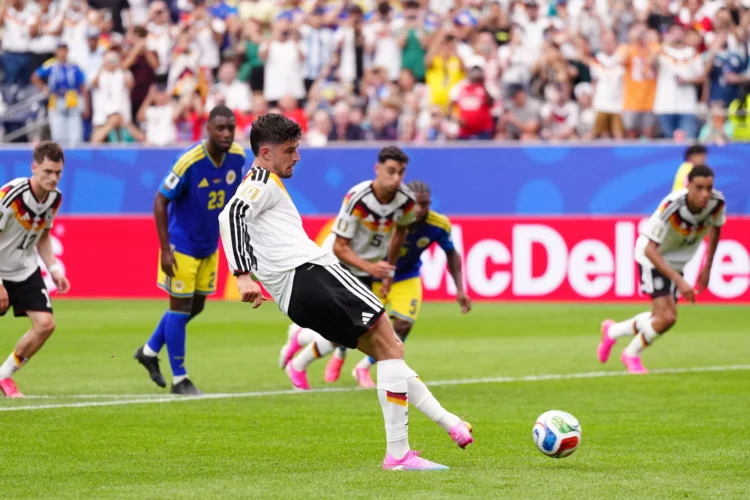
Germany opened their 2026 World Cup campaign in emphatic fashion with a 7-1 victory over debutants Curaçao, a match defined by early drama, a historic underdog breakthrough, and a ruthless second-half display led by Kai Havertz.
Despite the scoreline suggesting a one-sided affair from the outset, the match briefly carried a very different tone inside NRG Stadium in Houston, where Curaçao stunned the four-time champions by scoring their first-ever World Cup goal.

AD: Capeesh Restaurant
Livano Comenencia’s strike levelled the match at 1-1 after Germany’s early opener, creating a rare moment of tension for Julian Nagelsmann’s side and igniting celebrations among Curaçao’s travelling supporters. The breakthrough was more than just a goal; it was a milestone for the Caribbean nation competing in its first World Cup. Reports highlighted the emotional weight of the moment, with Curaçao players and fans celebrating a historic achievement that will stand as a landmark in their football history.
Germany, however, quickly reasserted control. Felix Nmecha had opened the scoring early with a sharp finish following a flowing attacking move, setting the tone for what many expected to be a routine win. But Curaçao’s equaliser temporarily disrupted Germany’s rhythm, forcing the favourites to recalibrate before their superior depth and tactical structure took over.
Kai Havertz emerged as the central figure in Germany’s response, scoring twice and dictating attacking phases with composure and precision. His influence, combined with goals from Nico Schlotterbeck, Jamal Musiala, Nathaniel Brown, and Deniz Undav, ultimately overwhelmed Curaçao’s defence as the match progressed.

AD: Oysterian Sea Food Restaurant And Bar
Havertz’s performance reinforced his growing importance to Germany’s attacking system under Julian Nagelsmann, with the national team coach repeatedly highlighting the forward as a “game-changer” alongside Florian Wirtz and Jamal Musiala when fully fit and in rhythm.
Recent analysis of Germany’s forward options has similarly underlined the depth of talent in Nagelsmann’s squad, pointing to Havertz’s versatility across attacking roles and his ability to link play, while also emphasising the creative influence of emerging stars such as Musiala and Florian Wirtz within a fluid, possession-based system.
Together, these assessments highlight how Havertz is no longer viewed solely as a traditional striker, but as a key connector within a flexible front line built around movement, interchanging positions, and technical creativity. The match also underlined Germany’s attacking depth, with multiple players contributing goals and chances throughout the contest. Despite Curaçao’s brief moment of glory, the difference in experience, tempo, and technical execution became increasingly evident as the game wore on.
After Curaçao’s historic equaliser, Germany responded with a sustained period of dominance that effectively ended the contest before halftime. Their ability to transition quickly through midfield and stretch the opposition defence proved decisive, with Jamal Musiala’s creativity and Kai Havertz’s movement repeatedly opening gaps.
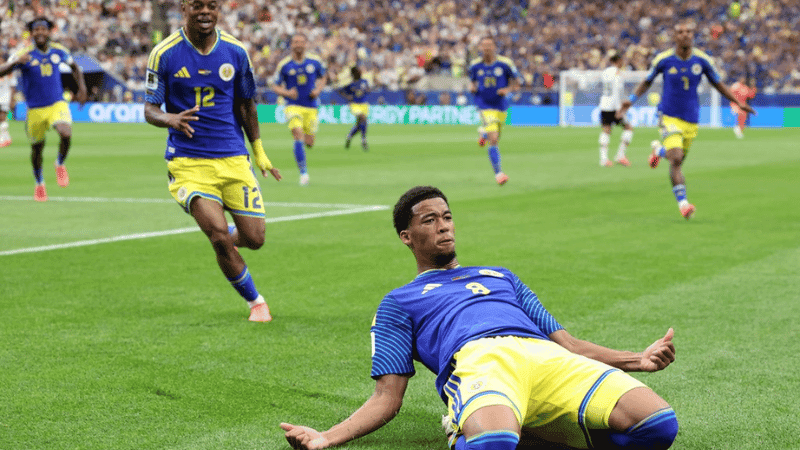
Havertz’s second goal, which capped off his standout performance, symbolised Germany’s clinical edge. His finishing, combined with intelligent positioning, allowed Germany to turn a potentially uncomfortable fixture into a statement victory.
Further goals from Musiala, Schlotterbeck, Brown, and Undav reflected the squad’s depth and attacking variety. Each scorer contributed in different ways set pieces, open play combinations, and transitional attacks demonstrating the tactical flexibility Nagelsmann has been trying to refine ahead of the tournament.
According to match coverage, Germany’s goals came in waves as Curaçao struggled to maintain defensive structure under relentless pressure. Despite the heavy defeat, Curaçao earned praise for their discipline and courage, particularly in the first half. Their goal remains one of the defining moments of the match, ensuring their World Cup debut will be remembered beyond the final scoreline.
The wider football world also noted the symbolic importance of their breakthrough. A nation of just over 150,000 people, scoring on football’s biggest stage represents a landmark achievement in their sporting development. Even in defeat, the moment was celebrated as a historic milestone for CONCACAF representation on the global stage.
Germany’s performance, meanwhile, reinforced their status as early contenders in the tournament. Their ability to absorb an unexpected setback and respond with authority will be viewed positively by coaching staff and supporters alike, especially given recent scrutiny of their performances in previous international competitions.
Noted in pre-match analysis, Germany’s attacking structure is built around fluid movement and interchangeable roles between Havertz, Musiala, and Wirtz, a system designed to overwhelm compact defensive blocks. That structure was fully on display once Germany regained control, with quick combinations and vertical passing repeatedly splitting Curaçao’s lines. The result was a second-half collapse that saw Germany score five unanswered goals, transforming the match into a showcase of attacking efficiency.
On full time, the scoreline reflected Germany’s superiority, but the narrative was more layered than a simple rout. Curaçao’s historic goal ensured their name entered World Cup history, while Germany’s response demonstrated both resilience and intent.
With Nagelsmann, the match offered both confirmation and caution: confirmation that his attacking system can produce goals from multiple sources, and caution that defensive lapses or slow starts could be punished more severely by stronger opposition later in the tournament. Still, the emphatic nature of the win sends a clear message to the rest of the competition. Germany are not just advancing through the group they are doing so with firepower, depth, and a renewed sense of purpose.
While the tournament progresses, the focus will inevitably shift to tougher tests, where margins are tighter and defensive structures far more disciplined. Germany’s opening performance, while emphatic on the scoreboard, will be assessed not only for its attacking fluency but also for the brief moments of vulnerability that allowed Curaçao to find a historic breakthrough.
Coaches and analysts will likely point to the need for sharper defensive transitions and sustained concentration against higher-ranked opposition, where early lapses can be punished far more severely. Still, the quality and depth of Germany’s attacking options remain a significant positive, with multiple players contributing goals and demonstrating the flexibility of Julian Nagelsmann’s system.
But for now, Germany leave their opening match with maximum points, a statement victory, and a reminder of their attacking potential at full flow. Their ability to respond decisively after an early setback will be seen as an encouraging sign of maturity and resilience within a squad blending experience and emerging talent. For Curaçao, meanwhile, the result tells only part of the story.
Despite the heavy defeat, their historic goal and spirited display ensure they depart with a landmark achievement that transcends the scoreline. In their first-ever World Cup appearance, they have etched their name into the competition’s narrative, creating a moment.

AD: Heritage And Restaurant Lounge Bar