
By Tim Parsons-
Football’s global governing body says it will place match tempo and the reduction of time-wasting at the heart of officiating priorities at the 2026 World Cup, as part of a wider push to make games more fluid, increase effective playing time and reduce stoppages that have long frustrated fans and coaches alike.
FIFA’s latest guidance to referees and match officials comes amid a coordinated overhaul of several laws of the game agreed by the International Football Association Board (IFAB), which has approved measures designed to speed up restarts, discourage delaying tactics and ensure that more of the 90 minutes is spent with the ball actually in play.

AD: Capeesh Restaurant
The changes are set to be implemented at the tournament in North America, beginning on June 11, 2026, and are being framed as one of the most significant attempts in modern football to reshape match rhythm.
The focus on tempo follows years of debate about stoppage time inflation, tactical delays and the growing perception that teams routinely exploit grey areas in the rules to run down the clock.
FIFA officials have repeatedly argued that supporters prefer continuous action over fragmented matches, and recent tournaments have already experimented with stricter interpretations of added time and enforcement of restart delays. The new approach, however, goes further in attempting to standardise and accelerate in-game behaviour across all competitions.

AD: Oysterian Sea Food Restaurant And Bar
According to regulatory updates confirmed by IFAB, referees will be instructed to clamp down more aggressively on slow restarts from throw-ins, goal kicks and free kicks, while also monitoring substitution procedures and injury stoppages more closely. The goal is to remove ambiguity over what constitutes acceptable delay and to reduce the small but cumulative actions that slow matches down.
FIFA refereeing officials, led by Pierluigi Collina in recent communications around rule enforcement, have argued that the modern game requires a stronger focus on “effective playing time,” pointing to data showing how frequently stoppages whether for substitutions, goal celebrations or treatment disrupt momentum.
The organisation has also promoted the idea that greater consistency in enforcement will discourage teams from using tactical time-wasting as a competitive tool rather than a last resort.
The emphasis on tempo is not entirely new, but its scale at the 2026 tournament signals a shift from isolated interventions to a more systemic redesign of match flow.Previous competitions, including the 2022 World Cup in Qatar, saw unusually high amounts of added time introduced to compensate for stoppages, a move that drew both praise for fairness and criticism for extending matches beyond traditional durations.
New rules designed to keep the game moving
Under the revised framework, several measures are expected to directly target the most common sources of delay. Substitutions will be more tightly timed, with players required to leave the field promptly or risk sanctions. Injured players who receive treatment may also be temporarily required to stay off the pitch for a set period once play resumes, a rule designed to discourage teams from using medical stoppages as a tactical pause.
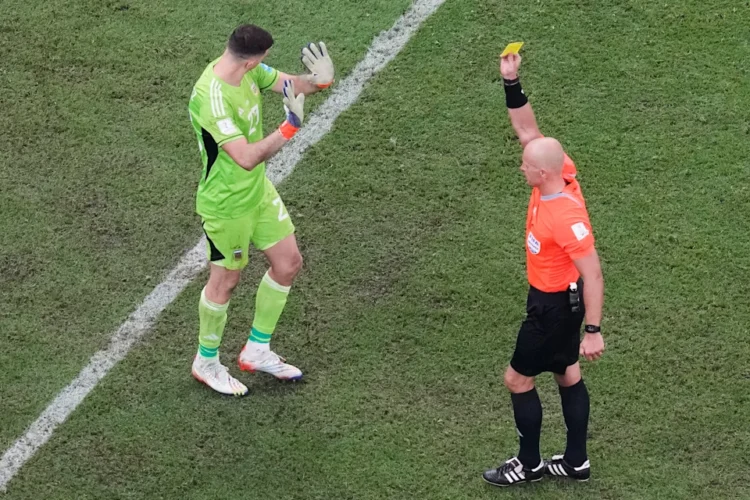
Goalkeepers, long accused of slowing the game during set-piece situations, are also under renewed scrutiny. Earlier trials in FIFA competitions introduced stricter limits on how long a goalkeeper can hold the ball, replacing the rarely enforced six-second rule with clearer visual countdowns and stronger penalties for breaches. In some cases, delays can now result in corner kicks or direct possession changes for the opposition, a significant escalation in enforcement.
Referees will additionally receive expanded VAR support to review certain types of delay-related infractions, including incorrect second yellow cards and set-piece mismanagement. Officials will also be equipped with more structured guidance on stoppage allocation, with the aim of standardising how lost time is calculated across matches and reducing inconsistencies between referees and tournaments.
Together, these adjustments reflect FIFA’s broader ambition to make match tempo a measurable and enforceable aspect of officiating rather than an interpretative one. The governing body has argued that greater precision will not only improve fairness but also increase entertainment value by ensuring more consistent rhythm across fixtures.
The reforms are likely to intensify scrutiny on how referees manage games in real time. While some coaches and analysts have welcomed the attempt to reduce cynical time-wasting, others have warned that stricter enforcement could lead to more interruptions if referees become overly interventionist or if players adjust by finding new ways to exploit the rules.
What is clear is that the 2026 World Cup will serve as the highest-profile testing ground yet for FIFA’s evolving philosophy: that football should be played faster, cleaner in its transitions, and with fewer opportunities to slow the game down without consequence.
Whether that produces a smoother spectacle or a more fragmented one will depend heavily on how consistently the new standards are applied when the world is watching.
The stakes are unusually high because the tournament is not just another edition of international football’s showpiece event, but the first to expand to 48 teams and to be staged across three countries, the United States, Canada and Mexico.
That expansion alone already places greater strain on scheduling, travel logistics and match intensity, meaning any additional attempts to regulate tempo will be tested under conditions of heightened physical and operational complexity. In that sense, FIFA is not only experimenting with how the game is refereed, but how it is rhythmically managed at scale.
Consistency of enforcement has historically been the most difficult part of any crackdown on time-wasting. Even when laws are clear, interpretation varies between referees, confederations and competitive contexts. A match in the group stage may be officiated differently from one in the knockout rounds, where pressure is higher and margins are thinner.
FIFA’s challenge will be to ensure that players and coaches do not quickly learn the boundaries of enforcement in a way that allows strategic exploitation to re-emerge in new forms.
There is also the question of how players adapt. Teams are likely to adjust their tactical behaviours rapidly if stricter tempo rules begin to affect outcomes. That could mean quicker substitutions, more proactive game management, or in some cases, attempts to disrupt rhythm in ways that are harder to penalise under existing laws.
In previous tournaments, rule changes aimed at speeding up play have often led to unintended consequences, including increased stoppages for enforcement itself.
The ambition is straightforward: more continuous football, fewer pauses, and a clearer sense that every minute counts. But the balance FIFA must strike is delicate. Over-enforcement risks turning matches into stop-start contests defined by whistles and administrative interventions, undermining the very flow it is trying to protect.
The 2026 World Cup will function as a live stress test of whether football can be made faster by design without losing its natural rhythm. If successful, it could reshape the global game’s tempo standards for years to come. If not, it may reinforce the idea that football’s irregular pace is not a flaw to be fixed, but a defining feature to be preserved.

AD: Heritage And Restaurant Lounge Bar