
By Samantha Jones-
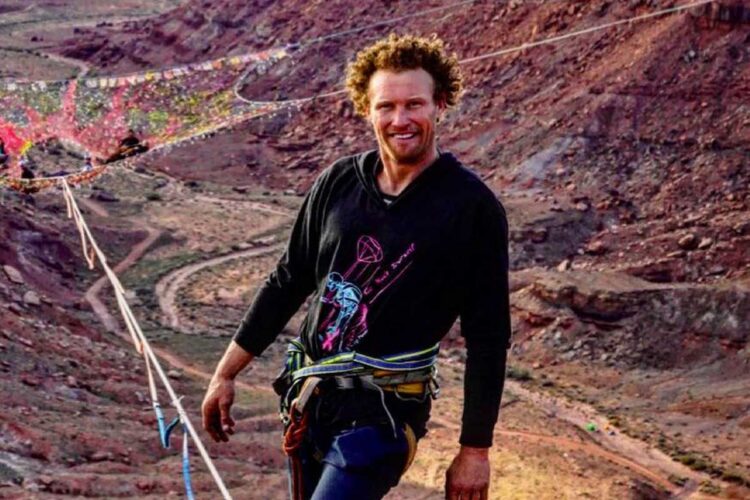
Two men were killed during a BASE jumping accident in a remote Utah canyon over the weekend, including renowned extreme sports athlete Andy Lewis, whose daring performances and larger-than-life personality made him a celebrated figure in the adventure sports community and earned him a spot alongside Madonna during the 2012 Super Bowl halftime show.
Authorities confirmed the fatalities on Sunday after emergency crews responded to reports of an incident in the Mineral Bottom area near the Utah-Colorado border.

AD: Capeesh Restaurant
The Grand County Sheriff’s Office said rescuers were dispatched to the isolated desert canyon following reports that two individuals had been seriously injured during a BASE jump attempt. Upon arrival, emergency personnel found both men deceased at the scene.
One victim was identified as Lewis, 39, a well-known slackliner, BASE jumper, and entrepreneur from Moab. The second victim, described as a 50-year-old man, has not yet been publicly identified. Authorities have not released additional details regarding the circumstances that led to the fatal accident. The tragedy has sent shockwaves through the global extreme sports community, where Lewis was regarded as one of the sport’s most recognisable and influential figures.
Known by many as “Sketchy Andy,” Lewis built a reputation for pushing the limits of human balance, agility and courage through a variety of high-risk pursuits, including slacklining, tricklining, highlining and BASE jumping. His death marks the loss of one of the most visible ambassadors of modern adventure sports.

AD: Oysterian Sea Food Restaurant And Bar
Lewis rose to international prominence in 2012 when he appeared during Madonna’s Super Bowl XLVI halftime show, performing slackline tricks and aerial acrobatics before an audience of more than 100 million viewers.
Previously known primarily within the extreme sports community, Lewis became a national sensation almost overnight, later describing the event as a major breakthrough for both his career and the sport of slacklining. According to past interviews, the exposure generated a wave of attention that dramatically expanded awareness of slacklining and tricklining among the general public.
Long before his Super Bowl appearance, however, Lewis had already established himself as a pioneering force within the sport. He captured four consecutive world championships in competitive slacklining between 2008 and 2011 and became widely credited with helping popularise modern tricklining, a discipline that combines balance, athleticism and aerial acrobatics on a narrow suspended line.
His achievements extended far beyond organized competition. Lewis set a Guinness World Record for slackline surfing in 2011, demonstrating extraordinary balance above China’s Diaoshuilou Waterfall.
In another widely publicised stunt, he traversed a slackline suspended between two hot-air balloons more than 4,000 feet above the Nevada desert, a feat that showcased both his technical skill and willingness to embrace extraordinary risks.
Friends and fellow athletes often described Lewis as a visionary who helped redefine what was possible in balance sports. His innovations inspired thousands of athletes worldwide to take up slacklining and tricklining. Through social media, documentaries and public appearances, he became one of the most recognisable faces associated with the rapidly growing extreme sports movement.
In recent years, Lewis increasingly focused on BASE jumping, a sport that involves leaping from fixed structures such as cliffs, bridges or buildings before deploying a parachute. The activity is widely regarded as one of the most dangerous recreational sports in the world due to the limited altitude available for recovery when equipment malfunctions or mistakes occur.
Lewis openly acknowledged the risks involved and frequently spoke about the realities of participating in a discipline where fatalities are not uncommon.
He also founded BASE Jump Moab, a company that introduced newcomers to the sport through guided experiences and tandem jumps, pairing less-experienced participants with trained professionals. The business became a notable part of Moab’s thriving adventure tourism industry, attracting thrill-seekers from around the world eager to experience Utah’s dramatic canyon landscapes from a unique perspective.
Investigation Continues as Tributes Pour In
Questions remain about exactly what happened during Sunday’s fatal jump. Local authorities have not yet disclosed whether equipment failure, weather conditions, human error or another factor contributed to the accident.
Officials confirmed only that both men died at the scene and that the investigation remains ongoing. The Utah Office of the Medical Examiner is expected to assist in determining the precise cause of death.
According to local reporting, the incident occurred in the rugged Mineral Bottom area, a remote section of canyon country known for its striking cliffs and challenging terrain. The region has long attracted outdoor enthusiasts, including hikers, climbers and BASE jumpers drawn to its dramatic geological features.
However, the same terrain that attracts adventure seekers can complicate rescue operations when accidents occur. Emergency responders often face difficult access conditions, extended response times and limited communications infrastructure in such remote areas.
The Grand County Sheriff’s Office expressed condolences to the families and friends of the victims, acknowledging the profound impact the tragedy has had on the local community.
Moab, which serves as a gateway to some of the American Southwest’s most famous outdoor recreation areas, has long been home to athletes and guides whose livelihoods revolve around adventure tourism and extreme sports. Lewis was among the community’s most visible members.
News of his death quickly spread across social media, prompting tributes from athletes, filmmakers, outdoor enthusiasts and fans. Many remembered Lewis not only for his remarkable accomplishments but also for his infectious enthusiasm and willingness to mentor newcomers.
Fellow athletes described him as a charismatic innovator whose influence extended far beyond competition results or record-setting performances. Though known for his daring stunts, he was equally respected for helping build a supportive and inclusive community around emerging adventure sports.
The accident also reignited discussion about the risks associated with BASE jumping. While participants often emphasize the importance of preparation, training and risk management, the sport continues to experience a higher fatality rate than many other adventure activities. Experienced jumpers acknowledge that even minor mistakes can have catastrophic consequences when operating in environments where there is little margin for error.
Many within the extreme sports world, however, believe the attraction lies precisely in confronting those challenges. Lewis himself frequently spoke about the balance between fear, preparation and personal freedom. Throughout his career, he embraced activities that required exceptional focus and commitment, often pushing beyond conventional limits in pursuit of experiences few others would attempt.
His death, alongside that of the second jumper, serves as a sobering reminder of the inherent dangers that accompany extreme sports. Yet for many who knew him, Lewis will be remembered not for the way his life ended, but for the fearless energy, creativity and passion that defined it.
Tributes continue to emerge from around the world, the adventure sports community is mourning the loss of one of its most influential and recognisable pioneers.

AD: Heritage And Restaurant Lounge Bar