
By Theodore Brown-
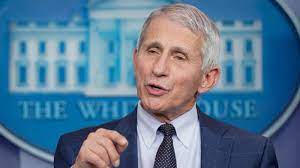
Dr Anthony Fauci spent decades answering questions about America’s most dangerous public health crises. From HIV/AIDS and Ebola to the COVID-19 pandemic, the veteran immunologist became one of the most recognisable scientific voices in the United States, briefing presidents, lawmakers and millions of anxious citizens during moments of national uncertainty.
On Wednesday, however, the man who once fronted daily White House pandemic briefings answered almost nothing at all.

AD: Capeesh Restaurant
Instead, the former director of the National Institute of Allergy and Infectious Diseases (NIAID) invoked the Fifth Amendment more than 100 times during a tense, three-hour hearing before the Senate Homeland Security and Governmental Affairs Committee, transforming what Republicans hoped would be a detailed examination of the pandemic into a constitutional and political confrontation with potentially far-reaching legal consequences.
The hearing, led by Republican Senator Rand Paul of Kentucky, marked the latest chapter in a years-long dispute over the origins of COVID-19, the US government’s funding of research involving Chinese laboratories and Fauci’s handling of the worst public health emergency in a century. But rather than producing new testimony, the proceedings became defined by what was left unsaid.
Acting on the advice of his legal team, Fauci repeatedly declined to answer questions, invoking his constitutional protection against self-incrimination. The Fifth Amendment guarantees that individuals cannot be compelled to provide testimony that could expose them to criminal prosecution, and legal experts have long stressed that exercising the right is not, in itself, evidence of wrongdoing.

AD: Oysterian Sea Food Restaurant And Bar
Nevertheless, Fauci’s decision immediately intensified political tensions surrounding the investigation. Republicans argued that his refusal to testify prevented lawmakers from obtaining answers about issues they have pursued for years, while Democrats accused the committee of conducting a politically motivated inquiry designed to reinforce predetermined conclusions rather than establish new facts.
At the centre of the dispute is one of the most consequential scientific questions of the modern era: how did COVID-19 begin?
Paul has consistently argued that the coronavirus may have escaped from a laboratory in Wuhan, China, and has questioned whether American taxpayer-funded research contributed to the outbreak. He has repeatedly accused Fauci of misleading Congress over National Institutes of Health funding linked to research at the Wuhan Institute of Virology, particularly work involving so-called gain-of-function experiments designed to understand how viruses evolve and potentially become more dangerous.
Fauci has steadfastly rejected those allegations, maintaining that the NIH did not fund research that caused the COVID-19 pandemic. Throughout the pandemic and in subsequent congressional appearances, he has argued that available scientific evidence points more strongly towards a natural spillover from animals to humans than a laboratory accident, while acknowledging that alternative hypotheses should continue to be investigated through scientific inquiry.
That scientific debate remains unresolved despite years of investigation. The majority of published scientific research continues to favour a zoonotic origin, pointing to wildlife markets in Wuhan as the most likely location where the virus first spread into humans.
However, parts of the US intelligence community have reached different conclusions. The FBI concluded in 2023 that a laboratory-related incident represented the most likely explanation, while the CIA reached a similar assessment in 2025, albeit with what it described as low confidence. Other intelligence agencies remain divided or continue to assess that there is insufficient evidence to reach a definitive conclusion.
One of the most closely watched aspects of Wednesday’s hearing involved more than 1,100 pages of Fauci’s typewritten diary, released ahead of the proceedings by Senator Paul.
The notes, written while Fauci served as a senior government official during the pandemic, document meetings with White House officials, scientific advisers and members of the media during one of the most turbulent periods in recent American history.
Health Secretary Robert F. Kennedy Jr. argued that the diary constitutes an official government record because it was prepared by a federal employee using government equipment during a declared public health emergency and remained on government property.
Paul claimed the documents reveal inconsistencies between Fauci’s private discussions and his public messaging during the pandemic.
Supporters of the former health official strongly dispute that characterisation. They argue the diary instead reflects the uncertainty confronting scientists during the earliest months of a rapidly evolving outbreak, when information changed almost daily and competing theories were being assessed in real time.
According to the released notes, Fauci documented a January 2020 conference call involving 11 leading virologists and evolutionary biologists examining the virus’s possible origins. At that stage, only two participants believed the virus almost certainly had a natural origin, while others discussed whether engineering could be ruled out.
Scientists note that such debates are common when investigating a newly emerging pathogen and that many participants later concluded that naturally occurring evolution remained the most likely explanation as additional evidence became available.
The legal questions surrounding the hearing extend beyond the scientific disagreements. Although former President Joe Biden granted Fauci a full and unconditional federal pardon in January 2025 covering potential offences committed since 2014, Republicans argue the protection has important limits.While the pardon shields Fauci from prosecution over past federal offences, they contend it does not cover any new crimes allegedly committed after the pardon was issued, including making false statements under oath during congressional testimony.
Fauci’s legal advisers therefore recommended that he avoid answering questions they believed could expose him to fresh legal risks. During the hearing, Fauci accused Paul of attempting to build a criminal case against him rather than conducting legitimate congressional oversight, reinforcing his decision to invoke constitutional protections.
Republicans counter with a novel legal argument of their own. Paul has suggested that because Biden’s pardon removes the possibility of criminal prosecution for Fauci’s earlier actions, the former health adviser should no longer be able to claim that answering questions about those actions could incriminate him.
Constitutional scholars remain divided over whether that reasoning would withstand judicial scrutiny, and Paul himself has acknowledged that the issue could ultimately require resolution by the courts.
The hearing itself featured several dramatic exchanges beyond Fauci’s repeated refusals to testify. At one point, Paul instructed Capitol Police to remove Fauci’s attorney, David Schertler, after the lawyer attempted to address the committee without being recognised by the chairman. Paul insisted that the proceedings were intended to hear directly from Fauci rather than his legal representatives, while Schertler later criticised the investigation as an “obsessive vendetta.”
Democratic members of the committee offered a markedly different interpretation of the day’s events. Senator Gary Peters described the proceedings as “a partisan exercise” designed to support a predetermined political narrative instead of uncovering new evidence. Democrats argued that the hearing reflected broader attempts to revisit pandemic-era disputes through a political rather than scientific lens.
Paul, however, closed the hearing by posing a stark question that underscored the seriousness with which Republicans continue to view the investigation, asking whether Fauci’s actions “led to the largest man-made plague in history.”
The immediate political battle is unlikely to end with Wednesday’s hearing. Paul announced that the committee is expected to vote next week on whether to hold Fauci in contempt of Congress over his refusal to answer lawmakers’ questions.
A contempt finding would not automatically result in criminal charges but could allow the Senate to refer the matter to the Department of Justice for possible prosecution or seek enforcement through civil litigation. In theory, the Senate also retains the rarely used power to direct its sergeant-at-arms to detain an uncooperative witness, although that authority has seldom been exercised in modern times.
Whether any of those options are ultimately pursued remains uncertain. Equally unclear is whether courts would agree with the legal theories advanced by either side concerning the interaction between presidential pardons and Fifth Amendment protections.
More than six years after COVID-19 first emerged, the virus continues to cast a long political shadow across Washington. Scientific debates over the pandemic’s origins remain unresolved, while disputes over lockdowns, vaccines, school closures and government messaging continue to divide public opinion.
Fauci, once the country’s leading infectious disease expert and a trusted adviser to seven presidents, remains one of the most polarising figures of that era.
Wednesday’s hearing demonstrated that, even after the immediate health emergency has passed, the struggle to define responsibility for the pandemic is far from over. Instead of providing definitive answers, it highlighted how the legacy of COVID-19 has increasingly shifted from laboratories and hospitals into congressional hearing rooms and, potentially, the courts.

AD: Heritage And Restaurant Lounge Bar