
By Kenneth Williams-
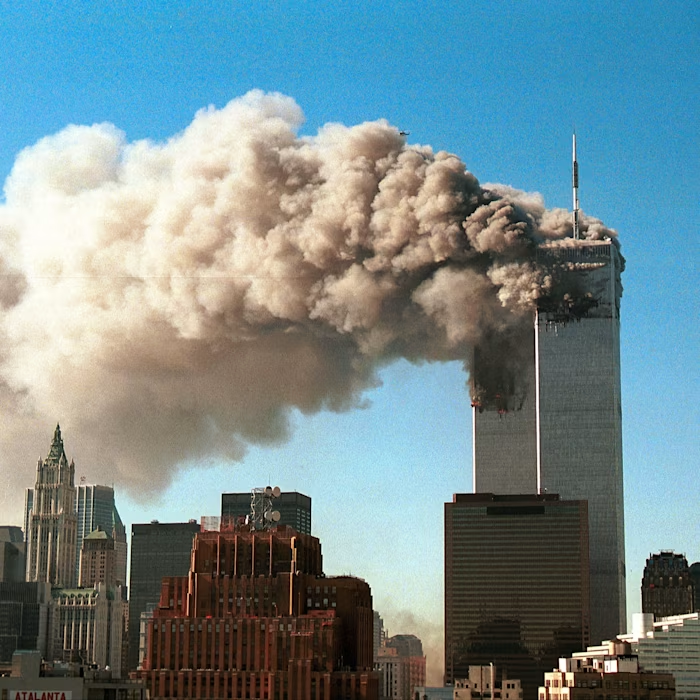
Twenty-five years after the attacks that transformed the modern world, the smoke has long disappeared from Lower Manhattan, the wreckage has been cleared from the Pentagon and the field in Pennsylvania where United Airlines Flight 93 came down has become a place of remembrance. But another legacy of September 11, 2001 has proved far more difficult to bury.
Almost from the moment the World Trade Center towers collapsed, questions began circulating about what really happened that morning. Was the American government warned in advance? Were the attacks allowed to happen? Were the Twin Towers and World Trade Center 7 brought down by explosives? Was the Pentagon actually struck by an aircraft? Did powerful people inside the United States have prior knowledge of the plot? Were the 19 men identified as the hijackers really responsible?
Some of these questions arose from genuine failures in intelligence and aviation security. Others developed from misunderstandings of engineering, incomplete information in the chaotic hours after the attacks or misleading images and claims circulated online. A smaller number evolved into elaborate theories alleging that the attacks were secretly planned or facilitated by elements within the U.S. government.

AD: Capeesh Restaurant
Twenty-five years later, the evidence allows some of those claims to be answered with considerable confidence.
It also reveals something more uncomfortable: the official history of September 11 is not a story in which American institutions performed flawlessly. The intelligence and security systems missed warnings. Agencies failed to share information effectively. The military response was confused. There were serious bureaucratic failures. Those facts are not evidence that the attacks were an inside job. But they help explain why the conspiracy theories survived.
The central historical finding of the 9/11 Commission was that the attacks were carried out by al-Qaeda, whose leadership had developed the plan over years and whose operatives entered the United States, learned to fly and eventually hijacked four commercial aircraft.

AD: Oysterian Sea Food Restaurant And Bar
The FBI likewise identifies the attacks as a meticulously planned operation in which terrorists hijacked four airliners, crashing three into the World Trade Center and Pentagon and the fourth into rural Pennsylvania after passengers attempted to regain control. The attacks killed 2,976 people.
The evidence accumulated over a quarter of a century is extensive: passenger and crew communications, airport records, flight data, surveillance footage, telephone records, financial transactions, intelligence files, the identification and movements of the hijackers, the recovery of aircraft debris and human remains, eyewitness testimony and the investigation of al-Qaeda’s structure and leadership.
The question is therefore not whether there are unanswered details about September 11. There certainly are. The more important question is whether those unanswered details amount to evidence that the attacks were secretly organised by the American government or another hidden actor. The available evidence does not establish that.
The broadest conspiracy theory maintains that senior figures in the U.S. government either planned the attacks or deliberately allowed them to happen to create public support for wars in Afghanistan and Iraq, expand government surveillance and increase American military power.
There is substantial evidence that the Bush administration used September 11 to justify major changes in American foreign and security policy. The attacks were followed by the invasion of Afghanistan, the creation of the Department of Homeland Security, the Patriot Act, expanded surveillance powers and, eventually, the invasion of Iraq. But political exploitation of a catastrophe is not evidence that the catastrophe was deliberately created.
The 9/11 Commission’s investigation found a long history of al-Qaeda planning, including Osama bin Laden’s development of the organisation during the 1990s and its previous attacks against American targets. The commission’s chronology describes al-Qaeda’s decision in the late 1990s to use large commercial aircraft as weapons rather than relying on traditional hostage-taking hijackings.
The FBI’s historical account also places the attacks within a broader campaign by al-Qaeda against the United States, rather than treating September 11 as an isolated event. Al-Qaeda had already attacked American interests, including the 1998 embassy bombings and the 2000 attack on the USS ColeT hat history matters because it provides a documented motive, organisation and operational trail leading into September 2001.
There is no comparable body of evidence showing that senior U.S. officials organised the attacks themselves.This is where the historical record becomes more complicated. The United States had received warnings about Osama bin Laden and al-Qaeda. Intelligence agencies knew the organisation was interested in attacking American targets. The 9/11 Commission famously described the summer of 2001 as a period when “the system was blinking red.”
There were warnings about possible hijackings. The FAA had considered the possibility of a suicide hijacking as early as 1999, although its analysts regarded such a scenario as unlikely. The intelligence failures were real.
Information about suspected terrorists was scattered between agencies. Some officials knew individual pieces of information without seeing the complete picture. The system for sharing intelligence was inadequate. The men who eventually became hijackers were able to enter the United States and operate inside the country despite various warning signs.
Those failures understandably became central to conspiracy arguments. But there is a crucial difference between possessing warning information and knowing precisely when, where and how an attack will occur. The evidence does not show that American officials possessed a detailed operational plan identifying the four aircraft, the hijackers, the targets and the exact timing of the attacks and then deliberately stood aside.
Indeed, the 9/11 Commission found the opposite: an intelligence and security system that was badly prepared for the form the attack eventually took.
The extraordinary failure of the military response
One of the most persistent conspiracy arguments concerns the U.S. military’s response.
If four passenger aircraft were hijacked inside the United States, conspiracy theorists ask, why were fighter jets not immediately sent to intercept them? It is a legitimate question.he answe is rooted in how the American aviation-security system worked before September 11.
The procedures used by the Federal Aviation Administration and the North American Aerospace Defense Command were designed primarily around conventional hijackings. In those scenarios, an aircraft might be seized by criminals or political extremists who intended to use passengers as hostages or bargain for concessions. The assumption was that there would be time to identify the aircraft, establish communication and coordinate a response.
Suicide hijackings in which the aircraft itself became a weapon were not the scenario the system had been designed around. The 9/11 Commission found that the procedures assumed a hijacked aircraft would be identifiable, that there would be sufficient time to work through FAA and NORAD chains of command and that the hijacking would follow the traditional model rather than involve a suicide mission.
The commission’s hearings also documented how information moved slowly between civilian aviation authorities and the military. American Airlines Flight 11, the first aircraft hijacked, was n By then, the attack was already unfolding. This failure can reasonably be described as catastrophic. It does not, however, establish that the military deliberately allowed the aircraft to reach their targets. Indeed, the documentary record indicates confusion, incomplete information and an aviation-response system built for a fundamentally different kind of hijacking.
The tragedy is that the system failed precisely because the attackers exploited assumptions that had governed aviation security for decades.
What about World Trade Center 7?
Of all the 9/11 conspiracy theories, the collapse of World Trade Center 7 remains perhaps the most persistent. Unlike the Twin Towers, WTC 7 was not hit by an aircraft. The 47-storey building collapsed at approximately 5:20 p.m., hours after the Twin Towers had fallen. To many viewers watching footage of the event, its relatively rapid and apparently symmetrical collapse looked like a controlled demolition.
The argument has been strengthened by the fact that WTC 7 contained offices used by several government agencies, including the Securities and Exchange Commission and Secret Service facilities. The question therefore became: how could a large steel-framed building collapse almost straight down without explosives? The answer provided by the National Institute of Standards and Technology is complicated but does not require explosives.
NIST’s investigation concluded that fires, combined with the building’s structural design and damage sustained during the collapse of the North Tower, initiated a failure sequence involving a critical interior column.
The building had burned for almost seven hours before collapsing. Debris from WTC 1 had damaged WTC 7 and started fires on multiple floors. The collapse of the Twin Towers had also damaged infrastructure supplying water to the building’s sprinkler system NIST concluded that fire-induced structural damage caused the failure of a critical column, triggering a progressive collapse.
Importantly, investigators specifically examined the controlled-demolition hypothesis. NIST reported that it found no corroborating evidence that explosives had been used to bring down the World Trade Center buildings That finding has been challenged by groups such as Architects & Engineers for 9/11 Truth, whose members argue that the observed collapse characteristics are more consistent with explosives.
But the existence of professional disagreement is not itself evidence that explosives were used. A claim of controlled demolition would require physical evidence of an explosive operation: identifiable explosive residues, detonators, cutting charges, wiring, blast patterns or other forensic evidence consistent with a planned demolition.
The official investigation did not find such evidence. Instead, it found a plausible structural failure mechanism supported by computer modelling, photographic evidence, eyewitness accounts, examination of structural components and an extensive review of the building.
NIST says its World Trade Center investigation involved more than 200 professionals and technical experts, interviews with more than 1,000 surviving occupants and hundreds of emergency responders, extensive examination of structural steel and thousands of photographs, videos and audio recordings. Its final investigation comprised tens of thousands of pages of material. That does not make NIST infallible.
But it does mean that the controlled-demolition theory faces a substantial evidentiary problem: the absence of the physical traces one would expect from such an operation. Another widely repeated argument says that jet fuel cannot melt steel and therefore the aircraft could not have caused the towers to collapse.The first part of that statement is broadly correct. The fires did not need to melt the structural steel. That is a critical distinction. Steel loses strength and stiffness at elevated temperatures well below its melting point. The towers had also suffered enormous mechanical damage when the aircraft struck them, destroying structural members and stripping fireproofing from parts of the building. The relevant question therefore is not whether jet fuel could melt steel.
It is whether aircraft impacts, structural damage, dislodged fireproofing and prolonged fires could sufficiently weaken the buildings to initiate collapse. NIST concluded that they could. The Twin Towers survived the initial aircraft impacts, but the combination of impact damage and subsequent fires weakened the structures until collapse began. NIST’s investigation found no evidence that explosives or missiles caused the collapses.
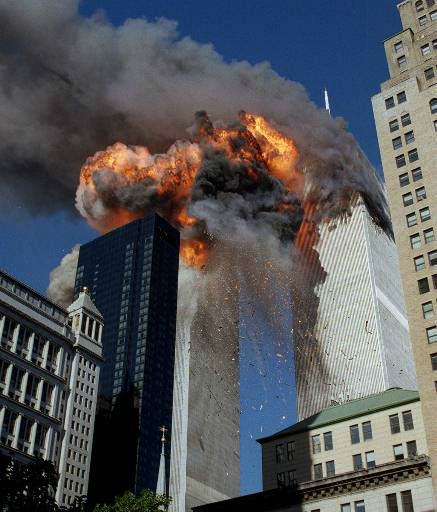
The misconception about melting steel illustrates a broader problem with many 9/11 conspiracy arguments: a technically correct observation can sometimes be used to support an incorrect conclusion. Steel did not have to melt. It only had to lose enough structural capacity for the damaged buildings to become unstable.
Some witnesses reported seeing molten material at Ground Zero. Photographs and videos also showed orange-hot material flowing from the wreckage. This has been interpreted by some conspiracy theorists as evidence of thermite, a chemical mixture capable of producing extremely high temperatures.
There is no doubt that extremely hot material existed within the destruction zone.The more difficult question is what produced it. The presence of molten or incandescent material does not, by itself, establish that thermite was used.
The collapse of two enormous buildings containing steel, aluminium, electrical equipment, vehicles, building materials and large quantities of combustible contents produced a highly unusual and chemically complex environment. Fires continued for weeks beneath the debris. Claims that thermite was used therefore require evidence that distinguishes thermite from other sources of intense heat.
NIST did not find evidence establishing that controlled demolition or thermite caused the towers’ colla That is an important distinction between an observation and an explanation. Something unusual happened in the wreckage. That does not automatically identify the cause.
Was the Pentagon really hit by a Boeing 757?
Another enduring theory says that American Airlines Flight 77 did not hit the Pentagon and that the building was instead struck by a missile or another weapon.Again, the visual appearance of the event has fuelled the theory.
The Pentagon was a heavily reinforced military building. The aircraft approached at high speed and struck relatively close to ground level. Initial photographs did not show the kind of intact aircraft fuselage that some viewers expected after a Boeing 757 crash.
But the absence of a recognisable intact aircraft is not evidence that no aircraft was present.
Flight 77 disappeared from radar before being identified as the aircraft that had been hijacked. Its flight path, passengers, crew and movements were subsequently reconstructed. Human remains were recovered and identified. Aircraft debris was found at the Pentagon. The FBI’s account identifies Flight 77 as one of the four hijacked aircraft and states that it was flown into the Pentagon. The 9/11 Commission also examined the hijacking and the response to Flight 77 in detail. The missile theory therefore has to explain not only the damage to the Pentagon but also what happened to the aircraft, passengers and crew.
It has never produced evidence capable of replacing the aircraft-crash explanation.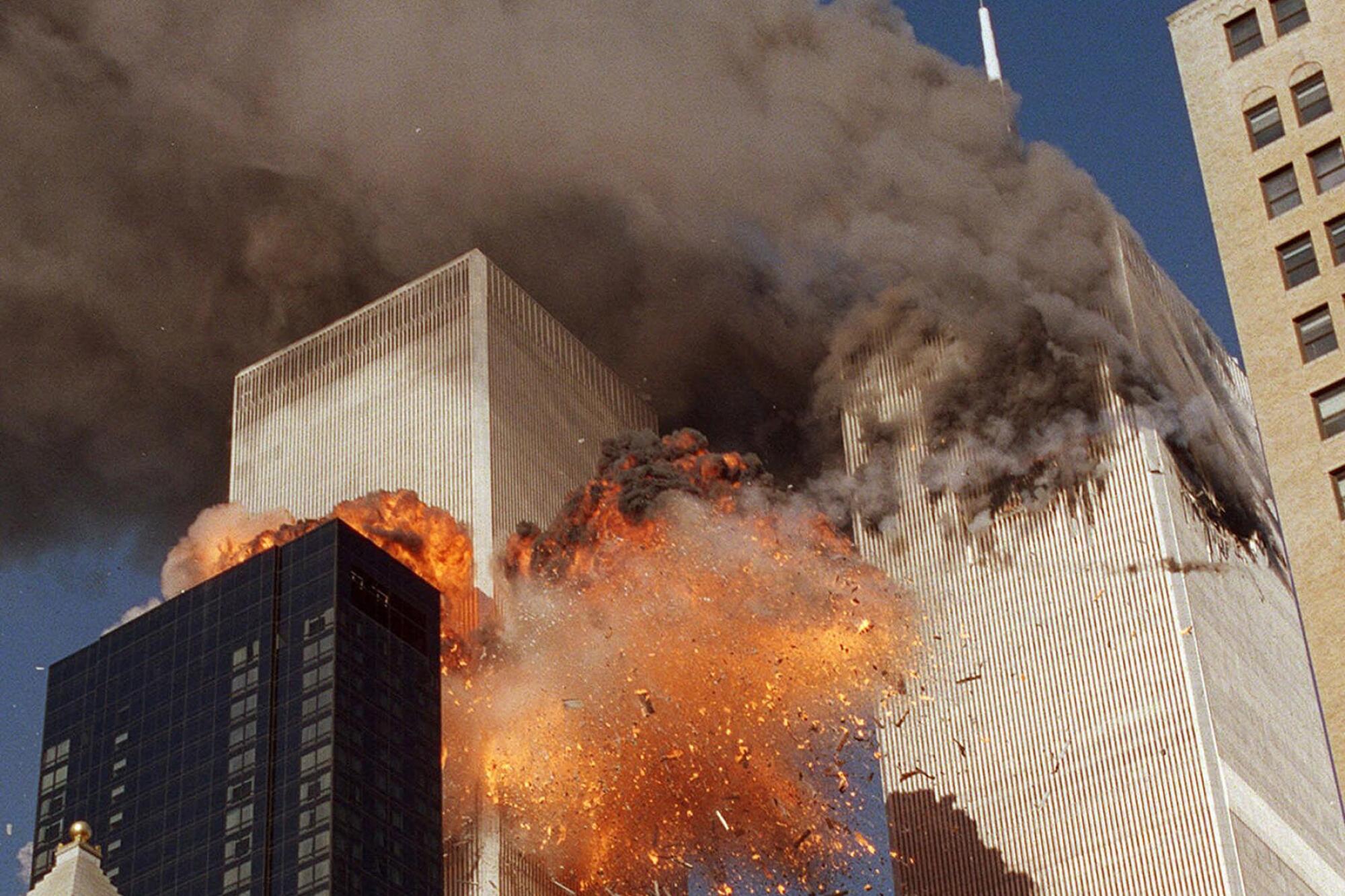 Did Flight 93 really crash because passengers fought back?
The final aircraft, United Airlines Flight 93, has generated fewer “inside job” claims but has also been surrounded by speculation.
The aircraft crashed into a field near Shanksville, Pennsylvania, after passengers learned through telephone calls that other hijacked aircraft had been used as weapons.
The evidence indicates that passengers attempted to regain control of the aircraft.
The plane never reached its intended target.
The 9/11 Commission reconstructed the sequence using passenger and crew telephone calls, cockpit recordings, air-traffic-control information and other evidence.
The final moments remain tragic precisely because the passengers appear to have realised what was happening and decided to act.
The crash site became one of the most important pieces of evidence in reconstructing the attacks.It also contradicts theories that the entire sequence was simply a scripted operation in which the government controlled every aircraft. One of the stranger stories to emerge after the attacks was the claim that some of the alleged hijackers were still alive.
The confusion arose partly because several people in the Middle East shared names with men identified as the hijackers. Early media reports sometimes published photographs or names incorrectly, producing understandable confusion.
That confusion was subsequently exploited as supposed evidence that the 19 men had been fabricated. But the identities of the hijackers were reconstructed through multiple sources. The 9/11 Commission documented their movements, travel, flight training and interactions. The FBI investigated the individuals and their connections to the plot.
The indictment of Zacarias Moussaoui, who was arrested before the attacks, also documented links between his activities and those of the hijackers. The existence of mistaken early identification does not establish that the identities were fictitious.
The alleged Israeli foreknowledge theory
One of the most controversial branches of 9/11 conspiracy theory claims that Israel or Israeli intelligence knew about, facilitated or participated in the attacks.
This theory has circulated in multiple forms, ranging from allegations of intelligence foreknowledge to claims that Jewish or Israeli workers were warned not to report to the World Trade Center on September 11.
The latter claim is false.
Thousands of Jewish Americans worked in and around the World Trade Center, and Jewish people were among those killed in the attacks.
There is no credible evidence establishing that Israel planned the attacks.
There were, however, genuine intelligence relationships and disagreements between the United States and Israel before September 11, just as there were between Washington and numerous other intelligence services.
That reality can be distorted into claims of complicity.
A responsible examination must therefore distinguish between the documented existence of intelligence activity and the unsupported leap from intelligence activity to responsibility for the attacks.A more substantive controversy concerns Saudi nationals and the financing and support networks surrounding al-Qaeda.
The 9/11 Commission examined the financing of the attacks and found that the hijackers were financed by al-Qaeda. That does not mean every question about foreign support networks disappeared. The issue of possible connections between Saudi individuals and some hijackers has remained politically controversial, and portions of U.S. intelligence material were classified for years. The existence of secrecy surrounding intelligence files naturally creates suspicion. But secrecy is not proof of conspiracy.
Governments routinely classify intelligence information to protect sources, methods and ongoing investigations. A classified document can contain important information without proving that a government ordered a terrorist attack. The evidentiary standard has to remain the same: allegations require corroboration One of the more sophisticated theories concerns unusual financial transactions before September 11.
The argument was that people who knew the attacks were coming could have profited by betting that the stock prices of airlines and other companies would fall. It is an apparently logical theory.If someone knew what was coming, why wouldn’t they make money from it? The difficulty is that suspicious-looking financial activity is not automatically evidence of foreknowledge.
Investigators examined trading activity associated with the attacks. The 9/11 Commission reported that there was no evidence that anyone with advance knowledge of the attacks profited through securities transactions. This is another case where a real observation—there were unusual trades—was transformed into a much stronger claim for which the necessary evidence was missing.
Financial investigations require identifying who made the trades, where the money came from, whether the trades were unusual for that investor, whether there was a connection to the attackers and whether the investor had information that could reasonably have come from the conspiracy.
Without those links, statistical anomalies remain anomalies.
Was Osama bin Laden really responsible?
Unlike many conspiracy theories, the central attribution of responsibility for September 11 is supported by a substantial body of evidence. Al-Qaeda had the motive, leadership structure and operational capability. The organisation had already attacked American targets.
The 9/11 Commission reconstructed the development of the plot and the recruitment and preparation of the hijackers. The FBI investigation identified the 19 hijackers and established their movements and activities. And Osama bin Laden himself ultimately acknowledged responsibility for the attacks. That does not mean every early government statement about 9/11 was correct.
It does mean that the core proposition—that al-Qaeda planned and carried out the attacks—is supported by evidence from numerous independent categories.
The persistence of 9/11 conspiracy theories cannot be explained simply by saying that millions of people are irrational. The attacks were so extraordinary that they generated an extraordinary need for explanation. People watched two of the world’s most recognisable skyscrapers collapse in real time. They saw a third high-rise fall hours later. They watched the Pentagon burn. They heard conflicting reports. They saw officials struggle to explain what was happening. In the days and weeks that followed, governments made mistakes.
Some information was classified. Some early reports were wrong.The Bush administration subsequently made controversial decisions that opponents associated with the attacks. And the Iraq War created one of the most powerful political incentives for people to question whether the American government had been entirely truthful about September 11. That environment was fertile ground for conspiracy theories. The internet then transformed the way those theories spread.
A video showing WTC 7 collapsing could be separated from the hours of footage showing the building burning. An error in identifying a hijacker could become photograph of an unidentified piece of debris could be presented without context. A genuine intelligence warning could be described as proof of precise foreknowledge. An error in identifying a hijacker could become evidence that the hijacker never existed.
A strange financial transaction could become proof of insider trading. Each fragment could be real while the conclusion drawn from it was false The strongest challenge to the “inside job” narrative is not that the American government was competent. It is that the government was demonstrably imperfect.
The 9/11 Commission’s findings describe an intelligence community struggling to connect information, an aviation security system designed around obsolete assumptions and a military response that was not prepared for four simultaneous hijackings being turned into suicide attacks.
The commission’s own title for the intelligence chapter—“The System Was Blinking Red”—captures the contradiction. There were warnings. and opportunities to act, as well as institutional failures. But there is a vast evidentiary distance between saying the system failed and saying the system deliberately caused the catastrophe.
The first proposition is secretly organised by the U.S. government, that the Twin Towers were deliberately demolished, that a missile struck the Pentagon, or that the entire operation was fabricated—requires evidence of a different overwhelmingly supported by the historical record. The second has not been established.
Twenty-five years later
A quarter of a century after September 11, conspiracy theories remain part of the cultural history of the attacks. Some will probably never disappear.
The collapse of WTC 7 will continue to look extraordinary to people unfamiliar with structural engineering. The failure of the military response will continue to raise legitimate questions. The intelligence warnings will continue to prompt arguments about whether more could have been done. Those questions should not be silenced.
Indeed, asking difficult questions is essential to a democratic society.But questioning the official account is not the same thing as proving an alternative account. A serious investigation must follow evidence wherever it leads—even when the evidence is embarrassing to governments, intelligence agencies or powerful institutions. After 25 years, the evidence does reveal uncomfortable truths about September 11.
American intelligence agencies had warnings about al-Qaeda. The security system failed to connect critical pieces of information. The procedures for responding to hijackings were inadequate. The military response was confused. The attacks exposed profound weaknesses in government preparedness. And the administration that followed used the trauma of September 11 to reshape American foreign and domestic policy on a historic scale.
All of that is documented. But the much larger claim—that the attacks were secretly organised by the U.S. government, that the Twin Towers were deliberately demolished, that a missile struck the Pentagon, or that the entire operation was fabricated—requires evidence of a different order.
After a quarter of a century of investigations, engineering studies, criminal inquiries, intelligence reviews, financial investigations, court proceedings and thousands of interviews, that evidence has not emerged.
NIST says it found no corroborating evidence of explosives or missiles in the destruction of the World Trade Center. 9/11 Commission’s investigation reconstructed the al-Qaeda plot, the hijackers and the failures that allowed them to operate inside the United States.The FBI continues to identify the attacks as a four-aircraft terrorist operation that killed 2,976 peop
None of that means every government statement surrounding September 11 disturbing than a perfectly organised conspiracy: a relatively small terrorist organisation identified weaknesses in the world’s most powerful country’s security system, exploited those weaknesses and succeeded on a scale that governments had failed should be accepted without scrutiny. It means something more basic. Extraordinary claims require extraordinary evidence.
After 25 years, the evidence supports a devastating conclusion that is arguably more disturbing than a perfectly organised conspiracy. A relatively small terrorist organisation identified weaknesses in the world’s most powerful country’s security system, exploited those weaknesses and succeeded on a scale that governments had failed to imagine.

AD: Heritage And Restaurant Lounge Bar
The tragedy of September 11 was not that everything worked according to a secret plan. It was that so much went wrong in plain sight. And perhaps that is the hardest truth of all.
:
-
Share On
- Categories
- Date