
By Theodore Brown-
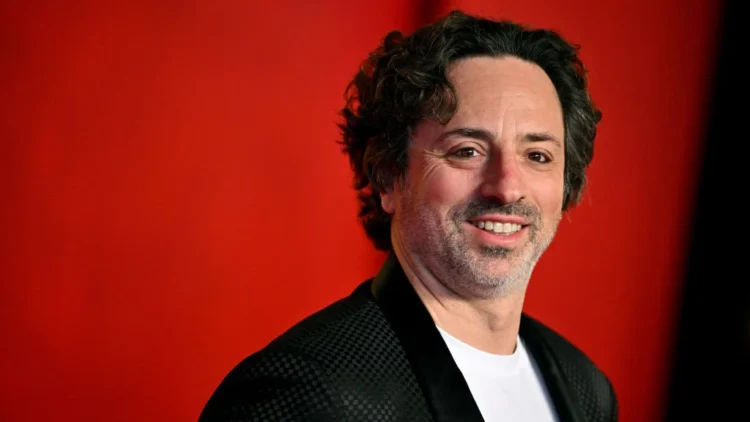
Sergey Brin,(pictured) co-founder of Google, has registered a seismic philanthropic footprint with a $20 million donation to a new initiative focused on California’s housing affordability crisis — the largest single housing-focused gift he’s made thus far.
This gift — earmarked for “Building a Better California”, a coalition aimed at advancing policy and ballot measures that would spur housing construction and affordability — places a Silicon Valley billionaire squarely in the volatile socio-political clash over land use, planning and economic inequality in cities such as Los Angeles, where soaring rents, housing shortages and homelessness have become defining challenges of a generation.

AD: Capeesh Restaurant
Brin’s recent $20 million donation to “Building a Better California” stands out not only for its size but for its timing and its target: the housing crisis affecting cities such as Los Angeles, San Francisco and others across California, where housing costs and shortages have reached crisis levels and become central political issues.
Statewide, wages have stagnated while costs of buying or renting have soared. Cities like LA — the second largest in the United States — face acute pressure from homelessness, constrained housing supply, and decades-long resistance to density increases. Brin’s contribution is meant to support policy measures and ballot initiatives designed to streamline approval processes, incentivize new construction, and expand affordability.
Crucially, the donation came amid debates over a proposed wealth tax in California, with critics arguing such a levy would drive billionaires and their capital out of the state. Brin himself reportedly relocated part of his assets and, in some filings, shifted residency interests to Nevada — a lower-tax state — even as he infused resources into California-specific civic work.

AD: Oysterian Sea Food Restaurant And Bar
The initiative has drawn mixed reactions. Supporters point to the urgent need for housing reform and applauded Brin’s financial commitment to elevating the issue. Skeptics, however, see political strategy as part of the calculation — including aligning with other tech leaders on ballot campaigns that intersect with tax policy, regulatory reform, and economic growth strategies.
Thus the housing donation, while unquestionably generous, sits at an intersection of philanthropy, public policy and elite influence in civic decision-making. It is at once an act of civic engagement and a statement in broader debates over wealth, taxation and inequality in major metropolitan regions.
Brin’s philanthropic journey — from health research and climate initiatives to housing affordability — illustrates a broader trend among the ultra-wealthy: deploying capital at scale not just for charity but to shape systems and public policy.
This approach echoes larger debates about the role of billionaire philanthropy in politics and public life. Critics argue that such concentrated giving can distort democratic processes, favoring wealthy donors’ priorities over grassroots community voices. Proponents contend that private resources are essential to confront complex social challenges that governments, constrained budgets and traditional nonprofits alone cannot solve.
Crucially, the donation came amid debates over a proposed wealth tax in California, with critics arguing such a levy would drive billionaires and their capital out of the state. Brin himself reportedly relocated part of his assets and, in some filings, shifted residency interests to Nevada — a lower-tax state — even as he infused resources into California-specific civic work.
The initiative has drawn mixed reactions. Supporters point to the urgent need for housing reform and applauded Brin’s financial commitment to elevating the issue. Skeptics, however, see political strategy as part of the calculation — including aligning with other tech leaders on ballot campaigns that intersect with tax policy, regulatory reform, and economic growth strategies.
Thus the housing donation — while unquestionably generous — sits at an intersection of philanthropy, public policy and elite influence in civic decision-making. It is at once an act of civic engagement and a statement in broader debates over wealth, taxation and inequality in major metropolitan regions.
Brin’s philanthropic journey — from health research and climate initiatives to housing affordability — illustrates a broader trend among the ultra-wealthy: deploying capital at scale not just for charity but to shape systems and public policy.
This approach echoes larger debates about the role of billionaire philanthropy in politics and public life. Critics argue that such concentrated giving can distort democratic processes, favouring wealthy donors’ priorities over grassroots community voices. Proponents contend that private resources are essential to confront complex social challenges that governments, constrained budgets and traditional non profits alone cannot solve.
Brin’s recent $20 million donation to “Building a Better California” stands out not only for its size but for its timing and its target: the housing crisis affecting cities such as Los Angeles, San Francisco and others across California, where housing costs and shortages have reached crisis levels and become central political issues.
Statewide, wages have stagnated while costs of buying or renting have soared. Cities like LA — the second largest in the United States — face acute pressure from homelessness, constrained housing supply, and decades-long resistance to density increases. Brin’s contribution is meant to support policy measures and ballot initiatives designed to streamline approval processes, incentivize new construction, and expand affordability.
Crucially, the donation came amid debates over a proposed wealth tax in California, with critics arguing such a levy would drive billionaires and their capital out of the state. Brin himself reportedly relocated part of his assets and, in some filings, shifted residency interests to Nevada — a lower-tax state — even as he infused resources into California-specific civic work.
The initiative has drawn mixed reactions. Supporters point to the urgent need for housing reform and applauded Brin’s financial commitment to elevating the issue. Skeptics, however, see political strategy as part of the calculation — including aligning with other tech leaders on ballot campaigns that intersect with tax policy, regulatory reform, and economic growth strategies.
Thus the housing donation — while unquestionably generous — sits at an intersection of philanthropy, public policy and elite influence in civic decision-making. It is at once an act of civic engagement and a statement in broader debates over wealth, taxation and inequality in major metropolitan regions.
Brin’s philanthropic journey — from health research and climate initiatives to housing affordability — illustrates a broader trend among the ultra-wealthy: deploying capital at scale not just for charity but to shape systems and public policy.
This approach echoes larger debates about the role of billionaire philanthropy in politics and public life. Critics argue that such concentrated giving can distort democratic processes, favouring wealthy donors’ priorities over grassroots community voices.
Proponents contend that private resources are essential to confront complex social challenges that governments, constrained budgets and traditional nonprofits alone cannot solve.
Sergey Brin’s rise is as emblematic of the digital era as any story of modern entrepreneurship. Born in Moscow on August 21, 1973, his family emigrated to the United States in 1979 to escape the Soviet regime’s restrictions, especially those targeting Jewish families.
Brin excelled academically, earning degrees in mathematics and computer science at the University of Maryland before enrolling in a Ph.D. program at Stanford University. There he met Larry Page, and together they developed a novel search engine — initially dubbed BackRub — that leveraged a link-ranking algorithm to deliver more relevant search results. Unhappy with conventional search tools, their system rapidly outgrew campus networks.
In 1998, from a humble garage in Menlo Park, California, Google was born. Over the subsequent decades, Google grew into one of the most powerful digital platforms in history — transforming how the world accesses information, powering digital advertising that fuels Alphabet’s vast ecosystem, and expanding into mobile operating systems, online video, cloud computing, artificial intelligence, autonomous driving and beyond.
Brin served as president of technology at Google and later as a board member and executive at Google’s parent, Alphabet Inc., after the company restructured in 2015. Though he stepped back from day-to-day management in 2019, he remains deeply involved in technological strategy, especially in artificial intelligence development.
Brin’s financial ascent is inseparable from Google’s phenomenal growth and its public listing in 2004. Through Alphabet stock ownership, he amassed an extraordinary net worth as stock prices climbed into the hundreds of billions over two decades.
As of early 2026, Brin’s personal fortune is routinely estimated in the range of $230 billion to $260 billion, placing him among the very wealthiest individuals on the planet. In recent months, some indexes pegged him as the third-richest person globally, surpassing Amazon founder Jeff Bezos and Oracle’s Larry Ellison — a testament both to Alphabet’s continued dominance and to Brin’s enduring stake.
Most of this wealth derives from Alphabet’s stock and the equity Brin retains — roughly 6 % of the company — along with dividends and capital gains from strategic stock sales.
Brin’s financial strategy has included family office management through Bayshore Global Management, an investment firm overseeing tens of billions in assets beyond his public stock holdings.
Today, Brin is as well-known for his philanthropy as for his role in shaping the global internet — though the way he gives has evolved significantly over the years. Historically, his earliest charitable work included support for the Hebrew Immigrant Aid Society (HIAS), reflecting his family’s journey to the U.S., and meaningful gifts to health-related causes tied to personal experiences.
One of Brin’s most personal and impactful philanthropic commitments has been in the field of Parkinson’s disease research. His mother, Eugenia Brin, battled Parkinson’s for more than two decades and passed away in 2025 — a long fight that catalysed Brin’s giving in the field.
Through both his family foundation and other vehicles, he has donated more than $1 billion toward Parkinson’s research, making him one of the largest individual donors to a single disease area in history.
In addition to Parkinson’s, Brin has expanded giving into research on bipolar disorder, autism and other central nervous system conditions, supported partly through a non-profit entity called Catalyst4, which he founded in 2021. Catalyst4 marries philanthropic aims with strategic investment, supporting basic research while also backing ventures that could yield treatments and therapies.
Brin’s philanthropy has also encompassed climate change initiatives, with his foundation making hundreds of millions of dollars in climate-related awards in recent years.
Moreover, he has previously donated large blocks of Alphabet stock — nearly $700 million in shared stock gifts in 2025 — to organizations including Catalyst4, his own family foundation, the Michael J. Fox Foundation (a Parkinson’s research nonprofit), and other causes that range from health to environmental issues.
Beyond health and environment, Brin has donated to civic and political causes, including Democratic Party candidates and committees —,though his political giving is a small piece of his broader philanthropic profile.

AD: Heritage And Restaurant Lounge Bar