
By Aaron Miller-
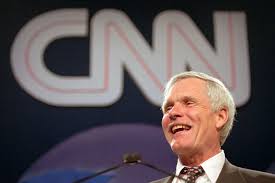
Ted Turner, the brash and outspoken media pioneer who transformed global journalism by launching CNN and reshaping television news into a 24-hour cycle, has died at the age of 87. His death was confirmed on Wednesday by CNN and Turner Enterprises, the company overseeing his business interests, according to multiple reports.
Turner’s passing marks the end of an era for modern broadcasting. Once dismissed by industry executives as reckless for attempting to build a round-the-clock news channel, he went on to redefine how the world consumes information. CNN, launched in 1980, became the first television network dedicated entirely to continuous news coverage, a concept that is now a global standard.

AD: Capeesh Restaurant
Often described as unpredictable, ambitious, and fiercely independent, Turner built far more than a news network. His media empire expanded to include TNT, TBS, Cartoon Network, and Turner Classic Movies, making him one of the most influential figures in the history of American cable television.
In further media, Turner was also known for his larger-than-life persona. He was a competitive yachtsman who famously won the America’s Cup in 1977, a professional sports owner, and one of the largest private landowners in the United States. His business interests extended across broadcasting, entertainment, and sports, reflecting a restless entrepreneurial drive that defined his career.
Tributes have already begun pouring in from across the media industry, with CNN leadership describing him as the “presiding spirit” of the network and crediting him with changing the very structure of modern journalism.

AD: Oysterian Sea Food Restaurant And Bar
Turner’s path to global influence began not in television, but in advertising. He took control of his family’s struggling billboard business and transformed it into a springboard for expansion into broadcasting, purchasing a local television station in Atlanta in the 1970s.
That acquisition marked the start of what would become Turner Broadcasting System, an empire that would eventually challenge the dominance of established networks.
His boldest idea came in the late 1970s: a 24-hour news channel. At the time, the concept was widely seen as commercially unviable. Television news in the United States typically ended in the late evening, with viewers left without updates overnight. Turner saw an opportunity in that gap, betting that audiences would want access to real-time global events regardless of the hour.
When CNN launched in 1980, it struggled initially with skepticism and financial pressure. Critics questioned whether viewers would tune in to continuous news coverage. But Turner persisted, even relocating parts of his operation into the Atlanta headquarters to keep costs under control during its early years.
The network’s defining breakthrough came during major international conflicts, when CNN’s live coverage demonstrated the power of real-time reporting. Its reporting during the Gulf War in the early 1990s cemented its reputation as a global news leader, capable of delivering immediate coverage from the world’s most volatile regions.
A controversial legacy of influence and reinvention
Turner’s influence extended far beyond CNN. Over the decades, he became a symbol of both innovation and controversy an executive admired for his vision and criticised for his blunt, often unpredictable style. Known for nicknames such as “The Mouth of the South” and “Captain Outrageous,” he cultivated a public image that matched the scale of his business ambitions.
In the 1990s, Turner’s empire was absorbed into Time Warner in a multibillion-dollar deal, marking a turning point in the consolidation of American media. Although he remained a major shareholder for a time, his direct control over the networks he created gradually diminished.
Even so, his impact continued to shape the industry. CNN evolved into a global brand, while his other ventures including Turner Sports and Turner Entertainment networks became central pillars of cable television. The structure he pioneered, particularly the idea of always-on news, remains the backbone of modern broadcasting.
Outside media, Turner was a major philanthropist and environmentalist. He donated $1 billion to support United Nations initiatives and established the United Nations Foundation, becoming one of the most prominent private donors to global humanitarian causes.
He also invested heavily in conservation, acquiring vast tracts of land in the United States and working on wildlife preservation efforts. His passion for environmental issues even influenced popular culture, including the creation of environmentally themed programming aimed at younger audiences.
In later years, Turner stepped back from public life after revealing in 2018 that he had been diagnosed with Lewy body dementia, a progressive neurological condition.
Despite declining health, his legacy remained firmly embedded in the media landscape. Through breaking news coverage to 24-hour global reporting, much of today’s news ecosystem traces its origins back to his vision.
His death closes the chapter on one of the most disruptive and influential figures in modern media history an entrepreneur whose willingness to challenge convention permanently changed how the world watches, listens to, and responds to news.
Even as his direct involvement in broadcasting faded in later years, the structures he built only grew more dominant. The continuous news cycle, once viewed as an untested experiment when CNN launched in 1980, is now the default model for global journalism.
News organisations across continents from major American networks to European and Asian broadcasters operate on the assumption that audiences expect immediate updates, live reporting, and constant digital availability. That expectation can be traced directly back to Turner’s decision to bet on a 24-hour news format at a time when most of the industry considered it unnecessary.
His influence also extended into the culture of journalism itself. The urgency of live coverage, the emphasis on real-time reporting from conflict zones, and the visual language of rolling news broadcasts all became standard practice in the decades following CNN’s rise. Major global events from wars to natural disasters to political upheavals are now almost instantly translated into continuous television and digital coverage, a shift that fundamentally altered how societies experience breaking news.
Turner’s approach was not without controversy. Critics throughout his career argued that the constant news cycle risked prioritising speed over depth, and immediacy over context.
Even those critiques underscore his impact: he did not simply build a network, but reshaped expectations about what news should be. Competing broadcasters were forced to adapt, accelerating the transformation of television journalism into a 24-hour industry.
Turner’s broader media empire also left a lasting imprint on global entertainment. Networks such as TNT and Cartoon Network helped redefine cable programming, expanding what television could offer beyond traditional broadcast schedules.
His willingness to invest in niche audiences and unconventional formats contributed to the fragmentation and specialisation of modern media, where content is increasingly tailored to specific viewer interests.
In the years since CNN’s founding, digital platforms and social media have further amplified the model Turner pioneered. News now travels not only through television but across smartphones, apps, and online feeds, yet the underlying principle remains the same: continuous, immediate access to information. In that sense, the architecture of today’s media environment still bears his signature.
With his passing, the industry reflects on a figure who was often described as larger than life, but whose most enduring achievement was structural rather than personal. Ted Turner did not just create channels or companies; he helped establish the rhythm of modern news itself.

AD: Heritage And Restaurant Lounge Bar