
By Gabriel Princewill-
A leading access to justice charity has called for a major overhaul of the way legal complaints decisions are published, arguing that rulings against law firms should remain available to the public indefinitely rather than disappearing from view after just 12 months.
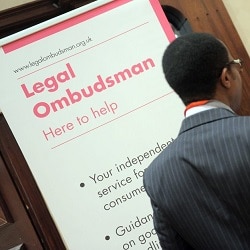
Blind Justice UK has urged the Legal Ombudsman (LeO) to abandon its current policy of removing published decisions from its website after one year, warning that the approach prevents consumers from making informed choices when selecting legal service providers.

AD: Capeesh Restaurant
The charity says thousands of historic decisions have already vanished from public access, creating a significant gap in transparency within the legal services market.The criticism comes as the legal sector faces increasing pressure to improve openness around complaints, regulation and professional standards. Blind Justice UK said its latest research briefing and audit identified around 11,000 decisions that have been removed from the Legal Ombudsman’s website under the current publication policy.
The charity argues that legal consumers often seek help during some of the most important and difficult moments of their lives, including disputes involving family matters, housing, finances, employment and personal rights. In such circumstances, it says, members of the public should have access to meaningful information about the quality of service provided by legal professionals.
Blind Justice UK’s review found that the Legal Ombudsman’s approach differs significantly from other public-facing complaint-handling bodies. Organisations such as the Pensions Ombudsman and the Information Commissioner’s Office generally retain published decisions indefinitely, allowing consumers, professionals and researchers to examine historical outcomes over time.

AD: Oysterian Sea Food Restaurant And Bar
The charity said the absence of a long-term archive means potential clients cannot properly assess the track record of legal providers. It claimed that consumers are left without access to information that could help them compare firms and make better decisions before instructing a solicitor.
The briefing highlighted that there appears to be no legal or regulatory requirement forcing the Legal Ombudsman to remove decisions after 12 months. Instead, Blind Justice UK said the limit appears to be an internal policy choice rather than a necessary consequence of legislation.
“The public should be able to understand how legal service providers have performed over time,” the charity argued, adding that transparency is particularly important in a sector where clients may have limited knowledge of legal processes and are often in vulnerable situations.
The criticism also extends to the level of detail currently provided in published Legal Ombudsman information. While some regulators publish detailed decisions explaining the background, evidence and reasoning behind outcomes, LeO generally publishes limited data entries rather than full decisions.
Currently, published information typically includes the name of the legal service provider, the date of the decision, the area of law involved and the remedy awarded. However, the reasoning behind the decision is usually unavailable, making it difficult for readers to understand why a complaint was upheld or rejected.
Blind Justice UK said the Legal Ombudsman therefore combines one of the shortest publication periods among comparable organisations with one of the least detailed publication formats. The charity believes that publishing full decisions, with appropriate safeguards, would strengthen public confidence and improve accountability.
The organisation’s recommendations will be submitted as part of the Legal Ombudsman’s ongoing consultation on the future publication of decisions. Blind Justice UK has called for final decisions, including the reasons behind them, to remain publicly accessible permanently.
The Legal Ombudsman has already signalled that changes could be introduced. Its consultation proposes moving away from publishing only high-level statistical information towards a system where every final decision is considered for publication online.
Under the proposed approach, decisions would be published with suitable protections to protect complainants’ privacy. LeO has indicated that documents would either be redacted or drafted in a way that prevents individuals from being identified directly or indirectly.
The move reflects a wider debate across the legal profession about balancing transparency with confidentiality. While greater openness may help consumers make better-informed choices, regulators must also ensure that sensitive personal information is protected and that complainants are not discouraged from bringing legitimate concerns forward.
Those in favour of greater disclosure argue that legal professionals hold a position of public trust and that accountability mechanisms should be visible and accessible. They say a permanent record of decisions would allow patterns of poor service to be identified and encourage firms to improve standards.
Critics of unlimited publication may raise concerns about reputational harm and the risk that historic complaints could continue to affect firms long after issues have been resolved. However, advocates for reform argue that careful anonymisation and proportionate publication rules can address these concerns while preserving the public interest.
The issue comes at a time when confidence in legal services remains a key priority for regulators and professional bodies. Complaints handling, regulatory transparency and consumer protection have all become central issues as the legal market evolves and clients increasingly expect greater access to information before choosing professional advisers.
Blind Justice UK insist that legal ombudsman decisions should not disappear from public view after a year. The charity believes that permanent access to decisions and their reasoning would provide consumers with a more reliable picture of legal service standards and bring the Legal Ombudsman closer into line with other public accountability bodies. The issue is a significant test of how the legal sector balances privacy, fairness and the public’s right to know.
Edward Romain, Founder and CEO of Blind Justice UK told The Eye Of Media.Com: ‘A solicitor’s disciplinary record can remain public for sixty years. The public record of a consumer’s complaint outcome against a law firm disappears after twelve months.
‘The public record of decisions is the only systematic, independent institutional memory available to consumers. This research asks a simple question of everybody that judges on the public’s behalf: how long should public accountability retain its public memory’?

AD: Heritage And Restaurant Lounge Bar