
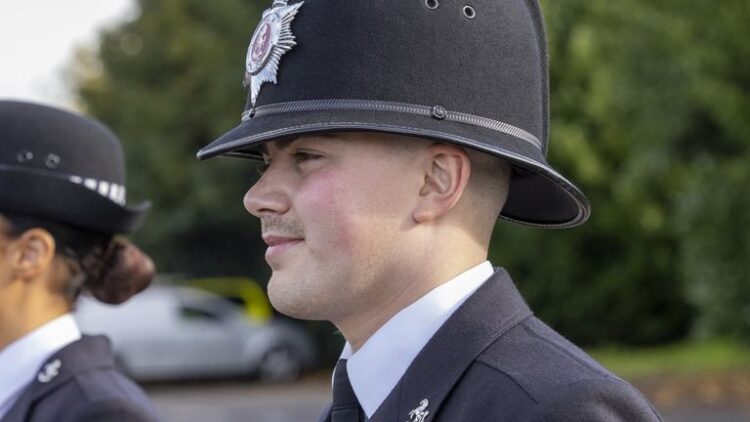
By Lucy Caulkett-
In a heartbreaking event that has rippled across the policing community, a police officer, Bradley Corke, 27, has died in the line of duty after a collision while responding to an emergency, with colleagues confirming he lost his life trying to protect others from danger. The incident has sparked an outpouring of grief, remembrance of fallen officers past and present, and renewed focus on the risks law enforcement faces every day.
Late last week, emergency services were alerted to an immediate call requiring police response. What began as a routine dispatch turned into tragedy when the responding police vehicle was involved in a serious collision on a busy stretch of road. The officer, whose name has been released with the consent of his family, suffered catastrophic injuries and died in hospital shortly after.

AD: Capeesh Restaurant
Another officer serving alongside him remains in critical condition, and a member of the public involved in the crash is also being treated for serious injuries.
Kent Police paid tribute to their fallen colleague, describing him as a “selfless” and dedicated officer who “gave up his life while trying to save the lives of others who were in danger.” Their statement underlined the profound commitment of the officer to his duty and his community.
The tragedy has also prompted an appeal for witnesses and footage from motorists who were travelling in the area at the time of the collision. Police investigators are working to piece together exactly what happened in the moments leading up to the crash, mindful that understanding the cause is essential not only for the family and force but also for wider public safety.

AD: Oysterian Sea Food Restaurant And Bar
Road traffic incidents are not uncommon causes of line‑of‑duty deaths. According to research on line of duty deathstatistics, motor vehicle crashes and vehicle strikes account for a significant proportion of fatalities among law enforcement officers, illustrating how everyday environments can quickly become perilous in emergency situations.
As details continue to emerge, colleagues and community members have gathered in vigil and reflection, laying flowers at memorials and sharing memories of an officer known for his professionalism and warmth.
Social media has been filled with condolences and admiration, with many noting that the “thin blue line” feels all the more fragile when one of its own is lost. His dedication, friends say, was evident from his early days in service, and his promise as a police officer was sadly cut short.
The impact of a police death in the line of duty extends far beyond the immediate tragedy. Across the United Kingdom, the sacrifices of officers who have died while protecting the public are commemorated annually at events such as the National Police Memorial Day, where names of the fallen are read aloud and their service remembered.
In recent years, recognition for those who have died while serving has taken on new forms. For example, the UK government established the Elizabeth Emblem to honour public servants who have died in the line of duty, offering families a formal acknowledgement of their loved one’s sacrifice.
Stories of heroic actions by officers, whether saving lives in perilous situations or stepping into harm’s way to protect others, resonate deeply within communities.
In past cases, officers have been commemorated not just for their bravery but for the everyday humanity that drove them to act. One such example saw a police sergeant lose his life after being struck by a train while saving a distressed man on the tracks.
These narratives, though heartbreaking, serve as powerful reminders of the risks inherent in policing. They challenge the public to appreciate that the badge represents not only authority but vulnerability, and that officers often confront danger in moments of crisis.
The emotional toll on surviving family members and colleagues is profound, with research into line of duty deaths documenting the deep psychological and practical impacts such losses have on those left behind.
The officer lost this week joins the ranks of thousands of law enforcement personnel who have died while serving their communities. Memorial rolls and records, such as those maintained by organisations like the National Police Memorial Roll and covered in news retrospectives like Killed in the line of duty: Officers who gave their lives protecting the public offer a sobering chronicle of service and sacrifice stretching back centuries.
While investigations continue and tributes are paid, there is an unmistakable call across policing and government circles to ensure that this tragedy is not in vain.
Discussions around officer safety, training, road risk mitigation and mental health support have all emerged in the wake of recent line‑of‑duty incidents. The goal, officials stress, is to honour those who have fallen by making policing safer for those who continue the work.
With the community, the loss is deeply personal. Friends have described the officer as a devoted colleague and a caring individual who embodied the best ideals of public service.
His passing has prompted reflection on the essential, often unseen sacrifices made by those who choose to protect others, at times at the highest possible cost. With vigils continue and the broader community mourns, the legacy of his bravery and commitment is sure to be felt for years to come.
In remembering the fallen, there is a collective hope that the lessons learned and the honours bestowed will keep alive both the memory of the officer lost and the enduring spirit of service he represented. The tragedy serves as a stark reminder that every moment of an officer’s duty carries potential risk, and that acts of courage are often performed in the most unpredictable and dangerous circumstances.
Communities, colleagues, and policymakers alike reflect not only on the personal loss but on the broader implications for public safety and the systems that support those who serve. Memorials, vigils, and ceremonial honours become more than symbolic gestures; they are vital expressions of collective gratitude, respect, and recognition for the sacrifices made. These remembrances provide a measure of solace, affirming that their loved one’s bravery is seen, valued, and remembered. Friends and fellow officers share stories of character, dedication, and compassion, ensuring that the officer’s life is celebrated in full, rather than defined solely by the tragic circumstances of his passing.
These narratives, passed through generations, educate the public about the human dimensions of law enforcement the compassion, the split-second decisions, and the profound responsibility of protecting lives, sometimes at the cost of one’s own. The memory of such selfless service encourages communities to engage more deeply with the role of law enforcement, fostering mutual respect and understanding.
Training programs, safety protocols, and support networks are often reviewed and improved in the wake of such tragedies, transforming loss into actionable change that enhances protection for those who continue to serve. The officer’s courage is likely to inspire future generations of public servants, that his memory will endure not only as a testament to personal heroism but as a beacon of dedication, empathy, and unwavering commitment to the greater good.

AD: Heritage And Restaurant Lounge Bar