
By Gabriel Princewill-
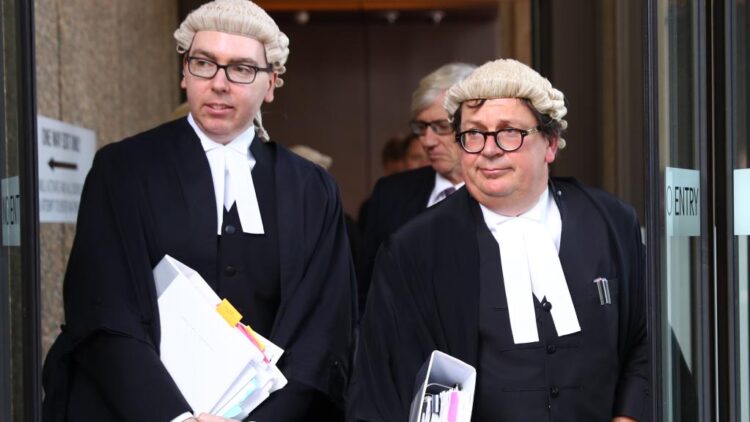
The Bar Standards Board says interim conditions will offer a more proportionate way to protect the public while allowing barristers to continue working before allegations against them have been proved.
Barristers awaiting disciplinary hearings could be allowed to continue practising under restrictions rather than face immediate suspension, under reforms announced by the Bar Standards Board (BSB) that seek to balance public protection with fairness to legal professionals.

AD: Capeesh Restaurant
The regulator plans to introduce powers enabling it to impose interim conditions on barristers facing disciplinary proceedings, creating a middle ground between allowing them to practise without restrictions and suspending them while investigations or hearings are pending.
The conditions could prevent a barrister from accepting certain types of instructions, require them to work under supervision or restrict their ability to undertake advocacy. The intention is to manage potential risks without automatically bringing a barrister’s career to a halt before misconduct has been established.
The announcement was first reported by The Law Society Gazette, is intended to be a proportionate to protect the public without halting the caree of the public. The Law Gazette is a legal news publication, serving solicitors and the wider legal profession through reporting and analysis intended to inform practitioners about developments in law, regulation and the justice system.

AD: Oysterian Sea Food Restaurant And Bar
The Law Society’s Law Gazette, has in the past taken a strident role against the lack of proper accountability of transgressing barristers. One of its past investigations in 2020, examined how rarely the Bar Standards Board had appealed disciplinary tribunal decisions on the grounds of undue leniency.
The Gazette in that publication lamented the scarce level of accountability in the profession, highlighting the deplorable level of impunity in the profession, when it pointe dout that the Bar Standards Board had challenged only two tribunal decisions for undue leniency since 2015, raising questions about the consistency of sanctions.
More recently, its coverage of Jo Sidhu KC’s disbarment highlighted criticism that the disciplinary system had failed to protect victims adequately. These reports provide context for the latest reforms, although they do not establish a single formal editorial position held by the publication
Another report in 2025 criticised bullying amongst UK based barristers, following a scathing criticism by MP Harriet Harman, who said that the current system is stacked against victims of barrister miscondut.
The prominent minister at the time said in her report: ‘This case starkly exposes the failure of the current systems to effectively prevent sexual misconduct at the bar – the jeopardy for young aspiring barristers, the impunity for those in positions of power, and the failure of the existing mechanisms to ensure timely investigations and prosecutions of such misconduct.’
It reported that the regulator had challenged just two tribunal decisions since 2015, including an unsuccessful appeal involving a barrister who received a reprimand after a suspended prison sentence. This supports discussion of whether disciplinary sanctions have been sufficiently stringe
A question of proportionality
The BSB’s proposal follows a consultation in which most respondents supported extending the regulator’s powers to impose interim conditions, rather than limiting its options to allowing unrestricted practice or seeking suspension.
Supporters of the initiative argue that restrictions could protect clients and the public while allowing barristers to retain some professional income and continue undertaking appropriate work. However, opponents raised concerns that the measures could create unnecessary regulation and effectively punish barristers before allegations against them had been tested.
The BSB says its existing requirement that interim intervention must be necessary, for example to protect the public or the public interest, will remain a safeguard against disproportionate action.
An interim restriction would not amount to a finding of professional misconduct, nor should it be presented as evidence that an allegation is true. Its justification would instead rest on whether a specific, identifiable risk required temporary management while proceedings continued.
Official figures underline why the regulator must distinguish between complaints, investigations and proven misconduct. The BSB assessed 1,883 reports in 2024/25, compared with 1,851 in 2023/24. It concluded 92 investigations during 2024/25, with 60% closed following investigation and 40% referred for disciplinary action. Of the 53 cases closed at disciplinary tribunals in 2024/25, 29 resulted in findings that charges were proved. Six were dismissed, 17 were withdrawn and one had another outcome.
The previous year, 33 of 39 cases heard at tribunal resulted in proven findings. Those figures suggest that disciplinary proceedings frequently result in established misconduct, but they also demonstrate that allegations do not invariably lead to a finding against a barrister.
The figures require careful interpretation. Tribunal cases are not necessarily equivalent to individual barristers, and withdrawn proceedings are not the same as findings of innocence or guilt. In 2024/25, the 17 withdrawn cases related to six individuals, with 11 withdrawn together after one barrister was disbarred in separate proceedings.
Nor do these figures establish how many barristers would qualify for interim restrictions under the proposed rules. The published statistics record completed case outcomes, not a count of people awaiting hearings who would be subject to the new powers.
Nevertheless, the figures provide a clear reason to consider a more flexible approach: the regulator needs to protect the public when risks are sufficiently serious, without treating every person under investigation as though misconduct has already been proved.
When misconduct is established
Disciplinary cases illustrate why temporary safeguards may sometimes be necessary. In one particularly serious example, barrister Peter Wareing was disbarred after a tribunal found that he had practised while suspended. He accepted instructions, acted for clients and appeared in court despite knowing that he was not authorised to practise.
The tribunal found that he had acted without integrity, including by failing to disclose his suspension and continuing to present himself as a practising barrister. Four charges were proved, while two were dismissed. The case demonstrated the risks associated with allowing a barrister to undertake legal work when their authority to practise has been withdrawn.
The BSB said the repeated failure to comply with a suspension created risks for actual and potential clients, as well as undermining public confidence in professional regulation.
Other disciplinary findings have involved dishonesty and failures to act with integrity. The BSB’s 2023/24 regulatory decisions report identified dishonesty and undermining trust and confidence in the profession as prominent concerns among matters investigated.
Of 30 barristers subject to proven misconduct findings at disciplinary tribunals that year, 20 faced charges involving dishonesty and/or acting without integrity.
Such cases illustrate the potential value of interim conditions. Where a specific risk concerns a particular type of work, restricting that work or requiring supervision may offer a practical means of protection while the evidence is examined. In more serious cases, where conditions would be insufficient to protect the public, suspension could remain necessary.
Transparency and fairness
The reforms also address the publication of disciplinary tribunal outcomes. Under the new arrangements, outcomes are to be published in all cases, including those in which charges are dismissed, unless the tribunal orders otherwise.
Some barristers have expressed concern that publishing dismissed cases could cause reputational damage. The BSB argues that where proceedings have already entered the public domain, publishing their outcome supports transparency and ensures that the public record reflects the result rather than merely the allegation.
Barristers will have opportunities to raise objections before publication in certain circumstances.The new regulations are expected to come into force on or around 1 February 2027, subject to the necessary approval. The BSB says the changes will apply to cases under the new regime from that date, with an exception for cases already convened for a hearing by 31 January 2027.
Director general Phil Golding said the reforms would lead to speedier outcomes, better support for witnesses and greater transparency in tribunal hearings.
The proposal is defensible if the new powers are used carefully. Public protection must remain the priority where credible risks threaten clients, court proceedings or confidence in the administration of justice. Equally, a barrister should not automatically lose the ability to earn a living merely because disciplinary proceedings have begun.
Interim conditions could provide a proportionate response where risks can be managed without suspension. Their legitimacy, however, will depend on clear reasons for imposing them, restrictions tailored to the risks identified, opportunities for review and disciplinary proceedings that progress without unnecessary delay.
The statistics demonstrate why neither blanket suspension nor unrestricted practice will always be appropriate. Some cases end in proven misconduct; others are dismissed or withdrawn. Neither outcome can safely be assumed at the outset.
The central test for the BSB will therefore be whether the new approach protects the public while preserving the principle that allegations must be determined through a fair process. If the safeguards are applied consistently and transparently, the reforms could offer a more balanced system of professional regulation without weakening accountability at the Bar.

AD: Heritage And Restaurant Lounge Bar